School of Medicine and Health Sciences, 504 Hamline St, Room 118, Grand Forks, ND 58203, USA.
J Neuroinflammation. 2012 Jul 2;9:117. doi: 10.1186/1742-2094-9-117.
Microglial activation is an important histologic characteristic of the pathology of Alzheimer's disease (AD). One hypothesis is that amyloid beta (Aβ) peptide serves as a specific stimulus for tyrosine kinase-based microglial activation leading to pro-inflammatory changes that contribute to disease. Therefore, inhibiting Aβ stimulation of microglia may prove to be an important therapeutic strategy for AD.
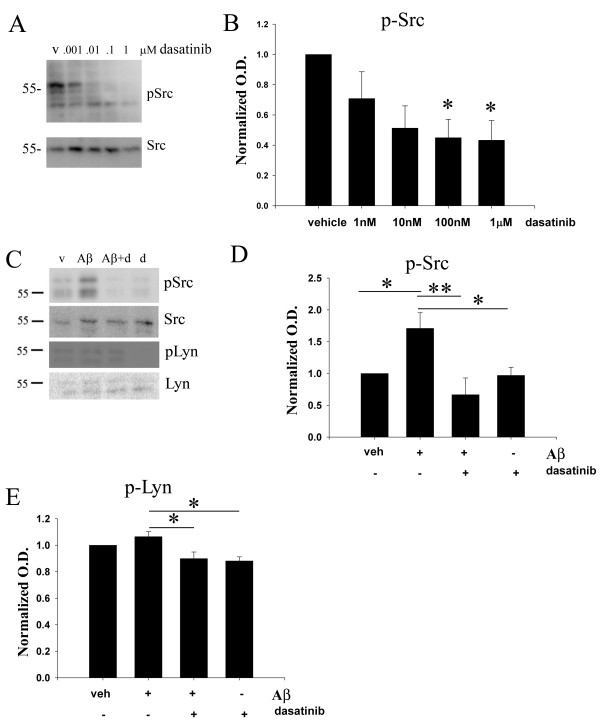
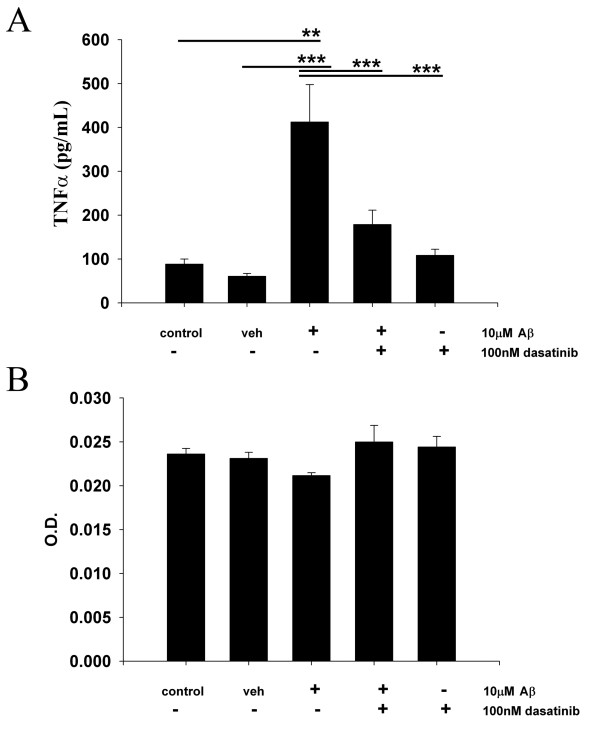
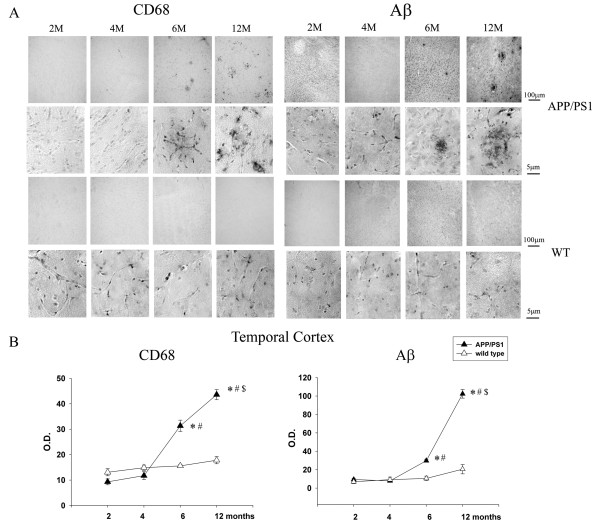
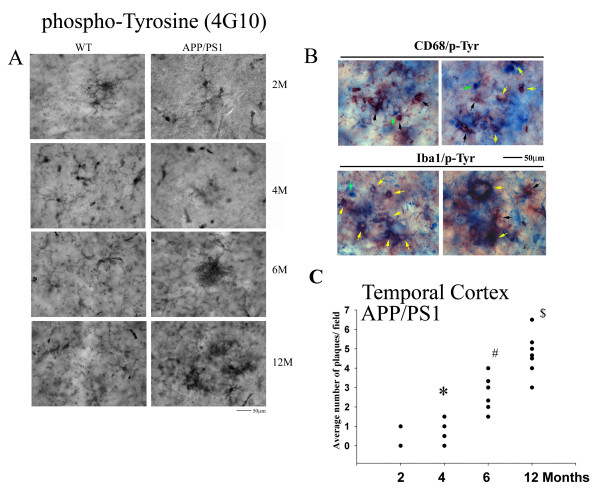
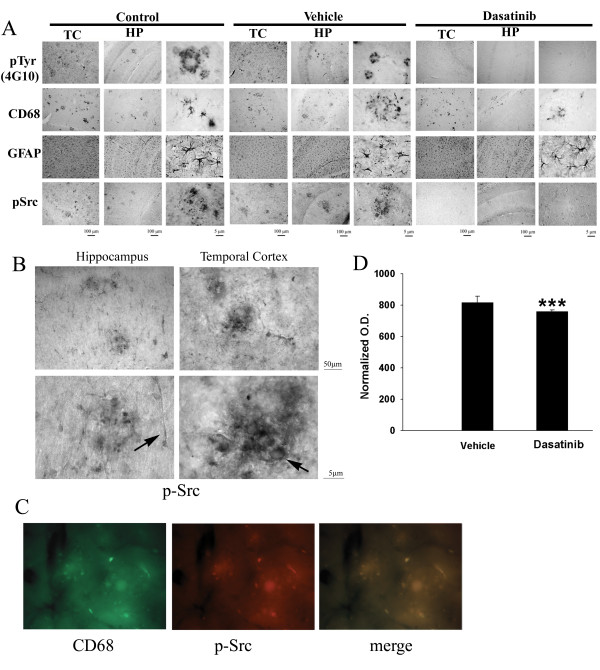
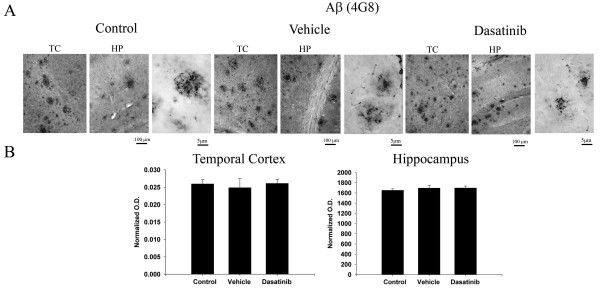
Primary murine microglia cultures and the murine microglia cell line, BV2, were used for stimulation with fibrillar Aβ1-42. The non-receptor tyrosine kinase inhibitor, dasatinib, was used to treat the cells to determine whether Src family kinase activity was required for the Aβ stimulated signaling response and subsequent increase in TNFα secretion using Western blot analysis and enzyme-linked immunosorbent assay (ELISA), respectively. A histologic longitudinal analysis was performed using an AD transgenic mouse model, APP/PS1, to determine an age at which microglial protein tyrosine kinase levels increased in order to administer dasatinib via mini osmotic pump diffusion. Effects of dasatinib administration on microglial and astroglial activation, protein phosphotyrosine levels, active Src kinase levels, Aβ plaque deposition, and spatial working memory were assessed via immunohistochemistry, Western blot, and T maze analysis.
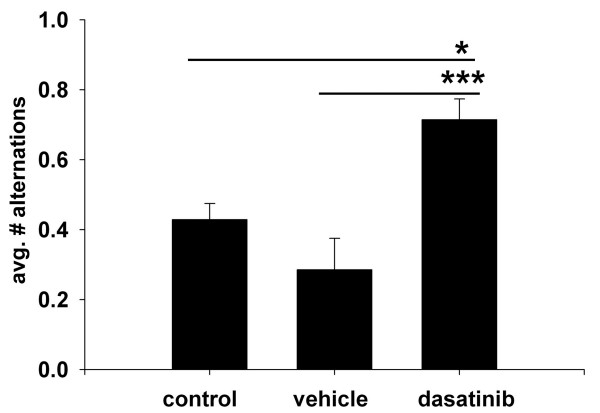
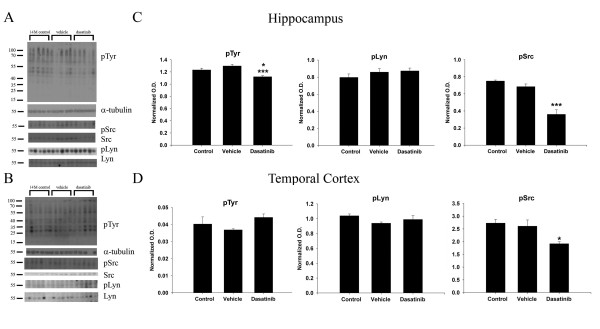
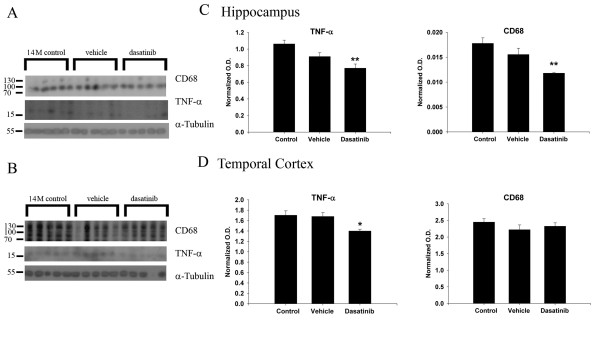
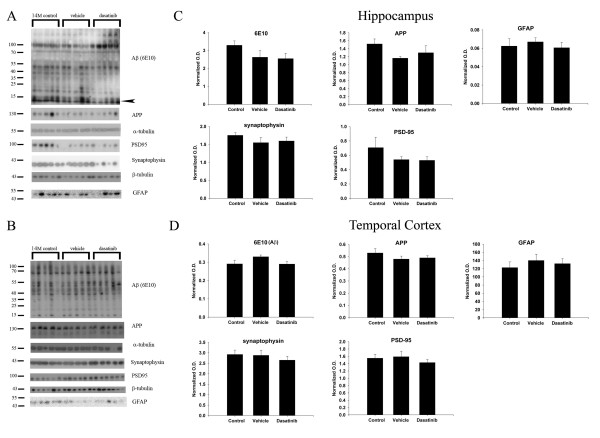
Aβ fibrils stimulated primary murine microglia via a tyrosine kinase pathway involving Src kinase that was attenuated by dasatinib. Dasatinib administration to APP/PS1 mice decreased protein phosphotyrosine, active Src, reactive microglia, and TNFα levels in the hippocampus and temporal cortex. The drug had no effect on GFAP levels, Aβ plaque load, or the related tyrosine kinase, Lyn. These anti-inflammatory changes correlated with improved performance on the T maze test in dasatinib infused animals compared to control animals.
These data suggest that amyloid dependent microgliosis may be Src kinase dependent in vitro and in vivo. This study defines a role for Src kinase in the microgliosis characteristic of diseased brains and suggests that particular tyrosine kinase inhibition may be a valid anti-inflammatory approach to disease. Dasatinib is an FDA-approved drug for treating chronic myeloid leukemia cancer with a reported ability to cross the blood-brain barrier. Therefore, this suggests a novel use for this drug as well as similar acting molecules.
小胶质细胞的激活是阿尔茨海默病(AD)病理学的一个重要组织学特征。有一个假设是,β淀粉样蛋白(Aβ)肽作为基于酪氨酸激酶的小胶质细胞激活的特定刺激物,导致促炎变化,从而促进疾病的发生。因此,抑制 Aβ对小胶质细胞的刺激可能被证明是治疗 AD 的一种重要治疗策略。
使用纤维状 Aβ1-42 刺激原代鼠小胶质细胞培养物和鼠小胶质细胞系 BV2。使用非受体酪氨酸激酶抑制剂达沙替尼(dasatinib)处理细胞,以确定Src 家族激酶活性是否是 Aβ 刺激的信号反应和随后 TNFα 分泌增加所必需的,分别使用 Western blot 分析和酶联免疫吸附测定(ELISA)。通过 AD 转基因小鼠模型 APP/PS1 进行组织学纵向分析,以确定小胶质细胞蛋白酪氨酸激酶水平增加的年龄,以便通过迷你渗透泵扩散给予达沙替尼。通过免疫组织化学、Western blot 和 T 迷宫分析评估达沙替尼给药对小胶质细胞和星形胶质细胞激活、蛋白磷酸酪氨酸水平、活性 Src 激酶水平、Aβ 斑块沉积和空间工作记忆的影响。
Aβ 原纤维通过涉及 Src 激酶的酪氨酸激酶途径刺激原代鼠小胶质细胞,该途径被达沙替尼减弱。APP/PS1 小鼠给予达沙替尼可降低海马体和颞叶皮层中的蛋白磷酸酪氨酸、活性 Src、反应性小胶质细胞和 TNFα 水平。该药物对 GFAP 水平、Aβ 斑块负荷或相关的酪氨酸激酶 Lyn 没有影响。这些抗炎变化与在达沙替尼输注动物中与对照动物相比,在 T 迷宫测试中的表现改善相关。
这些数据表明,体外和体内淀粉样依赖的小胶质细胞增生可能依赖于 Src 激酶。本研究确定了 Src 激酶在疾病大脑中小胶质细胞增生中的作用,并表明特定的酪氨酸激酶抑制可能是一种有效的抗炎方法。达沙替尼是一种 FDA 批准的用于治疗慢性髓性白血病的药物,据报道它能够穿过血脑屏障。因此,这表明该药物以及类似作用的分子具有新的用途。