Pulmonary and Critical Care Medicine Division, The Victoria Johnson Laboratory for Obstructive Lung Disease Research, Virginia Commonwealth University, Richmond, Virginia, United States of America.
PLoS One. 2012;7(5):e38038. doi: 10.1371/journal.pone.0038038. Epub 2012 May 31.
Given the relative abundance and toxic potential of acrolein in inhaled cigarette smoke, it is surprising how little is known about the pulmonary and systemic effects of acrolein. Here we test the hypothesis whether systemic administration of acrolein could cause endoplasmic reticulum (ER) stress, and lung cell apoptosis, leading to the enlargement of the alveolar air spaces in rats.
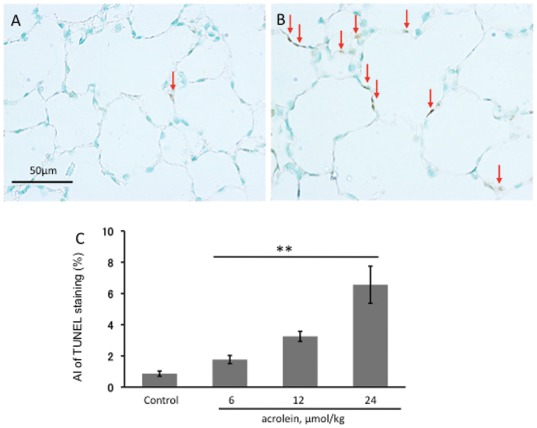
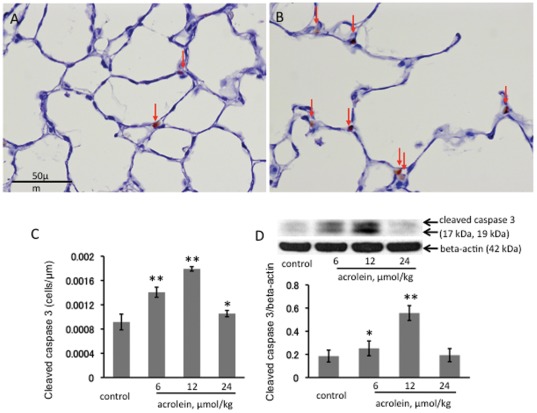
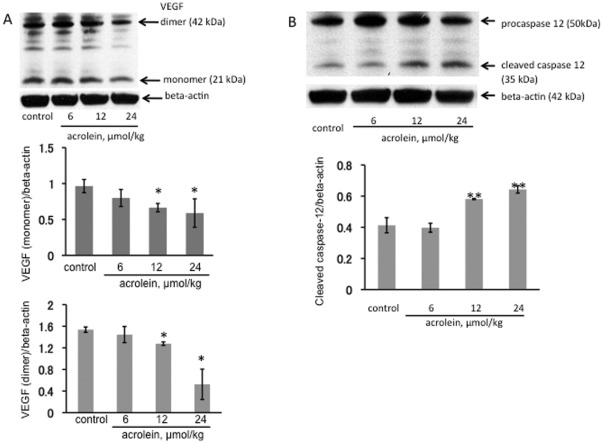
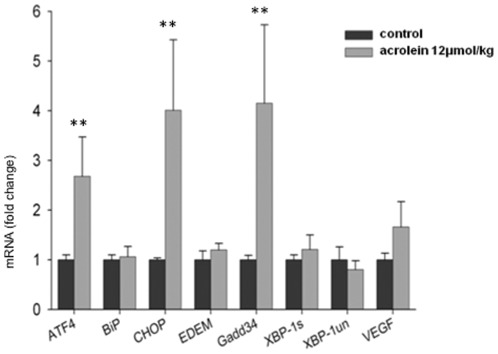
Acute and chronic effects of intraperitoneally administered acrolein were tested. Mean alveolar airspace area was measured by using light microscopy and imaging system software. TUNEL staining and immunohistochemistry (IHC) for active caspase 3 and Western blot analysis for active caspase 3, and caspase 12 were performed to detect apoptosis. The ER-stress related gene expression in the lungs was determined by Quantitative real-time PCR analysis. Acrolein-protein adducts in the lung tissue were detected by IHC.
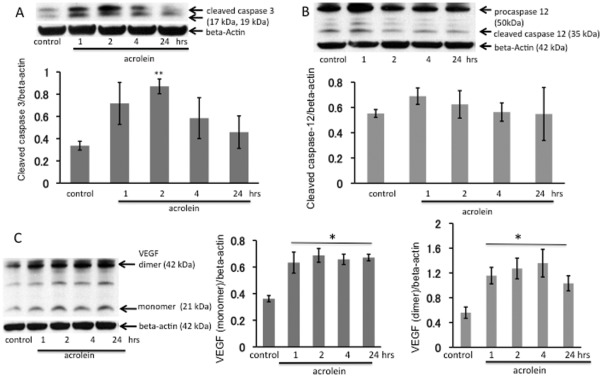
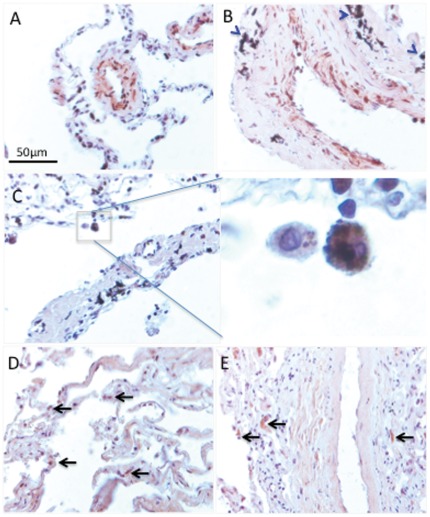
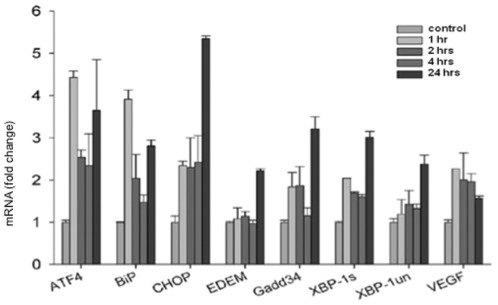
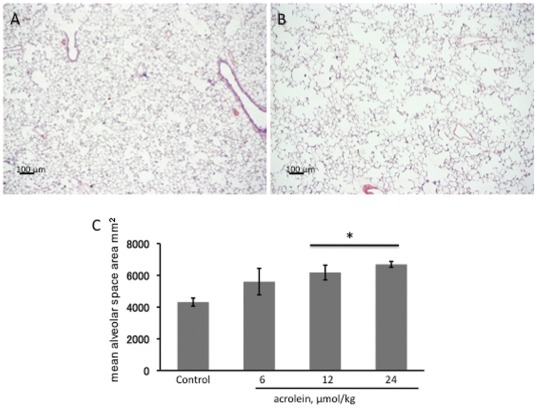
Acute administration of acrolein caused a significant elevation of activated caspase 3, upregulation of VEGF expression and induced ER stress proteins in the lung tissue. The chronic administration of acrolein in rats led to emphysematous lung tissue remodeling. TUNEL staining and IHC for cleaved caspase 3 showed a large number of apoptotic septal cells in the acrolein-treated rat lungs. Chronic acrolein administration cause the endoplasmic reticulum stress response manifested by significant upregulation of ATF4, CHOP and GADd34 expression. In smokers with COPD there was a considerable accumulation of acrolein-protein adducts in the inflammatory, airway and vascular cells.
Systemic administration of acrolein causes endoplasmic reticulum stress response, lung cell apoptosis, and chronic administration leads to the enlargement of the alveolar air spaces and emphysema in rats. The substantial accumulation of acrolein-protein adducts in the lungs of COPD patients suggest a role of acrolein in the pathogenesis of emphysema.
考虑到丙烯醛在吸入的香烟烟雾中的相对丰富度和潜在毒性,人们对丙烯醛的肺部和全身影响知之甚少,这令人惊讶。在这里,我们检验了这样一个假设,即全身给予丙烯醛是否会导致内质网(ER)应激和肺细胞凋亡,从而导致大鼠肺泡空气空间增大。
测试了腹腔内给予丙烯醛的急性和慢性作用。使用光学显微镜和成像系统软件测量平均肺泡空气空间面积。通过 TUNEL 染色和活性 caspase 3 的免疫组化(IHC)以及活性 caspase 3 和 caspase 12 的 Western blot 分析检测细胞凋亡。通过定量实时 PCR 分析确定肺部 ER 应激相关基因的表达。通过 IHC 检测肺组织中的丙烯醛-蛋白加合物。
丙烯醛的急性给药导致肺组织中激活的 caspase 3 显著升高,VEGF 表达上调,并诱导 ER 应激蛋白。大鼠慢性给予丙烯醛导致肺气肿样肺组织重塑。TUNEL 染色和活性 caspase 3 的 IHC 显示,丙烯醛处理的大鼠肺中有大量凋亡的隔细胞。慢性丙烯醛给药引起内质网应激反应,表现为 ATF4、CHOP 和 GADd34 表达显著上调。在 COPD 吸烟者中,炎症、气道和血管细胞中大量积累了丙烯醛-蛋白加合物。
全身给予丙烯醛会引起内质网应激反应、肺细胞凋亡,慢性给予会导致大鼠肺泡空气空间增大和肺气肿。COPD 患者肺中大量积累丙烯醛-蛋白加合物表明丙烯醛在肺气肿发病机制中的作用。