Molecular and Behavioral Neuroscience Institute, University of Michigan, Ann Arbor, MI, 48109, USA.
Biol Sex Differ. 2012 Jun 7;3(1):14. doi: 10.1186/2042-6410-3-14.
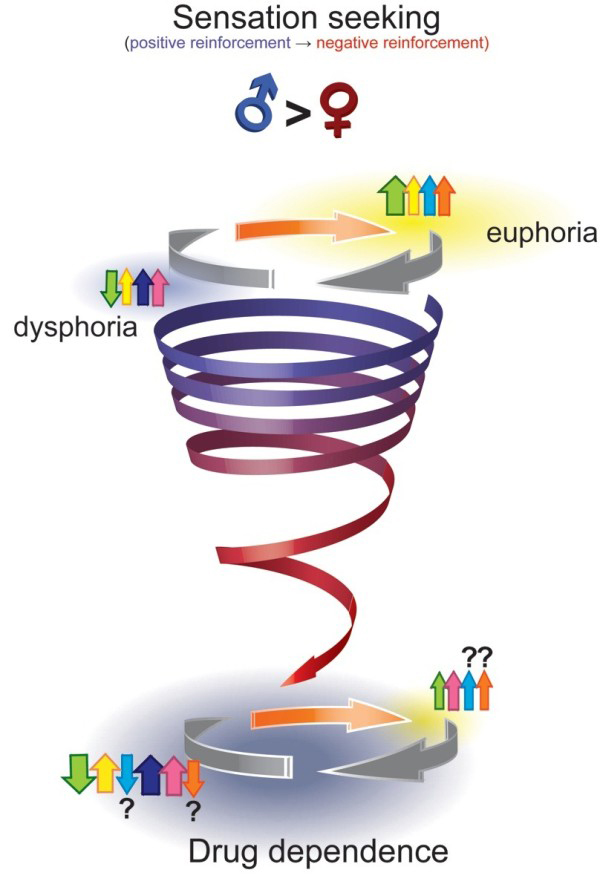
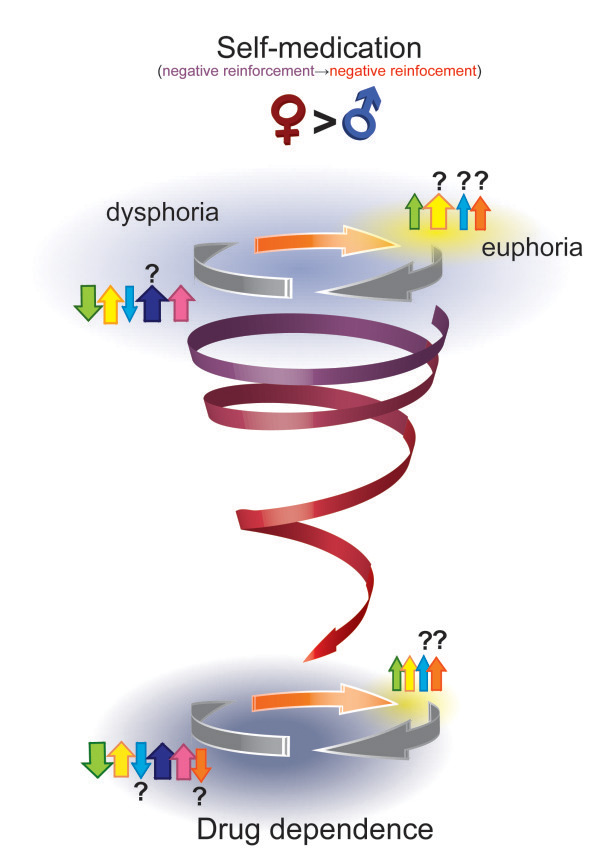
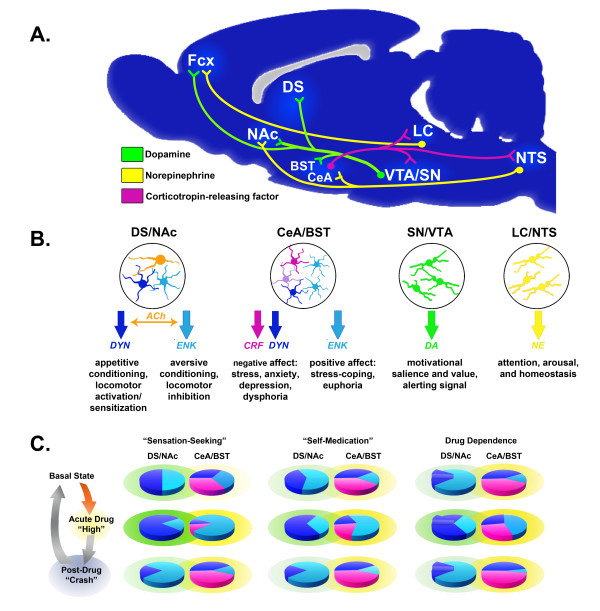
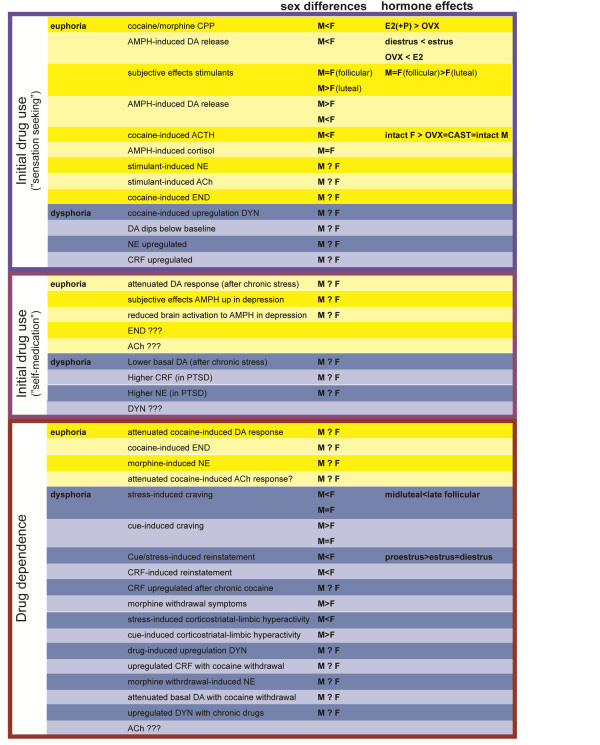
In this review we propose that there are sex differences in how men and women enter onto the path that can lead to addiction. Males are more likely than females to engage in risky behaviors that include experimenting with drugs of abuse, and in susceptible individuals, they are drawn into the spiral that can eventually lead to addiction. Women and girls are more likely to begin taking drugs as self-medication to reduce stress or alleviate depression. For this reason women enter into the downward spiral further along the path to addiction, and so transition to addiction more rapidly. We propose that this sex difference is due, at least in part, to sex differences in the organization of the neural systems responsible for motivation and addiction. Additionally, we suggest that sex differences in these systems and their functioning are accentuated with addiction. In the current review we discuss historical, cultural, social and biological bases for sex differences in addiction with an emphasis on sex differences in the neurotransmitter systems that are implicated.
在这篇综述中,我们提出男性和女性进入可能导致成瘾的途径存在性别差异。男性比女性更有可能从事冒险行为,包括尝试滥用药物,而在易受影响的个体中,他们会被卷入最终导致成瘾的螺旋式下降。女性和女孩更有可能开始服用药物作为自我治疗,以减轻压力或缓解抑郁。出于这个原因,女性在成瘾的道路上走得更远,因此更快地过渡到成瘾。我们提出,这种性别差异至少部分归因于负责动机和成瘾的神经系统的性别差异。此外,我们还认为,这些系统及其功能的性别差异在成瘾时会更加明显。在目前的综述中,我们讨论了成瘾中性别差异的历史、文化、社会和生物学基础,重点讨论了涉及的神经递质系统的性别差异。