Department of Nutritional Medicine, University of Hohenheim Stuttgart, Germany.
Front Immunol. 2012 Jun 5;3:143. doi: 10.3389/fimmu.2012.00143. eCollection 2012.
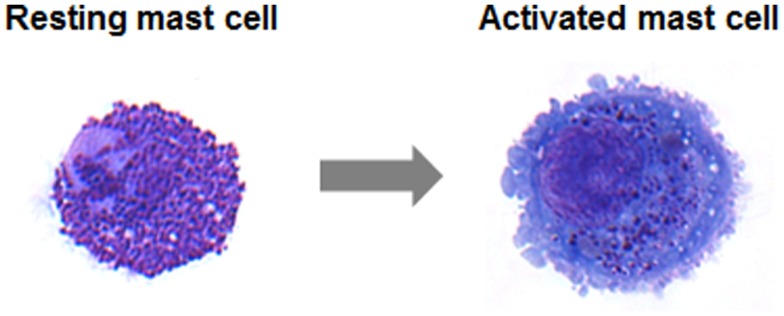
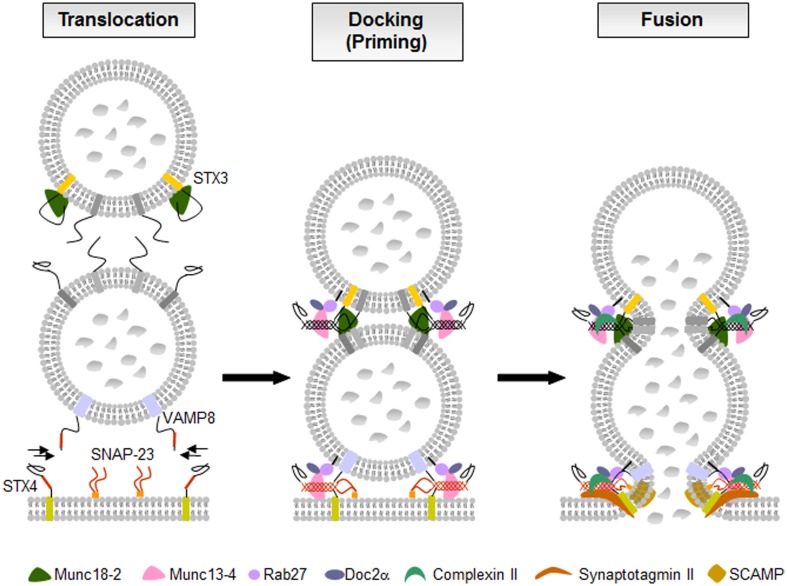
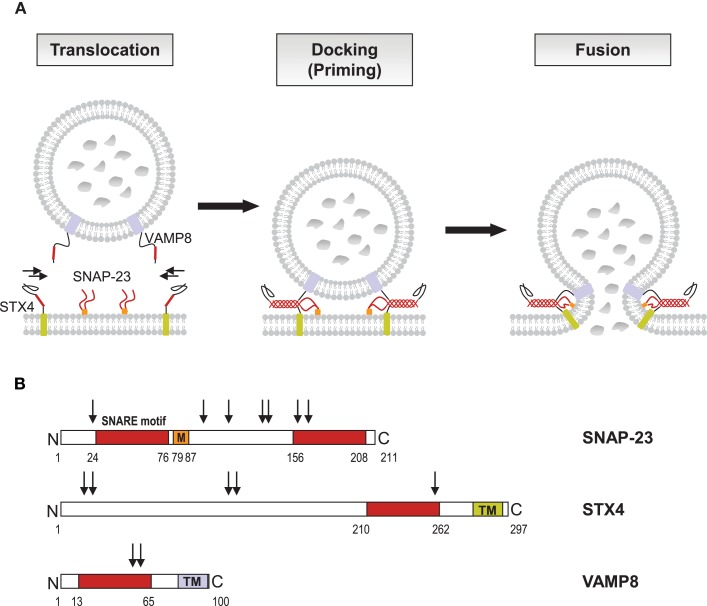
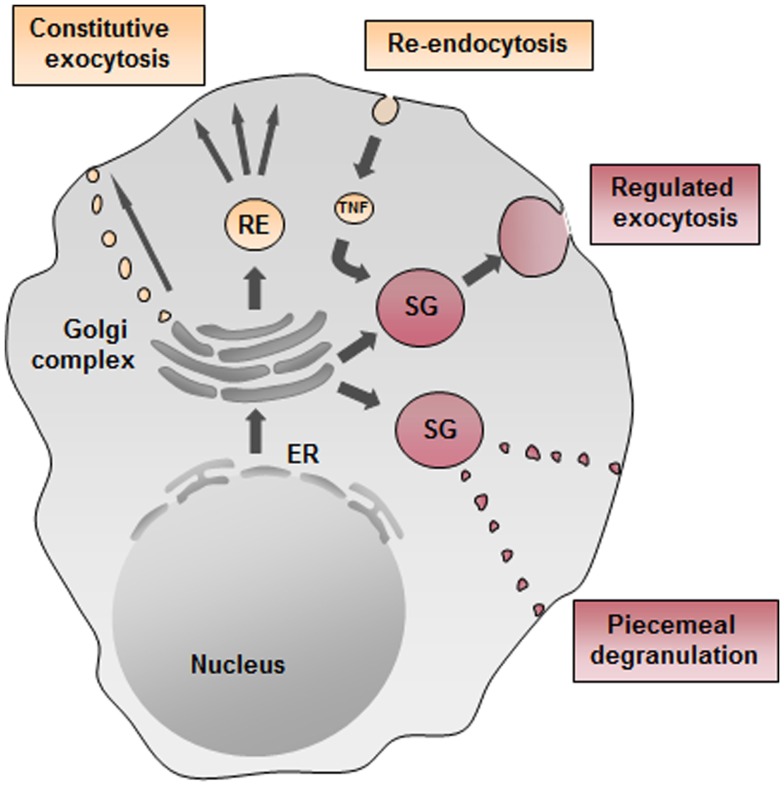
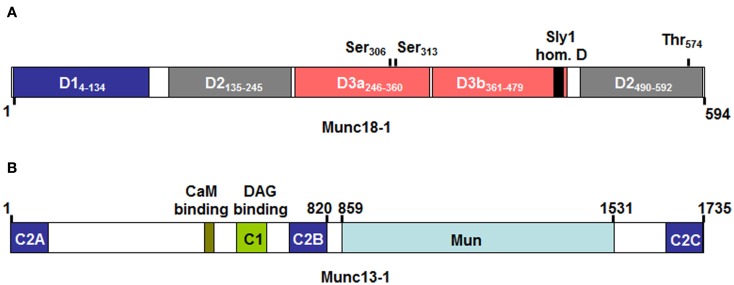
Mast cells are known as inflammatory cells which exert their functions in allergic and anaphylactic reactions by secretion of numerous inflammatory mediators. During an allergic response, the high-affinity IgE receptor, FcεRI, becomes cross-linked by receptor-bound IgE and antigen resulting in immediate release of pre-synthesized mediators - stored in granules - as well as in de novo synthesis of various mediators like cytokines and chemokines. Soluble N-ethylmaleimide-sensitive factor attachment protein (SNAP) receptors (SNARE) proteins were found to play a central role in regulating membrane fusion events during exocytosis. In addition, several accessory regulators like Munc13, Munc18, Rab GTPases, secretory carrier membrane proteins, complexins, or synaptotagmins were found to be involved in membrane fusion. In this review we summarize our current knowledge about the SNARE machinery and its mechanism of action in mast cell secretion.
肥大细胞被称为炎症细胞,通过分泌大量炎症介质在过敏和过敏反应中发挥作用。在过敏反应中,高亲和力 IgE 受体 FcεRI 通过受体结合的 IgE 和抗原交联,导致预先合成的介质(储存在颗粒中)立即释放,以及各种介质(如细胞因子和趋化因子)的从头合成。可溶性 N-乙基马来酰亚胺敏感因子附着蛋白 (SNAP) 受体 (SNARE) 蛋白被发现在胞吐作用期间调节膜融合事件中发挥核心作用。此外,还发现几种辅助调节剂,如 Munc13、Munc18、Rab GTPases、分泌载体膜蛋白、复合物或突触融合蛋白,参与膜融合。在这篇综述中,我们总结了我们目前对 SNARE 机制及其在肥大细胞分泌中的作用机制的了解。