Center for Molecular and Cellular Biosciences, School of Biological, Environmental, and Earth Sciences, University of Southern Mississippi, Hattiesburg, MS 39406, United States of America.
Center for Molecular and Cellular Biosciences, School of Biological, Environmental, and Earth Sciences, University of Southern Mississippi, Hattiesburg, MS 39406, United States of America.
Cell Signal. 2023 May;105:110607. doi: 10.1016/j.cellsig.2023.110607. Epub 2023 Jan 21.
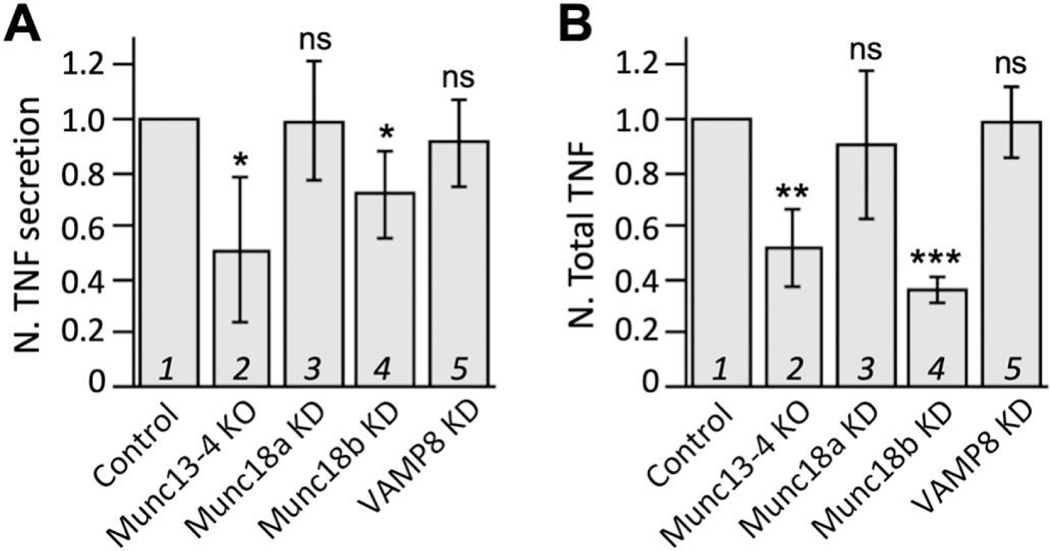
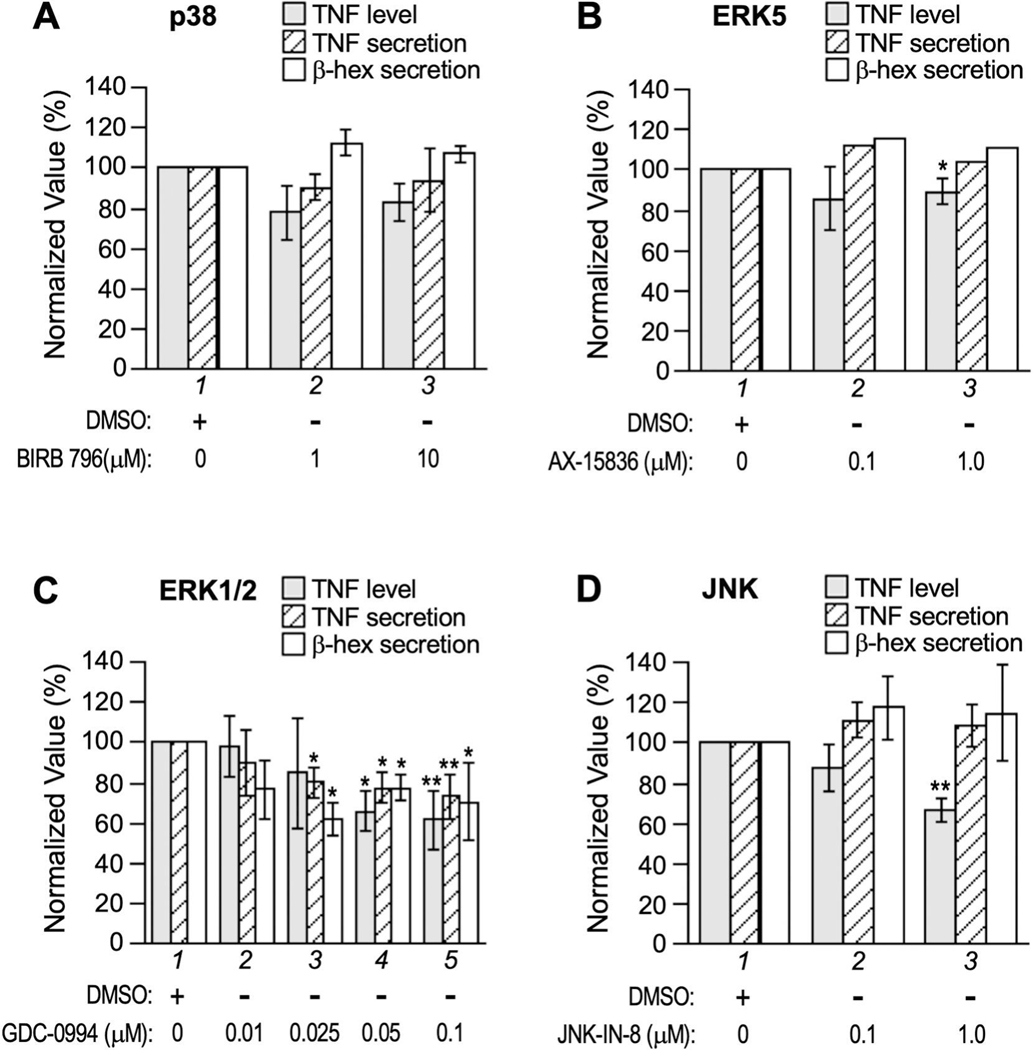
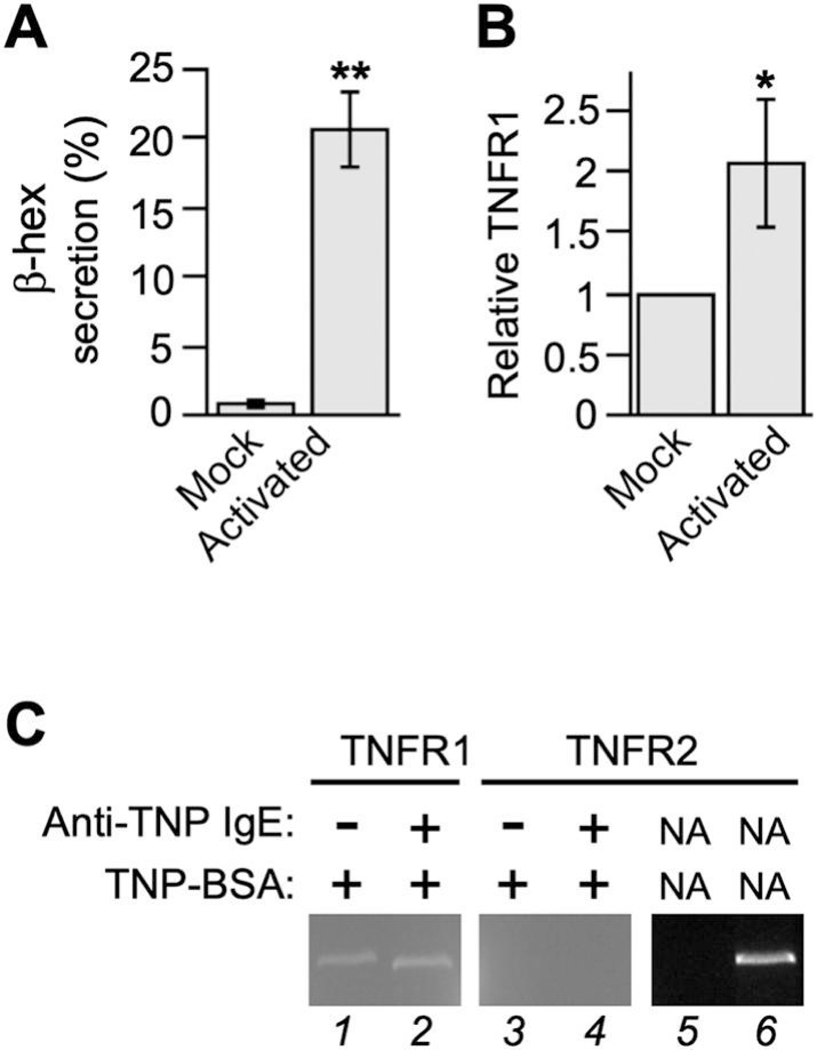
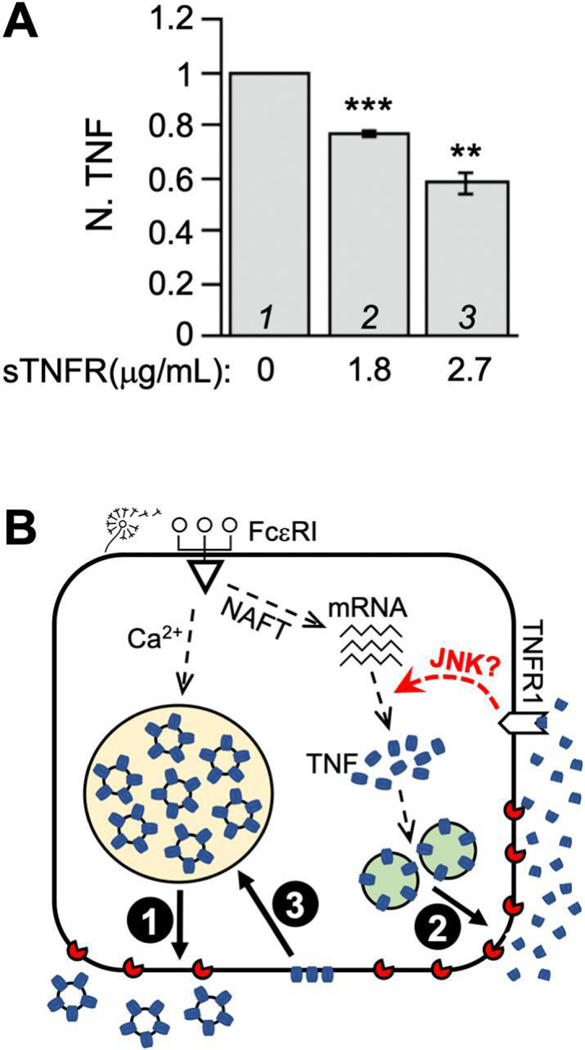
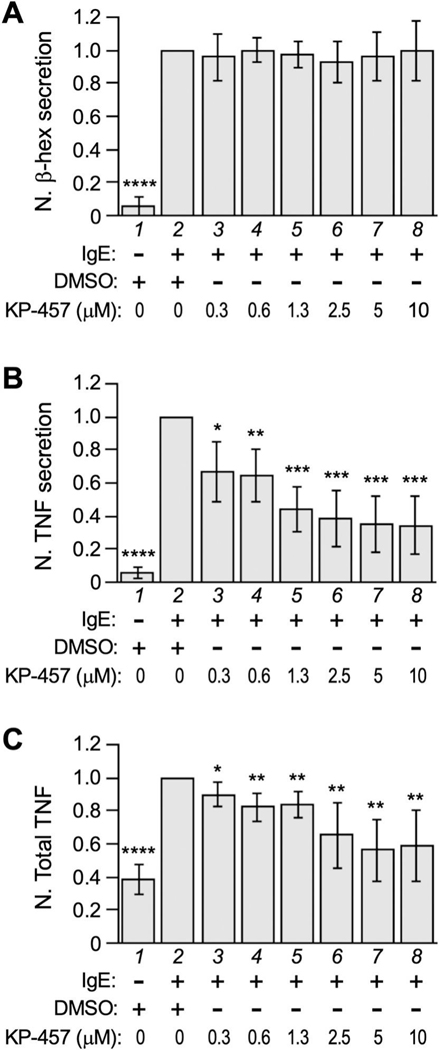
We previously reported that the maximal production of Tumor Necrosis Factor (TNF or TNFα) in antigen-activated RBL-2H3 cells (a tumor analog of mucosal mast cells) requires Munc13-4, a regulator of exocytic fusion. In this study, we investigated the involvement of various fusion catalysts in TNF production. We observed a strong correlation between the total TNF level and TNF exocytosis in RBL-2H3 cells. RT-qPCR shows that TNFR1 (TNF receptor 1) is the sole TNFR expressed in these cells, and that its transcription is upregulated upon allergen-mediated activation. Importantly, the addition of soluble TNFR1 inhibits antigen-elicited TNF production in a dosage-dependent fashion. Likewise, TNF production is diminished in the presence of TACE (TNFα Converting Enzyme) inhibitor KP-457, which prevents the generation of soluble TNF (sTNF). Together, these findings indicate that sTNF and TNFR1 function as autocrine agent and receptor respectively at the mast cell surface to boost TNF proliferation during allergic inflammation.
我们之前报道称,肿瘤坏死因子(TNF 或 TNFα)在抗原激活的 RBL-2H3 细胞(黏膜肥大细胞的肿瘤类似物)中的最大产量需要 Munc13-4,这是一种外排融合的调节剂。在这项研究中,我们研究了各种融合催化剂在 TNF 产生中的作用。我们观察到 RBL-2H3 细胞中总 TNF 水平与 TNF 胞吐之间存在很强的相关性。RT-qPCR 显示,这些细胞中仅表达 TNFR1(TNF 受体 1),并且其转录在过敏原介导的激活时上调。重要的是,添加可溶性 TNFR1 以剂量依赖的方式抑制抗原引发的 TNF 产生。同样,在 TACE(TNFα 转换酶)抑制剂 KP-457 的存在下,TNF 产生减少,该抑制剂可防止可溶性 TNF(sTNF)的产生。综上所述,这些发现表明 sTNF 和 TNFR1 在肥大细胞表面分别作为自分泌剂和受体发挥作用,以在过敏炎症期间增强 TNF 的增殖。