Tian Xiao-Jun, Liu Feng, Zhang Xiao-Peng, Li Jun, Wang Wei
National Laboratory of Solid State Microstructures and Department of Physics, Nanjing University, Nanjing, China.
PLoS One. 2012;7(6):e38164. doi: 10.1371/journal.pone.0038164. Epub 2012 Jun 5.
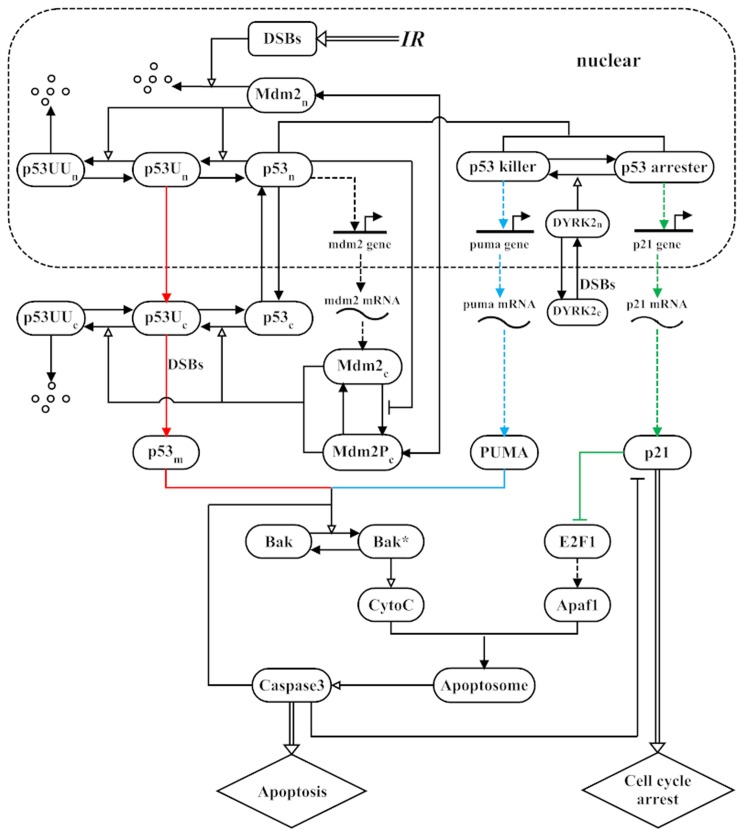
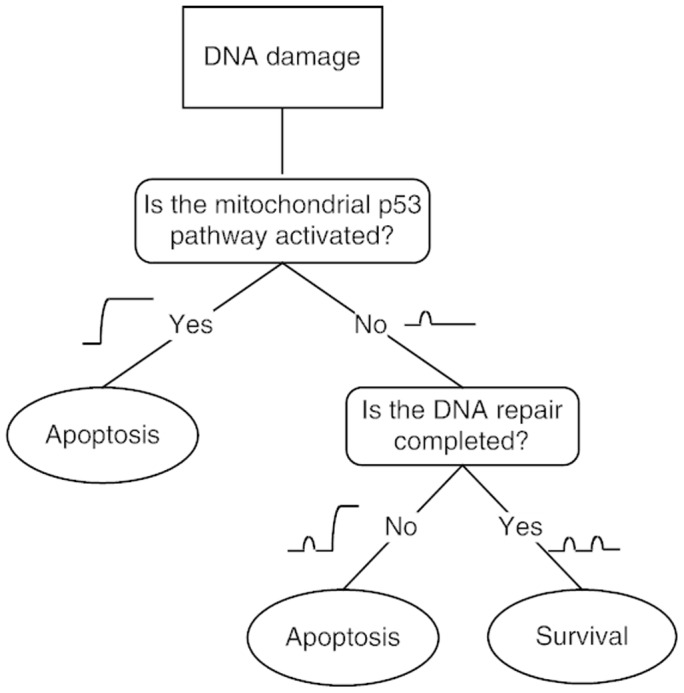
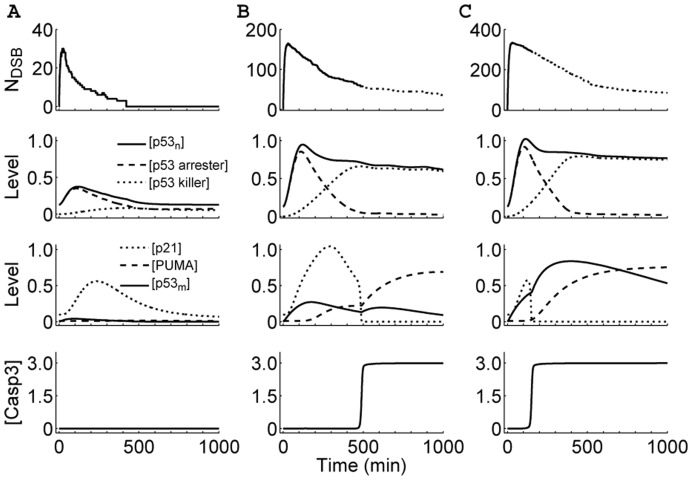
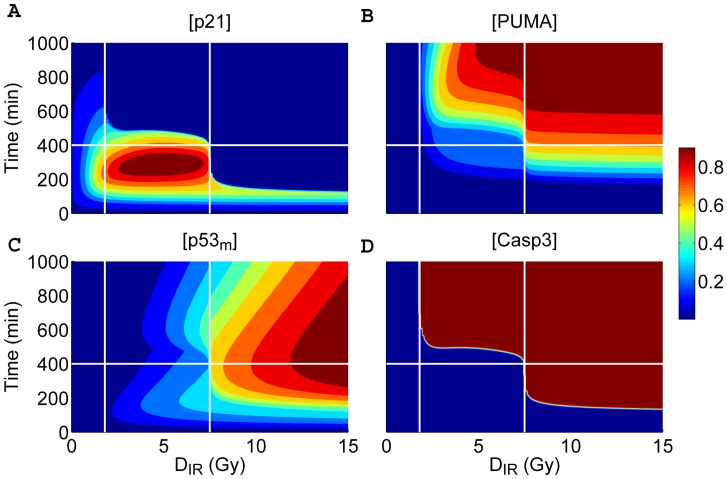
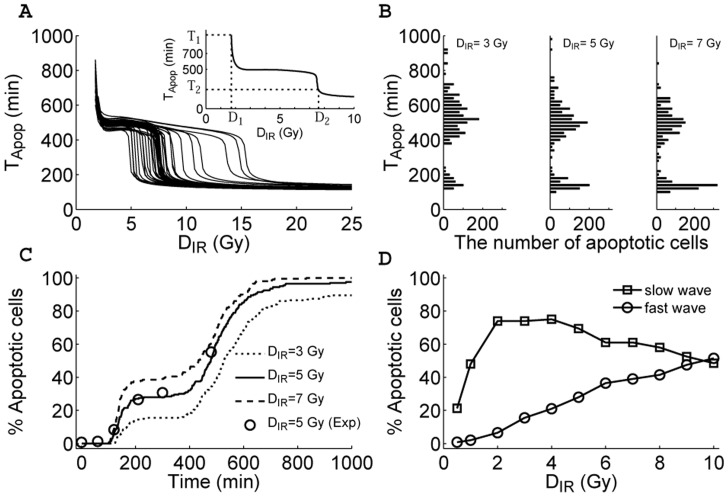
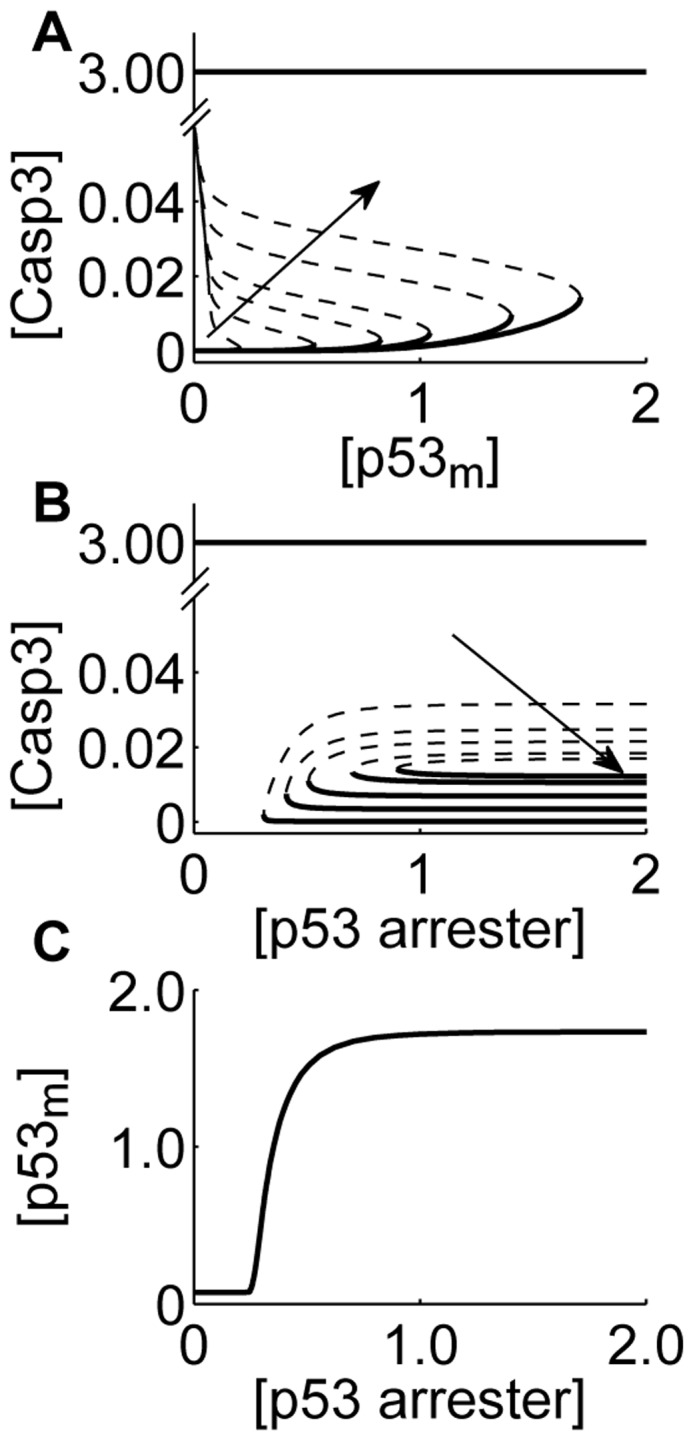
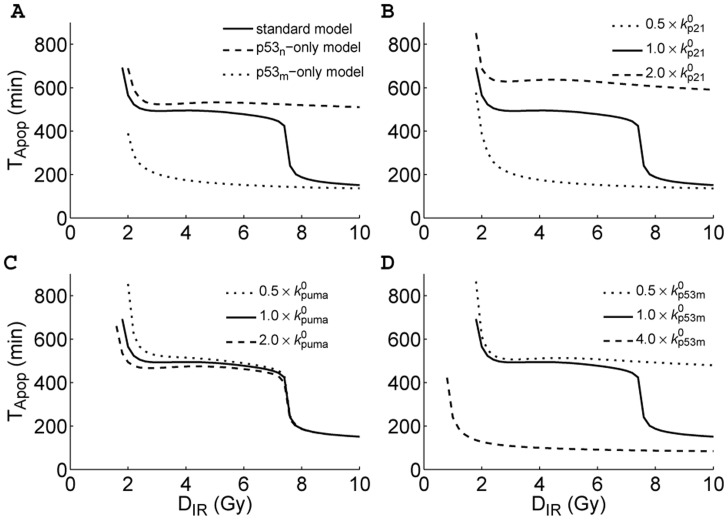
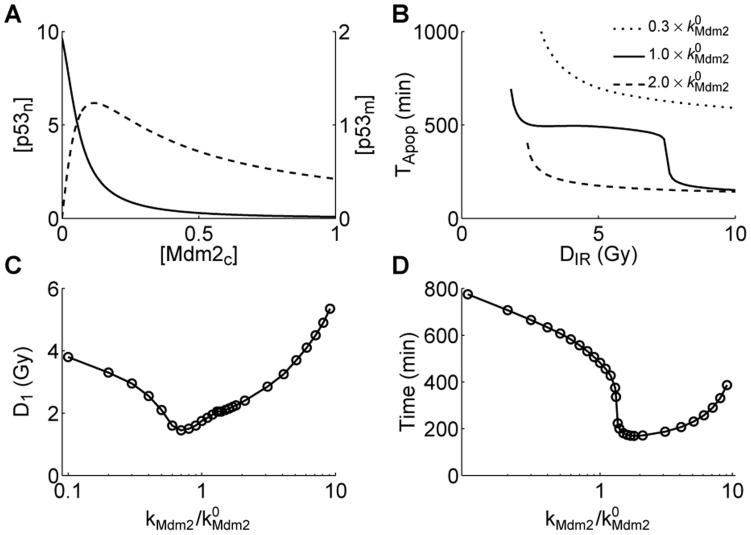
The tumor suppressor p53 has a crucial role in the DNA damage response. Here, we proposed an integrated model of the p53 network and explored how the nuclear and mitochondrial p53 pathways are coordinated to determine cell fates after [Formula: see text]-irradiation in radiosensitive tissues. Using numerical simulations, we found that depending on the extent of DNA damage, cells may survive, commit apoptosis after cell cycle arrest, or undergo apoptosis soon after irradiation. There exists a large cell-to-cell variability in outcome because of stochasticity in the generation and repair of DNA damage as well as cellular heterogeneity. At the cell population level, there occur two waves of apoptosis: a fast wave mediated by mitochondrial p53 within three hours postirradiation, and a slow wave mediated by nuclear p53 after eight hours postirradiation. Thus, we propose a two-step mechanism for cell fate decision. The first step is to decide whether DNA damage is severe enough to trigger apoptosis directly through the mitochondrial p53 pathway, while the second step is to determine whether the damage is fixed after cell cycle arrest. Such a mechanism may represent an efficient and reliable control mode, avoiding unnecessary death or greatly promoting the execution of apoptosis. It was also demonstrated that nuclear p53 can inhibit the pro-apoptotic activity of mitochondrial p53 by transactivating p21, and Mdm2 can facilitate apoptosis by promoting the mono-ubiquitination of p53. These results are either in good agreement with experimental observations or experimentally testable. Our work suggests that both the transcription-independent and -dependent p53 activities are indispensable for a reliable choice of cell fate and also provides clues to therapeutic manipulation of the p53 pathway in cancer treatment.
肿瘤抑制因子p53在DNA损伤反应中起关键作用。在此,我们提出了一个p53网络的整合模型,并探讨了核p53途径和线粒体p53途径如何协同作用,以确定放射敏感组织在[公式:见正文]照射后细胞的命运。通过数值模拟,我们发现,根据DNA损伤的程度,细胞可能存活、在细胞周期停滞后发生凋亡,或在照射后不久即发生凋亡。由于DNA损伤的产生和修复过程中的随机性以及细胞异质性,细胞间的结果存在很大差异。在细胞群体水平上,会出现两波凋亡:一波是照射后三小时内由线粒体p53介导的快速凋亡波,另一波是照射后八小时后由核p53介导的缓慢凋亡波。因此,我们提出了一个细胞命运决定的两步机制。第一步是决定DNA损伤是否严重到足以直接通过线粒体p53途径触发凋亡,而第二步是确定损伤在细胞周期停滞后是否得到修复。这样的机制可能代表了一种高效可靠的控制模式,避免了不必要的死亡或极大地促进了凋亡的执行。研究还表明,核p53可以通过反式激活p21来抑制线粒体p53的促凋亡活性,而Mdm2可以通过促进p53的单泛素化来促进凋亡。这些结果要么与实验观察结果高度一致,要么可以通过实验进行验证。我们的工作表明,p53的转录非依赖型和依赖型活性对于可靠地选择细胞命运都是不可或缺的,同时也为癌症治疗中p53途径的治疗性操作提供了线索。