Institute of Materia Medica, Chinese Academy of Medical Sciences and Peking Union Medical College, Beijing, China.
Free Radic Biol Med. 2012 Aug 15;53(4):758-68. doi: 10.1016/j.freeradbiomed.2012.05.041. Epub 2012 Jun 7.
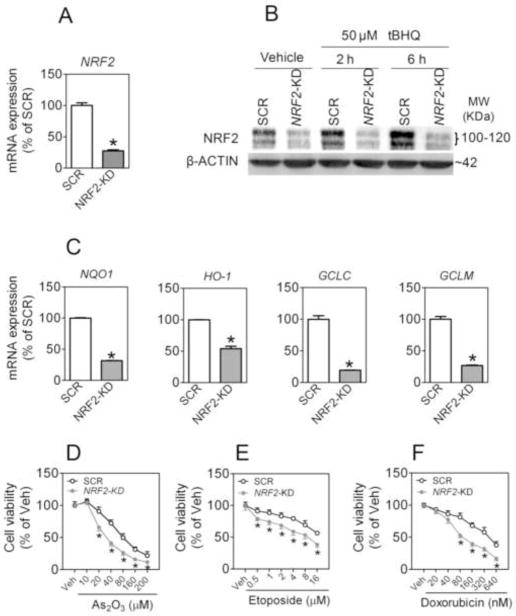
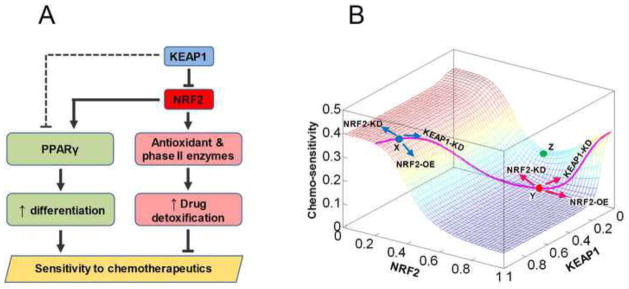
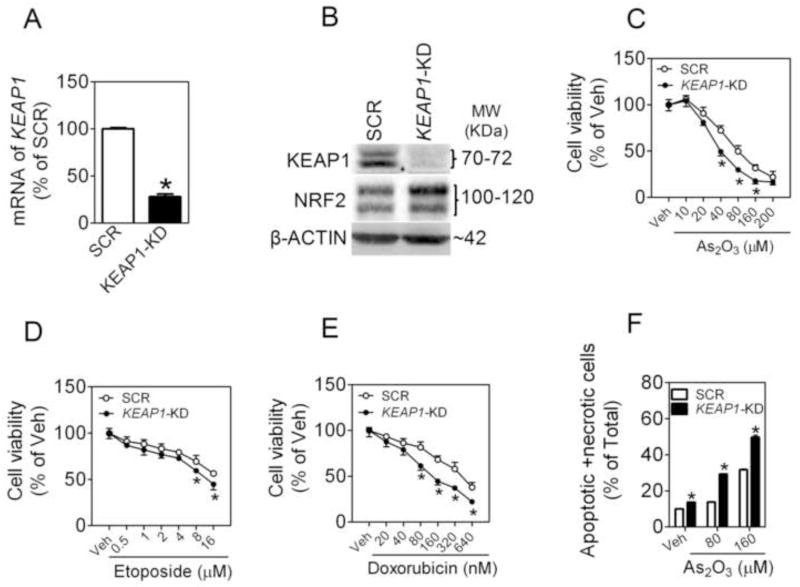
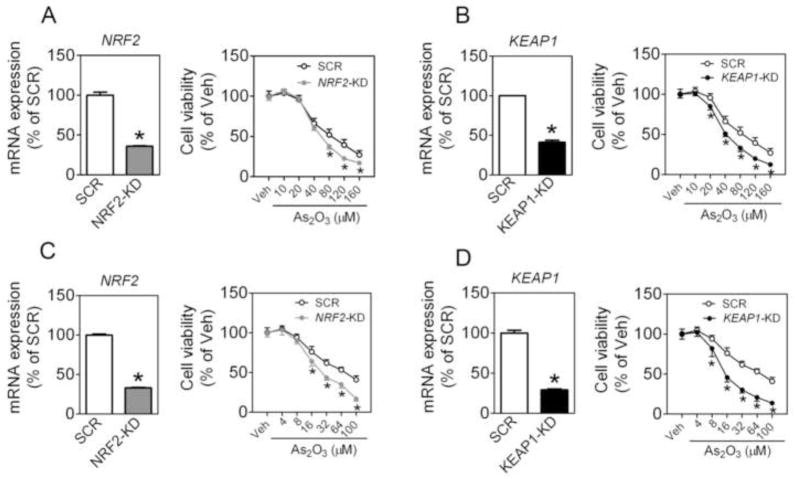
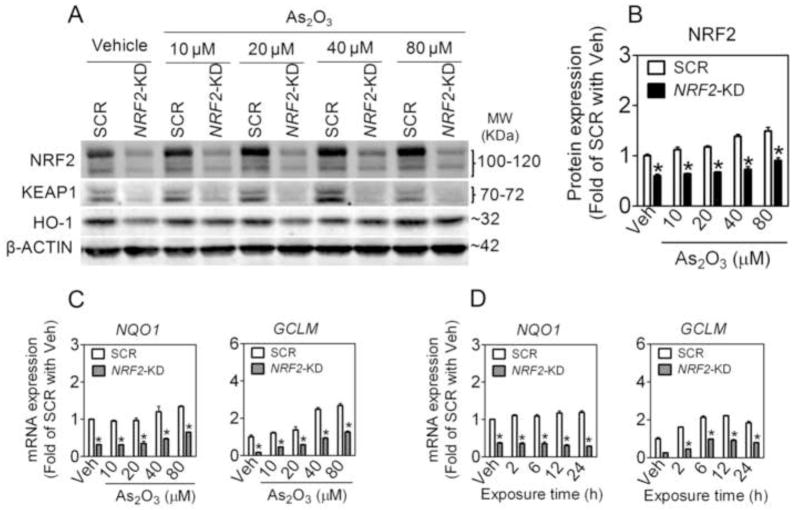
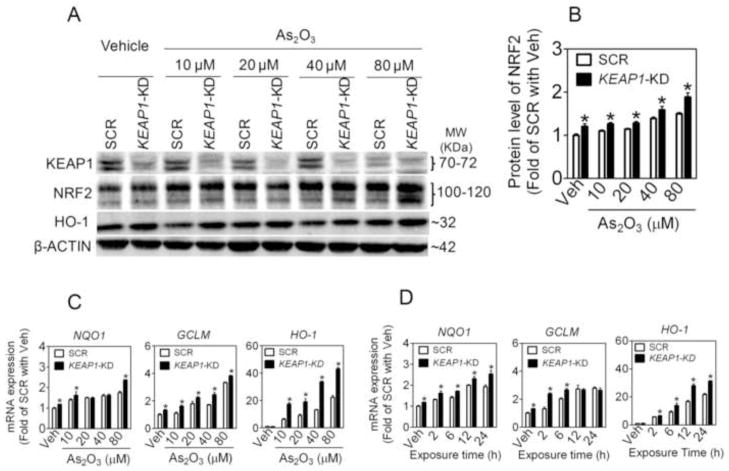
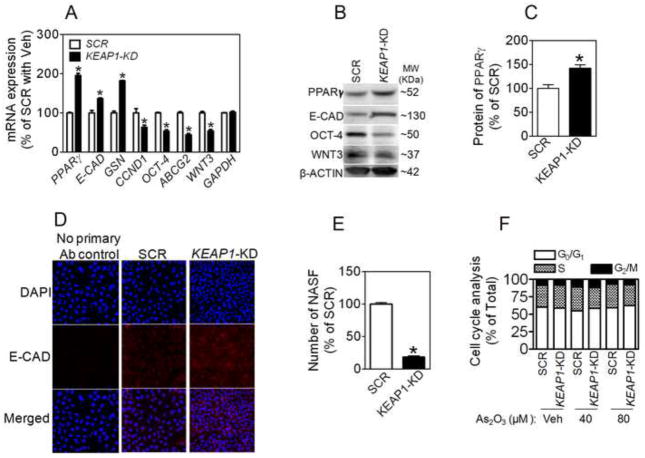
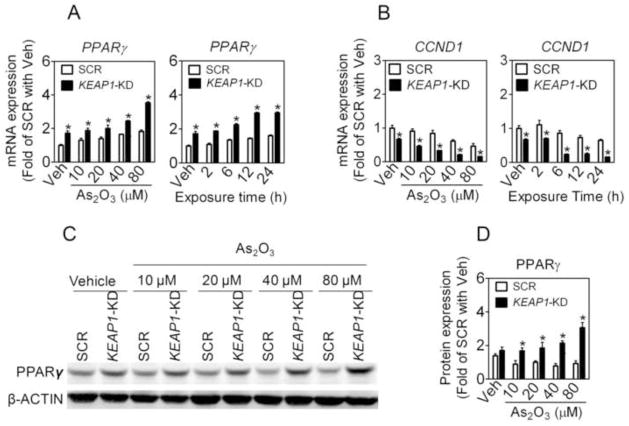
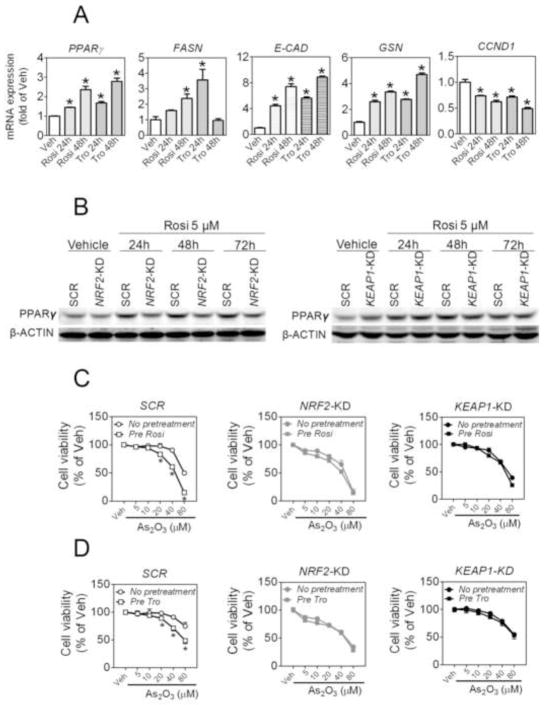
The nuclear factor-E2-related factor 2 (NRF2) serves as a master regulator in cellular defense against oxidative stress and chemical detoxification. However, persistent activation of NRF2 resulting from mutations in NRF2 and/or downregulation of or mutations in its suppressor, Kelch-like ECH-associated protein 1 (KEAP1), is associated with tumorigenicity and chemoresistance of non-small-cell lung carcinomas (NSCLCs). Thus, inhibiting the NRF2-mediated adaptive antioxidant response is widely considered a promising strategy to prevent tumor growth and reverse chemoresistance in NSCLCs. Unexpectedly, stable knockdown of KEAP1 by lentiviral shRNA sensitized three independent NSCLC cell lines (A549, HTB-178, and HTB-182) to multiple chemotherapeutic agents, including arsenic trioxide (As(2)O(3)), etoposide, and doxorubicin, despite moderately increased NRF2 levels. In lung adenocarcinoma epithelial A549 cells, silencing of KEAP1 augmented the expression of peroxisome proliferator-activated receptor γ (PPARγ) and genes associated with cell differentiation, including E-cadherin and gelsolin. In addition, KEAP1-knockdown A549 cells displayed attenuated expression of the proto-oncogene cyclin D1 and markers for cancer stem cells (CSCs) and reduced nonadherent sphere formation. Moreover, deficiency of KEAP1 led to elevated induction of PPARγ in response to As(2)O(3). Pretreatment of A549 cells with PPARγ agonists activated PPARγ and augmented the cytotoxicity of As(2)O(3). A mathematical model was formulated to advance a hypothesis that differential regulation of PPARγ and detoxification enzymes by KEAP1 and NRF2 may underpin the observed landscape changes in chemosensitivity. Collectively, suppression of KEAP1 expression in human NSCLC cells resulted in sensitization to chemotherapeutic agents, which may be attributed to activation of PPARγ and subsequent alterations in cell differentiation and CSC abundance.
核因子-E2 相关因子 2(NRF2)作为细胞抗氧化应激和化学解毒的主要调节剂。然而,由于 NRF2 中的突变以及其抑制剂 Kelch 样 ECH 相关蛋白 1(KEAP1)的下调或突变导致的 NRF2 的持续激活与非小细胞肺癌(NSCLC)的致瘤性和化学抗性有关。因此,抑制 NRF2 介导的适应性抗氧化反应被广泛认为是预防肿瘤生长和逆转 NSCLC 化学抗性的有前途的策略。出乎意料的是,通过慢病毒 shRNA 稳定敲低 KEAP1 使三种独立的 NSCLC 细胞系(A549、HTB-178 和 HTB-182)对包括三氧化二砷(As(2)O(3))、依托泊苷和多柔比星在内的多种化疗药物敏感,尽管 NRF2 水平略有升高。在肺腺癌上皮 A549 细胞中,KEAP1 的沉默增强了过氧化物酶体增殖物激活受体 γ(PPARγ)的表达以及与细胞分化相关的基因,包括 E-钙黏蛋白和凝胶蛋白。此外,KEAP1 敲低的 A549 细胞显示出原癌基因 cyclin D1 和癌症干细胞(CSC)标志物的表达减弱以及非贴壁球体形成减少。此外,KEAP1 的缺乏导致 PPARγ 在响应 As(2)O(3)时的诱导增加。用 PPARγ 激动剂预处理 A549 细胞可激活 PPARγ 并增强 As(2)O(3)的细胞毒性。制定了一个数学模型来提出一个假设,即 KEAP1 和 NRF2 对 PPARγ 和解毒酶的差异调节可能是观察到的化学敏感性景观变化的基础。总之,在人 NSCLC 细胞中抑制 KEAP1 的表达导致对化疗药物的敏感性增加,这可能归因于 PPARγ 的激活以及随后的细胞分化和 CSC 丰度的改变。