Department of Endocrinology, Key Laboratory of Endocrinology, Ministry of Health, Peking Union Medical College Hospital, Chinese Academy of Medical Sciences, Beijing, China.
PLoS One. 2012;7(6):e38643. doi: 10.1371/journal.pone.0038643. Epub 2012 Jun 7.
The WNT1-inducible signaling pathway protein 3 (WISP3), which belongs to the CCN (cysteine-rich protein 61, connective tissue growth factor, nephroblastoma overexpressed) family, is a secreted cysteine-rich matricellular protein that is involved in chondrogenesis, osteogenesis and tumorigenesis. WISP3 gene mutations are associated with progressive pseudorheumatoid dysplasia (PPD, OMIM208230), an autosomal recessive genetic disease that is characterized by the swelling of multiple joints and disproportionate dwarfism.
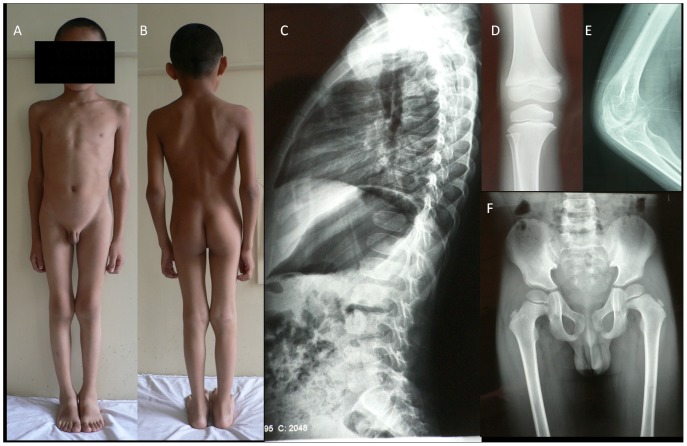
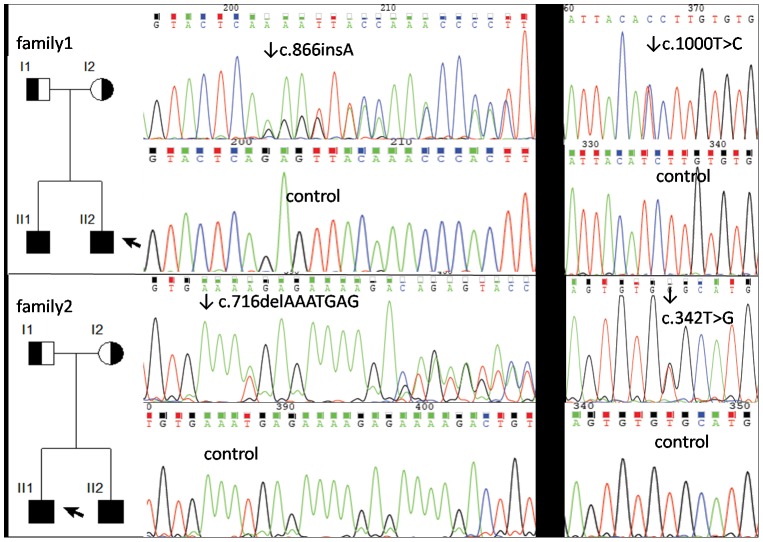
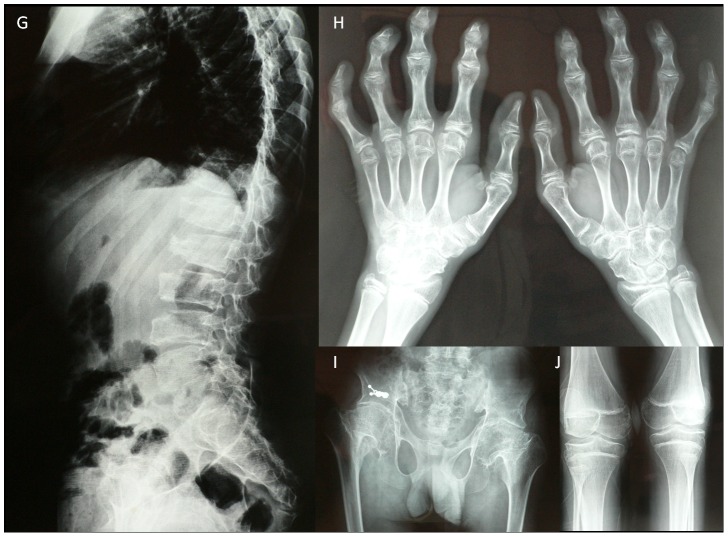
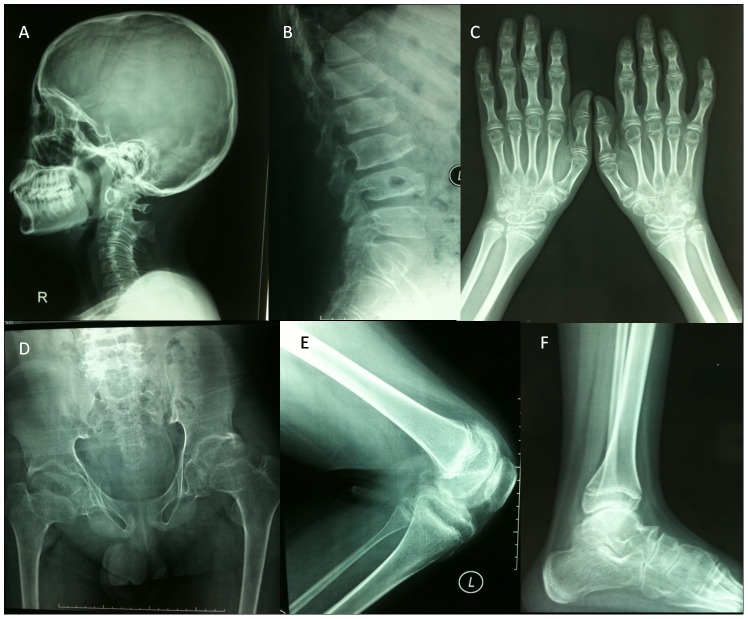
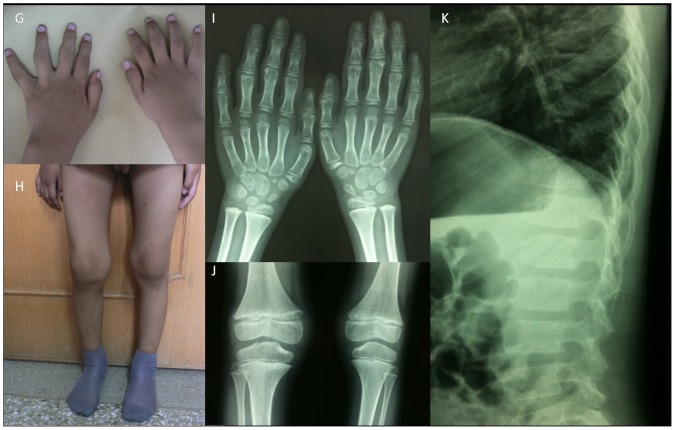
METHODOLOGY/PRINCIPAL FINDINGS: Four PPD patients from two unrelated Chinese families were recruited for this study. The clinical diagnosis was confirmed by medical history, physical examinations, laboratory results and radiological abnormalities. WISP3 mutations were detected by direct DNA sequence analysis. In total, four different mutations were identified, which consisted of two missense mutations, one deletion and one insertion that spanned exons 3, 5 and 6 of the WISP3 gene. One of the missense mutations (c.342T>G/p.C114W) and a seven-base pair frameshift deletion (c.716_722del/p.E239fs16) were novel. The other missense mutation (c.1000T>C/p. S334P) and the insertion mutation (c.866_867insA/p.Q289fs31) had previously been identified in Chinese patients. All four cases had a compound heterozygous status, and their parents were heterozygous carriers of these mutations.
CONCLUSIONS/SIGNIFICANCE: The results of our study expand the spectrum of WISP3 mutations that are associated with PPD and further elucidate the function of WISP3.
WNT1 诱导信号通路蛋白 3(WISP3)属于 CCN(富含半胱氨酸蛋白 61、结缔组织生长因子、肾母细胞瘤过表达)家族,是一种分泌的富含半胱氨酸的基质细胞蛋白,参与软骨生成、成骨和肿瘤发生。WISP3 基因突变与进行性假风湿性发育不良(PPD,OMIM208230)有关,这是一种常染色体隐性遗传疾病,其特征为多个关节肿胀和不成比例的矮小。
方法/主要发现:本研究招募了来自两个无关的中国家庭的 4 名 PPD 患者。临床诊断通过病史、体格检查、实验室结果和影像学异常得到确认。通过直接 DNA 序列分析检测 WISP3 突变。总共鉴定出四种不同的突变,包括两个错义突变、一个缺失和一个跨越 WISP3 基因外显子 3、5 和 6 的插入。其中一个错义突变(c.342T>G/p.C114W)和一个 7 个碱基对的移码缺失(c.716_722del/p.E239fs16)是新发现的。另一个错义突变(c.1000T>C/p.S334P)和插入突变(c.866_867insA/p.Q289fs31)之前在中国患者中已被发现。这四个病例均为复合杂合状态,其父母均为这些突变的杂合携带者。
结论/意义:我们的研究结果扩展了与 PPD 相关的 WISP3 突变谱,并进一步阐明了 WISP3 的功能。