Vishnubhotla Ramana, Bharadwaj Shruthi, Sun Shan, Metlushko Vitali, Glover Sarah C
Department of Bioengineering, University of Illinois at Chicago, Chicago, IL 60612, USA.
Int J Cell Biol. 2012;2012:259142. doi: 10.1155/2012/259142. Epub 2012 May 29.
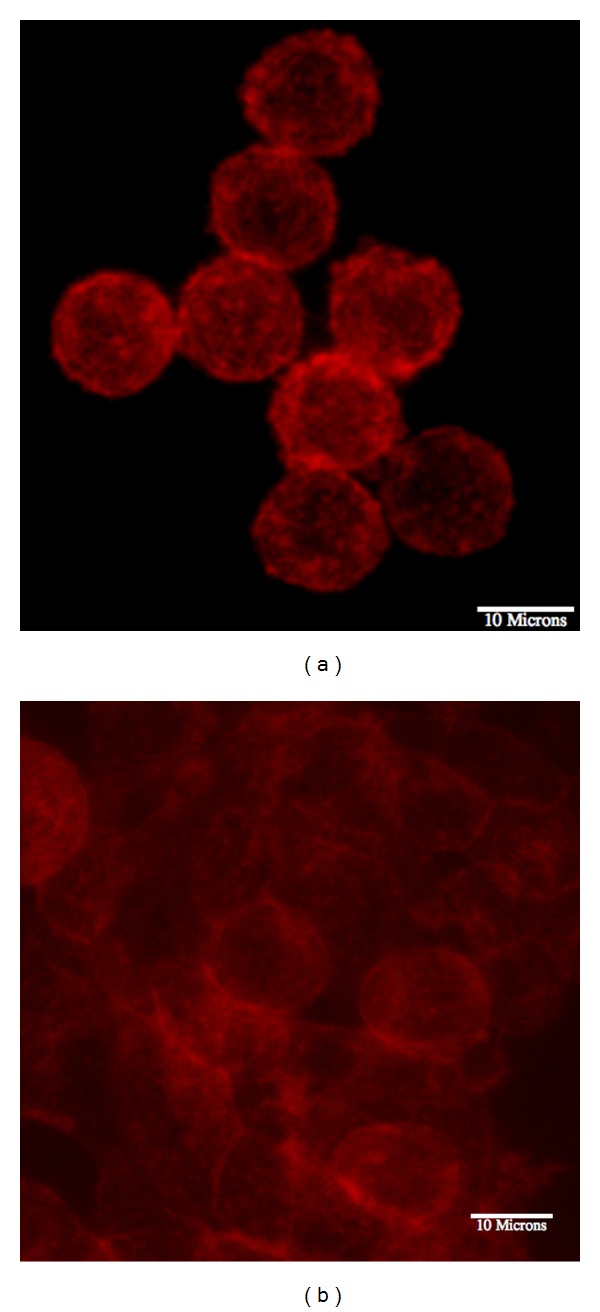
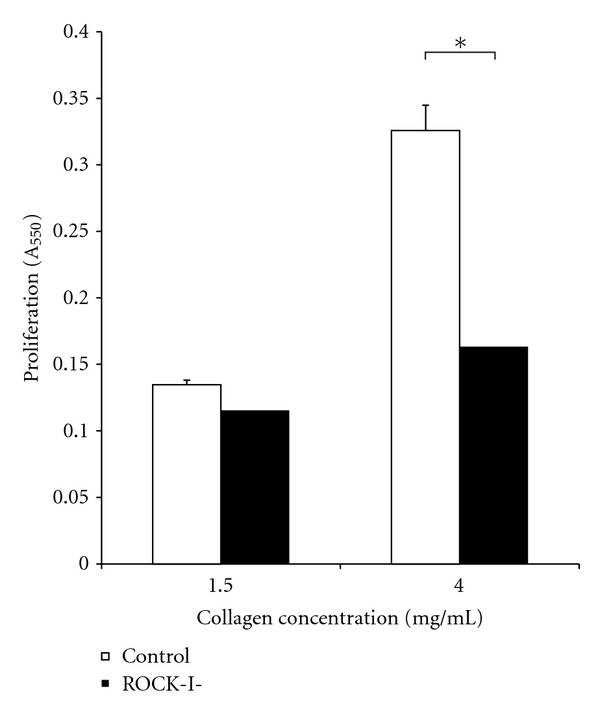
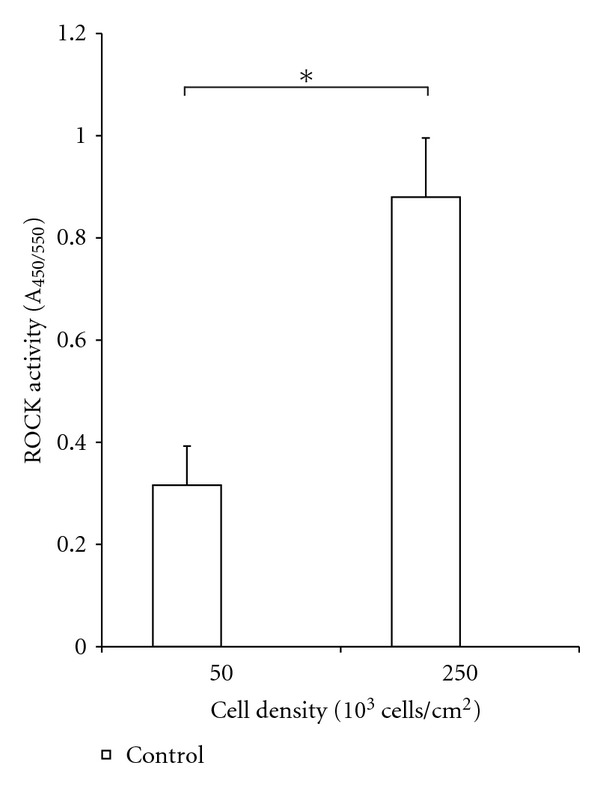
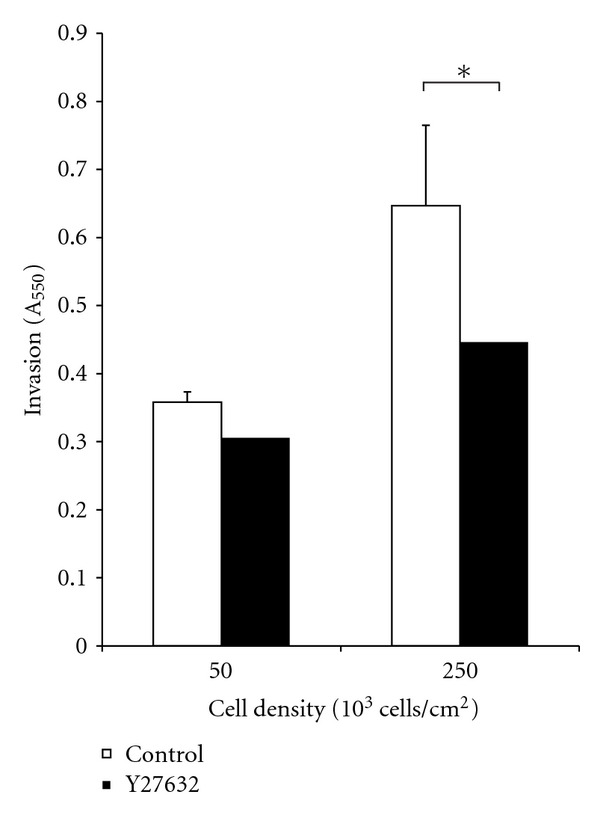
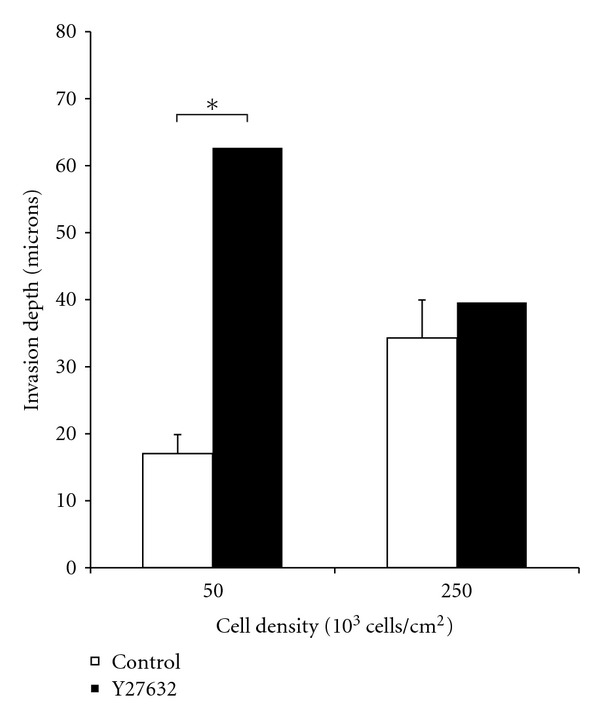
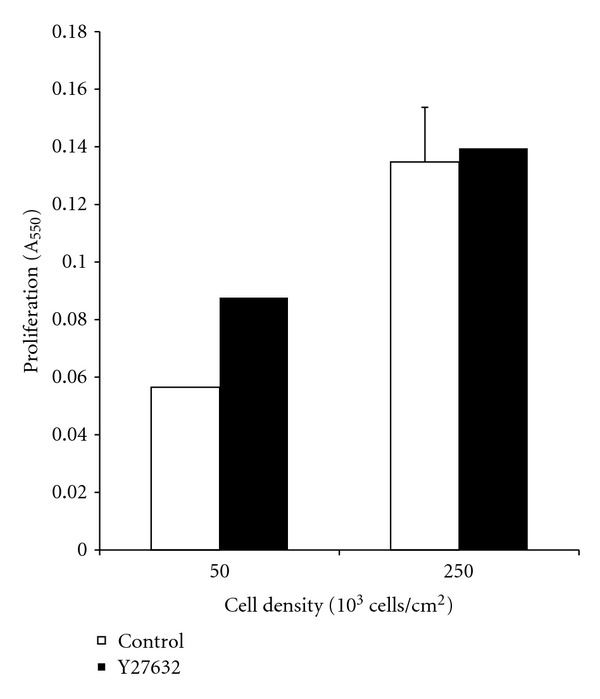
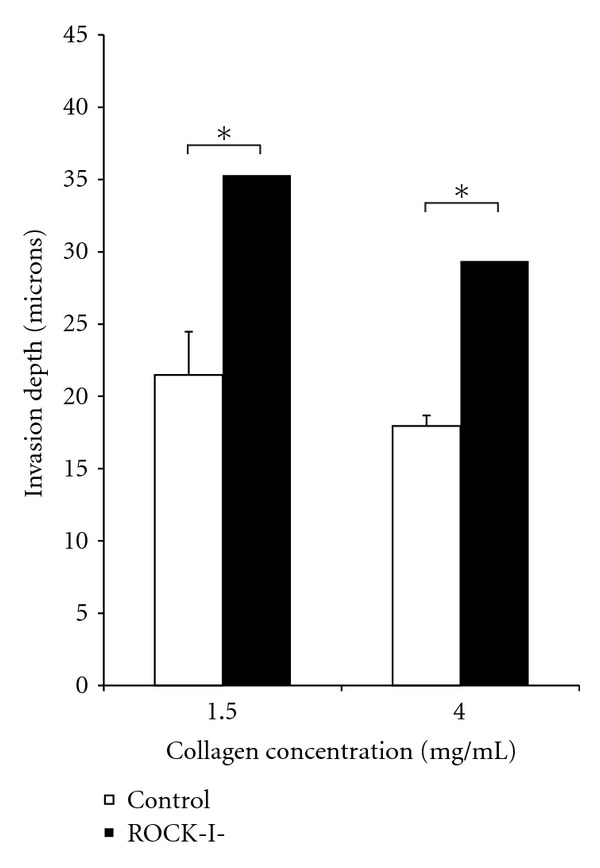
The concept of using tissue density as a mechanism to diagnose a tumor has been around for centuries. However, this concept has not been sufficiently explored in a laboratory setting. Therefore, in this paper, we observed the effects of cell density and extracellular matrix (ECM) density on colon cancer invasion and proliferation using SW620 cells. We also attempted to inhibit ROCK-I to determine its effect on cell invasion and proliferation using standard molecular biology techniques and advanced imaging. Increasing cell seeding density resulted in a 2-fold increase in cell invasion as well as cell proliferation independent of treatment with Y-27632. Increasing collagen I scaffold density resulted in a 2.5-fold increase in cell proliferation while treatment with Y-27632 attenuated this effect although 1.5 fold increase in cell invasion was observed in ROCK inhibited samples. Intriguingly, ROCK inhibition also resulted in a 3.5-fold increase in cell invasion within 3D collagen scaffolds for cells seeded at lower densities. We show in this paper that ROCK-I inhibition leads to increased invasion within 3D collagen I microenvironments. This data suggests that although ROCK inhibitors have been used clinically to treat several medical conditions, its effect largely depends on the surrounding microenvironment.
利用组织密度作为诊断肿瘤的机制这一概念已经存在了几个世纪。然而,这一概念在实验室环境中尚未得到充分探索。因此,在本文中,我们使用SW620细胞观察了细胞密度和细胞外基质(ECM)密度对结肠癌侵袭和增殖的影响。我们还试图抑制ROCK-I,以使用标准分子生物学技术和先进成像来确定其对细胞侵袭和增殖的影响。增加细胞接种密度导致细胞侵袭以及细胞增殖增加了2倍,这与Y-27632处理无关。增加I型胶原支架密度导致细胞增殖增加了2.5倍,而用Y-27632处理减弱了这种效应,尽管在ROCK抑制的样本中观察到细胞侵袭增加了1.5倍。有趣的是,对于接种密度较低的细胞,ROCK抑制还导致在3D胶原支架内细胞侵袭增加了3.5倍。我们在本文中表明,抑制ROCK-I会导致在3D I型胶原微环境中侵袭增加。这些数据表明,尽管ROCK抑制剂已在临床上用于治疗多种病症,但其效果在很大程度上取决于周围的微环境。