Respiratory Pharmacology Group, Pharmacology and Toxicology Section, National Heart and Lung Institute, Faculty of Medicine, Imperial College London, Exhibition Road, London SW7 2AZ, UK.
Thorax. 2012 Oct;67(10):891-900. doi: 10.1136/thoraxjnl-2011-201443. Epub 2012 Jun 12.
Cough is the most frequent reason for consultation with a family doctor, or with a general or respiratory physician. Treatment options are limited and a recent meta-analysis concluded that over-the-counter remedies are ineffective and there is increasing concern about their use in children. Endogenous inflammatory mediators such as prostaglandin E2 (PGE2) and bradykinin (BK), which are often elevated in respiratory disease states, are also known to cause cough by stimulating airway sensory nerves. However, how this occurs is not understood.
We hypothesised that the transient receptor potential (TRP) channels, TRPA1 and TRPV1, may have a role as 'common effectors' of tussive responses to these agents. We have employed a range of in vitro imaging and isolated tissue assays in human, murine and guinea pig tissue and an in vivo cough model to support this hypothesis.
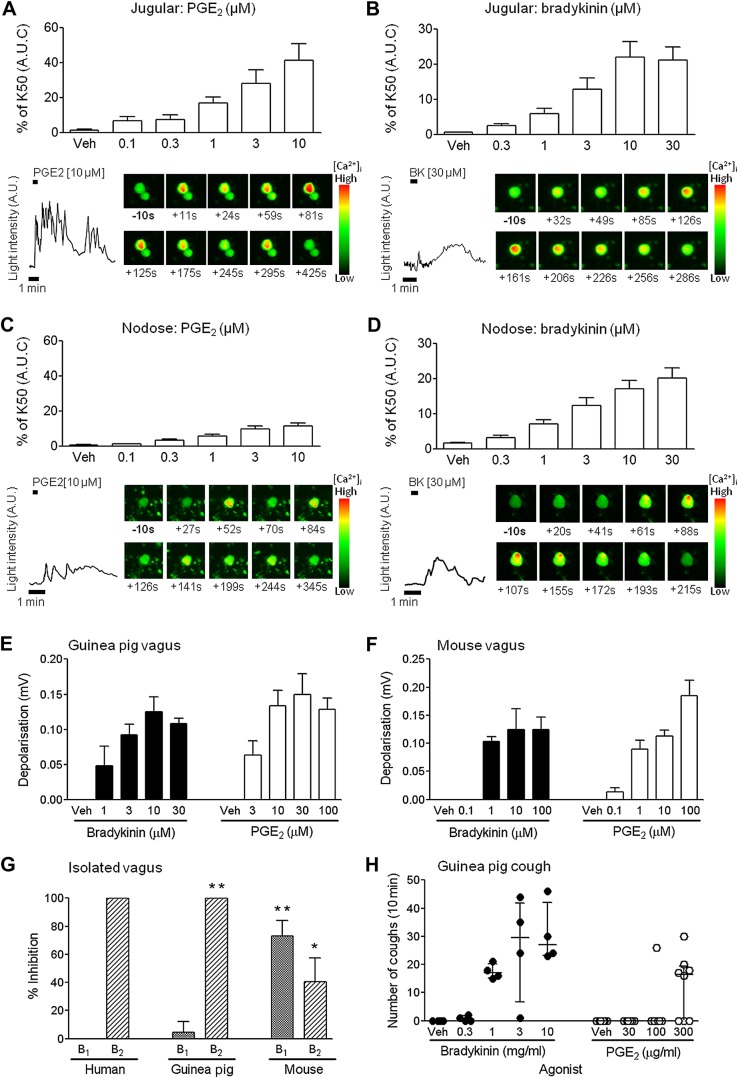
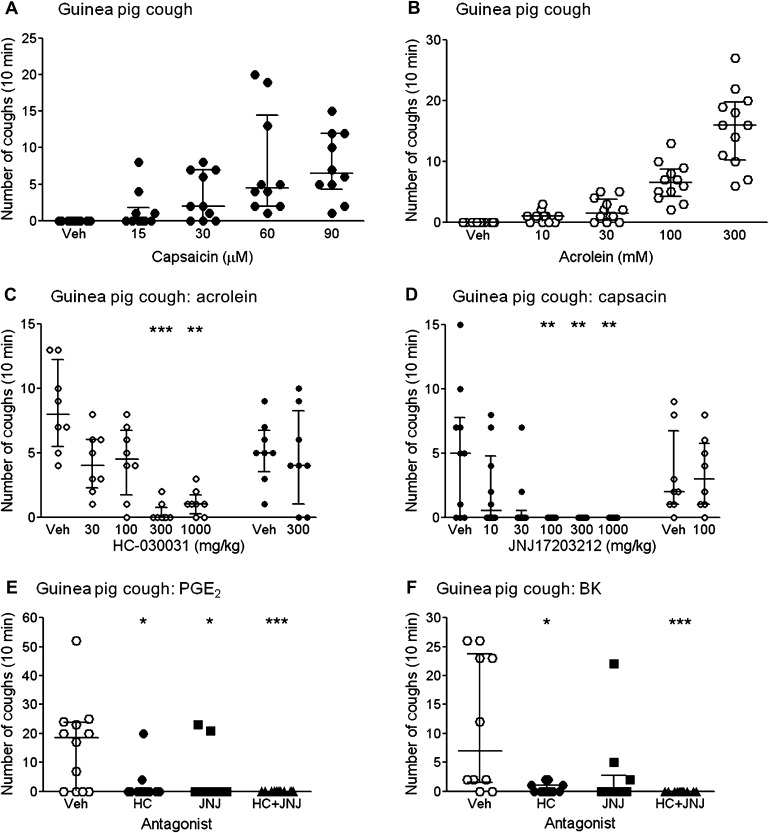
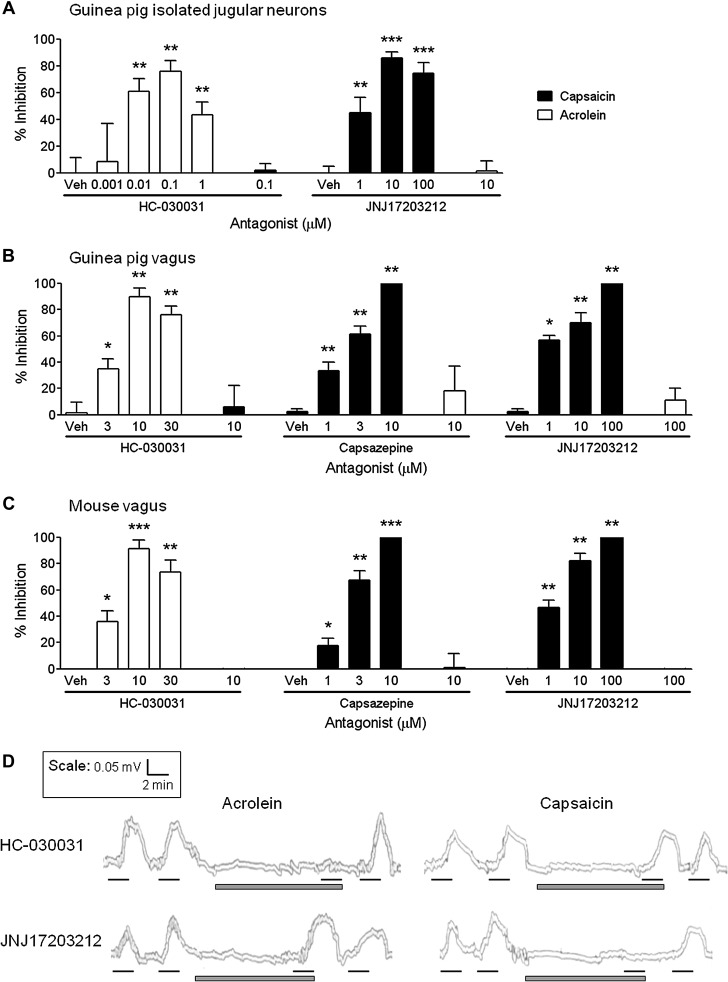
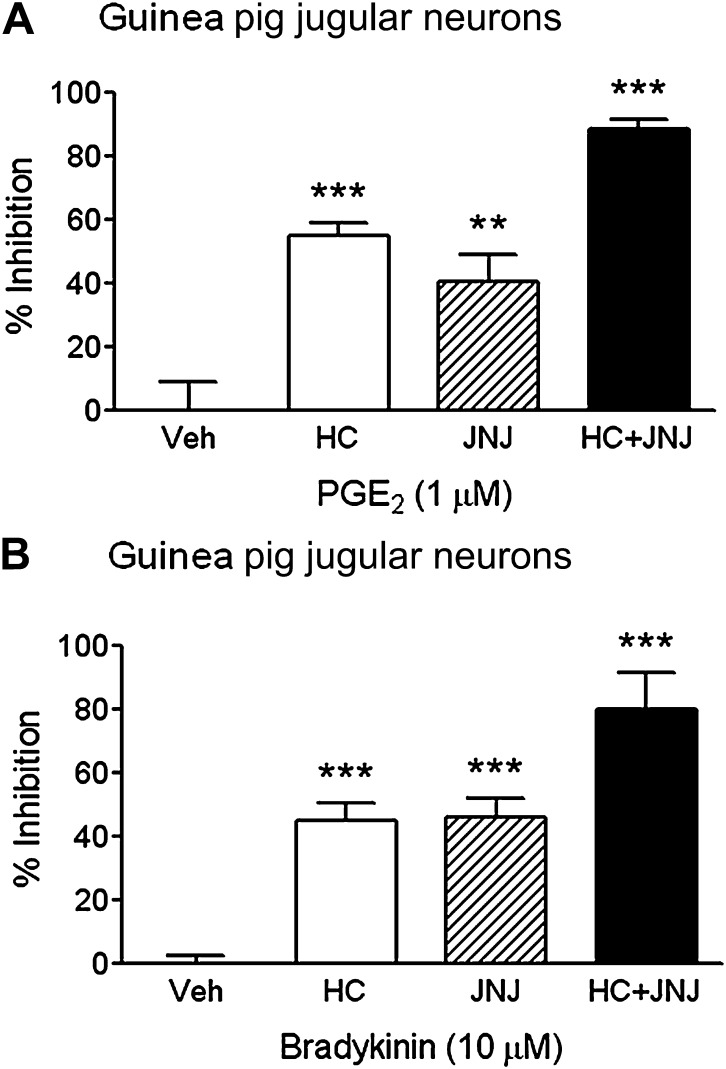
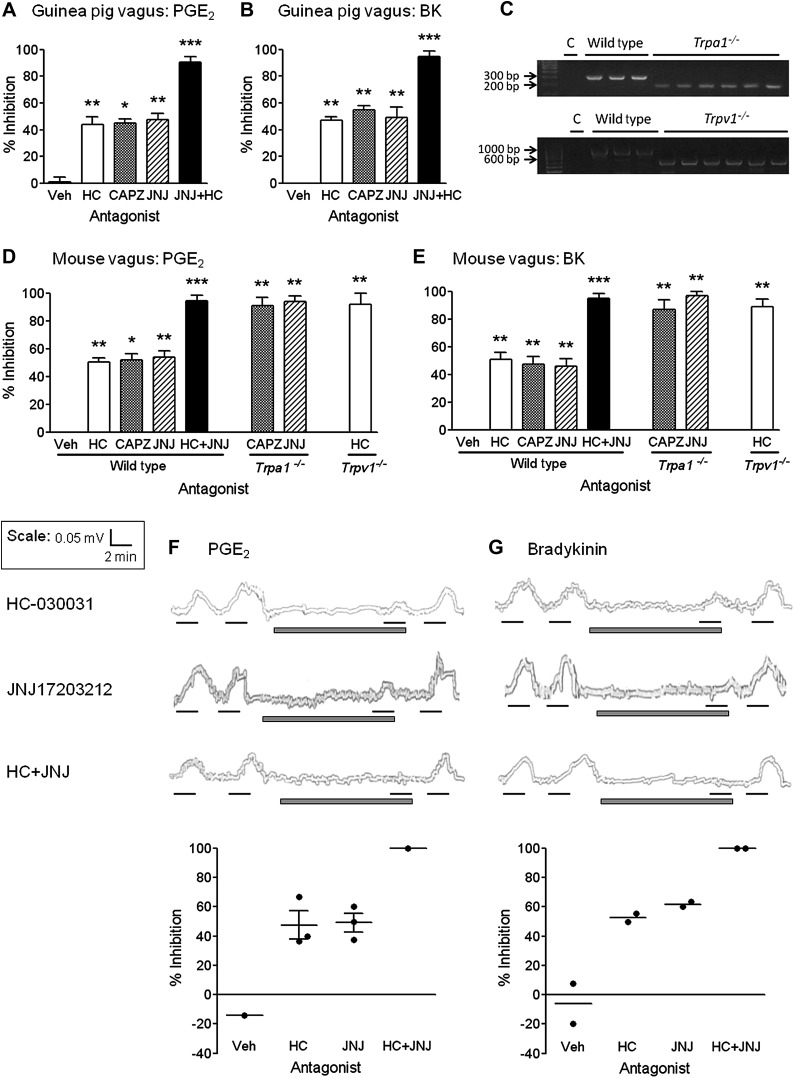
Using calcium imaging we demonstrated that PGE2 and BK activated isolated guinea pig sensory ganglia and evoked depolarisation (activation) of vagal sensory nerves, which was inhibited by TRPA1 and TRPV1 blockers (JNJ17203212 and HC-030031). These data were confirmed in vagal sensory nerves from TRPA1 and TRPV1 gene deleted mice. TRPV1 and TRPA1 blockers partially inhibited the tussive response to PGE2 and BK with a complete inhibition obtained in the presence of both antagonists together in a guinea pig conscious cough model.
This study identifies TRPA1 and TRPV1 channels as key regulators of tussive responses elicited by endogenous and exogenous agents, making them the most promising targets currently identified in the development of anti-tussive drugs.
咳嗽是家庭医生、全科医生或呼吸科医生接诊最常见的原因。治疗选择有限,最近的一项荟萃分析得出结论,非处方药物无效,而且人们越来越担心这些药物在儿童中的使用。内源性炎症介质,如前列腺素 E2(PGE2)和缓激肽(BK),在呼吸道疾病状态下通常升高,也被认为通过刺激气道感觉神经引起咳嗽。然而,其发生机制尚不清楚。
我们假设瞬时受体电位(TRP)通道 TRPA1 和 TRPV1 可能作为这些药物致咳反应的“共同效应器”发挥作用。我们使用了一系列体外成像和分离组织测定法,在人类、鼠类和豚鼠组织以及体内咳嗽模型中,支持了这一假设。
我们通过钙成像技术证明,PGE2 和 BK 激活了分离的豚鼠感觉神经节,并引起迷走感觉神经的去极化(激活),TRPA1 和 TRPV1 阻滞剂(JNJ17203212 和 HC-030031)可抑制这种反应。TRPA1 和 TRPV1 基因缺失小鼠的迷走感觉神经证实了这些数据。TRPV1 和 TRPA1 阻滞剂部分抑制了 PGE2 和 BK 的咳嗽反应,在豚鼠清醒咳嗽模型中,同时使用两种拮抗剂可完全抑制咳嗽反应。
本研究确定 TRPA1 和 TRPV1 通道是内源性和外源性药物引起咳嗽反应的关键调节剂,使它们成为目前在开发镇咳药物中最有希望的靶点。