Respiratory Pharmacology, National Heart and Lung Institute, Faculty of Medicine, Imperial College London, London, United Kingdom.
Respiratory Pharmacology, National Heart and Lung Institute, Faculty of Medicine, Imperial College London, London, United Kingdom.
J Allergy Clin Immunol. 2014 Mar;133(3):679-87.e9. doi: 10.1016/j.jaci.2013.12.003. Epub 2014 Feb 5.
Recent studies have suggested that the long-acting muscarinic receptor antagonist tiotropium, a drug widely prescribed for its bronchodilator activity in patients with chronic obstructive pulmonary disease and asthma, improves symptoms and attenuates cough in preclinical and clinical tussive agent challenge studies. The mechanism by which tiotropium modifies tussive responses is not clear, but an inhibition of vagal tone and a consequent reduction in mucus production from submucosal glands and bronchodilation have been proposed.
The aim of this study was to investigate whether tiotropium can directly modulate airway sensory nerve activity and thereby the cough reflex.
We used a conscious cough model in guinea pigs, isolated vagal sensory nerve and isolated airway neuron tissue- and cell-based assays, and in vivo single-fiber recording electrophysiologic techniques.
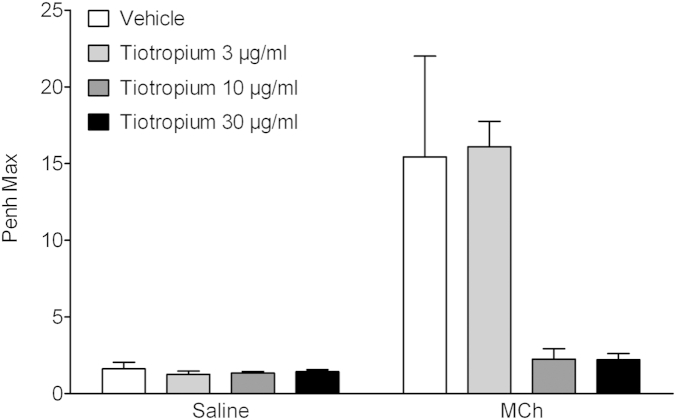
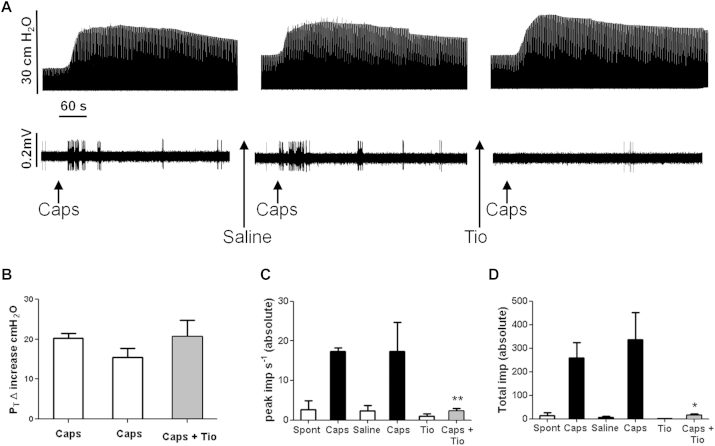
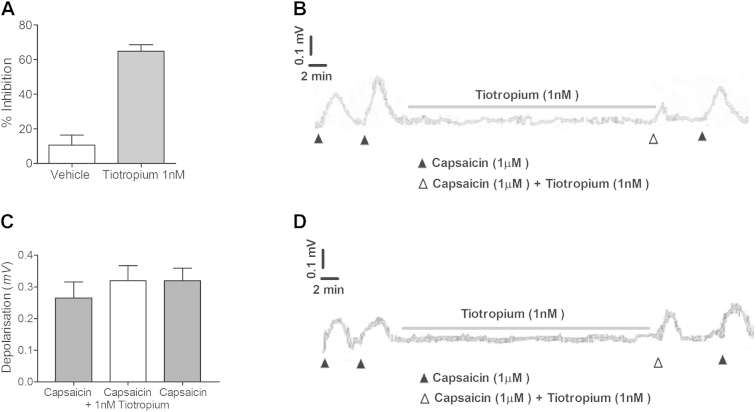
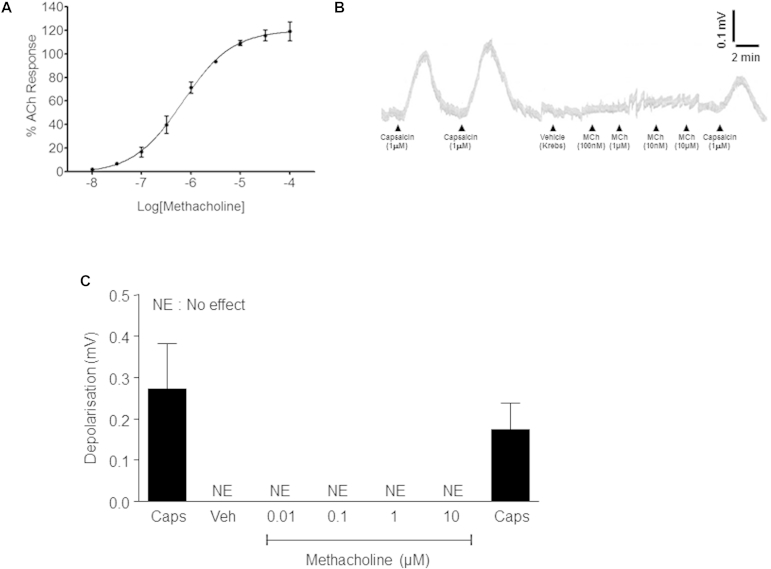
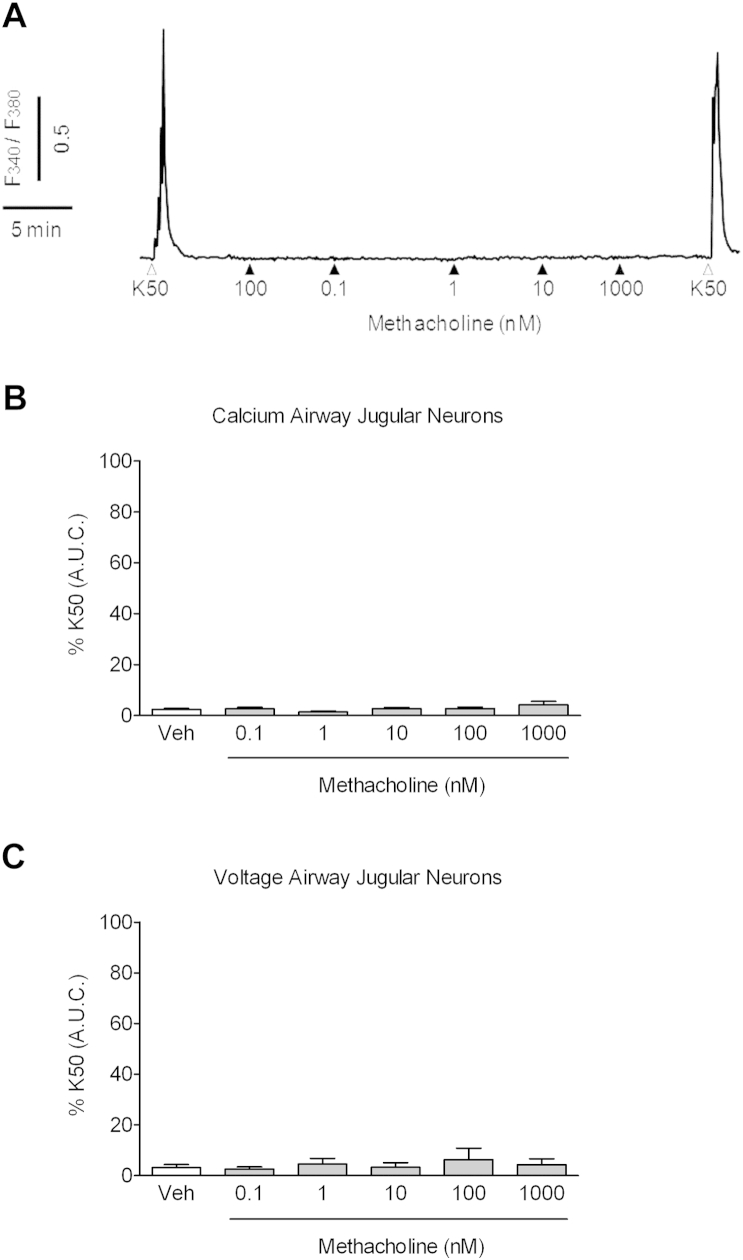
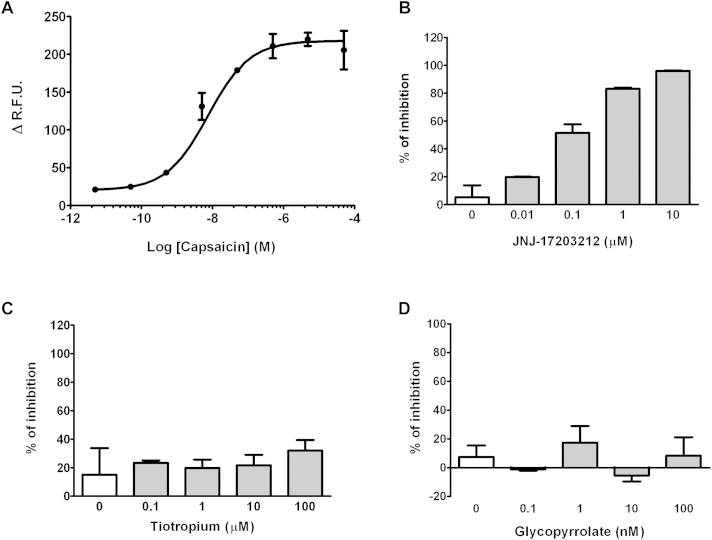
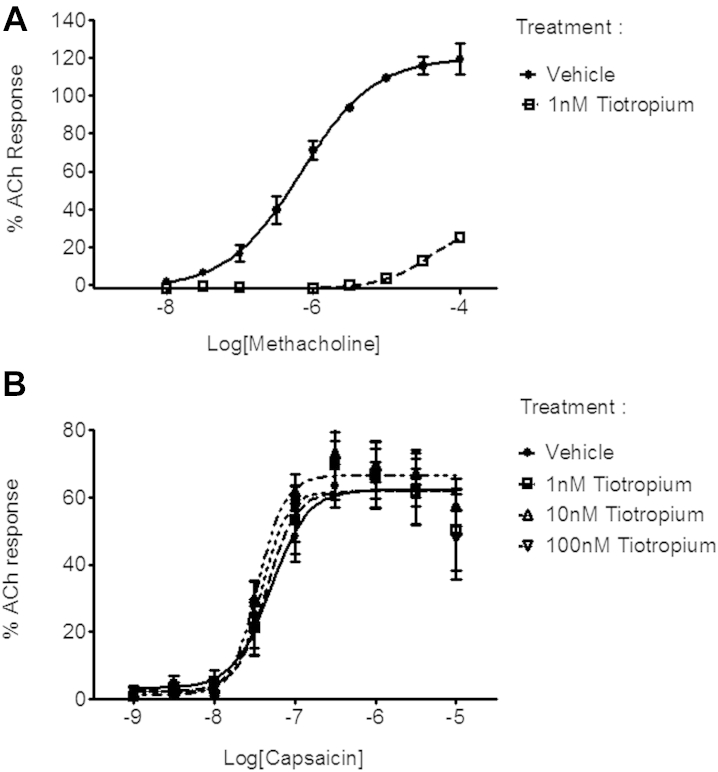
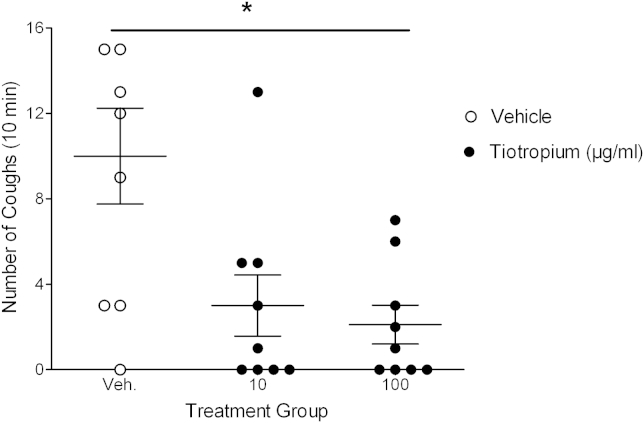
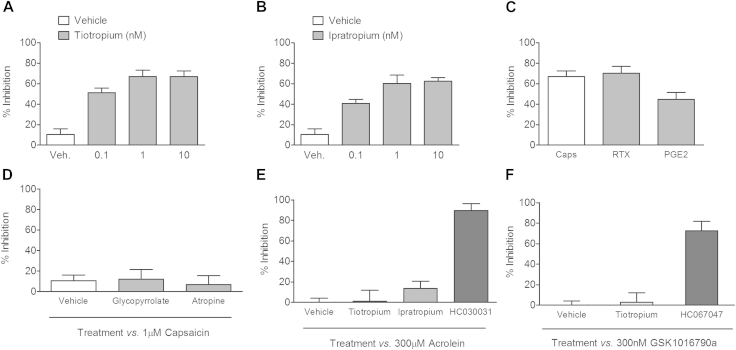
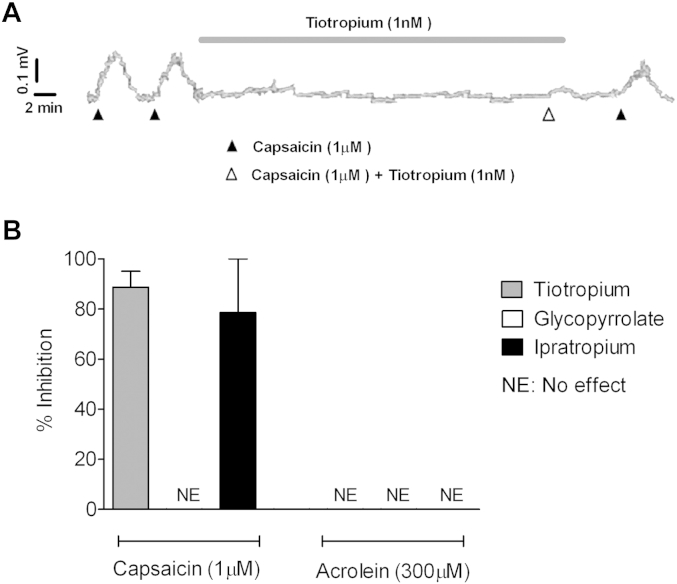
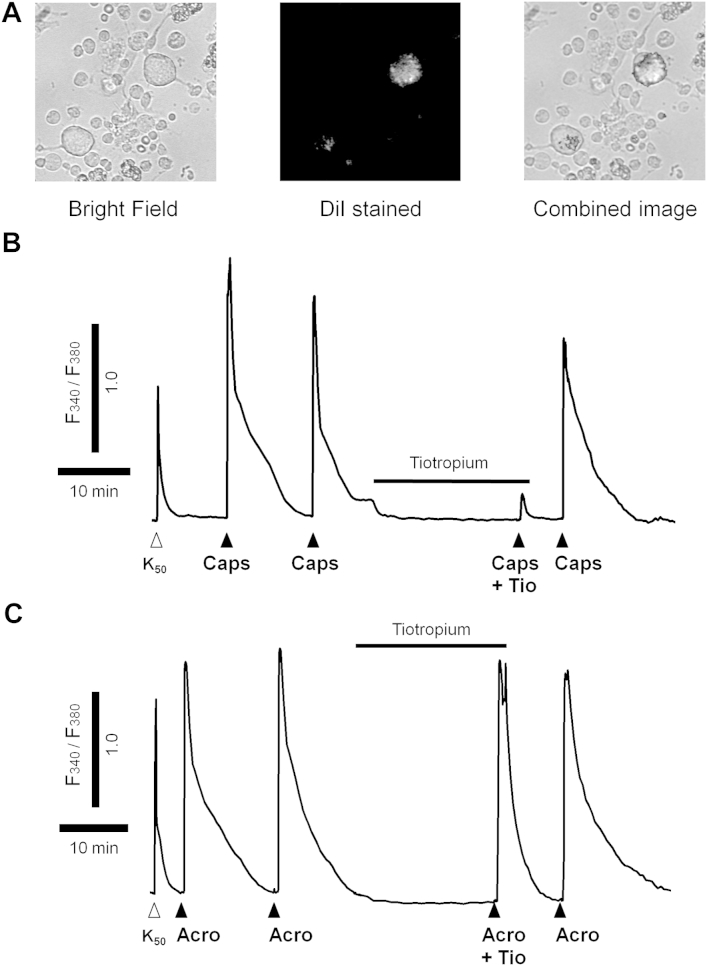
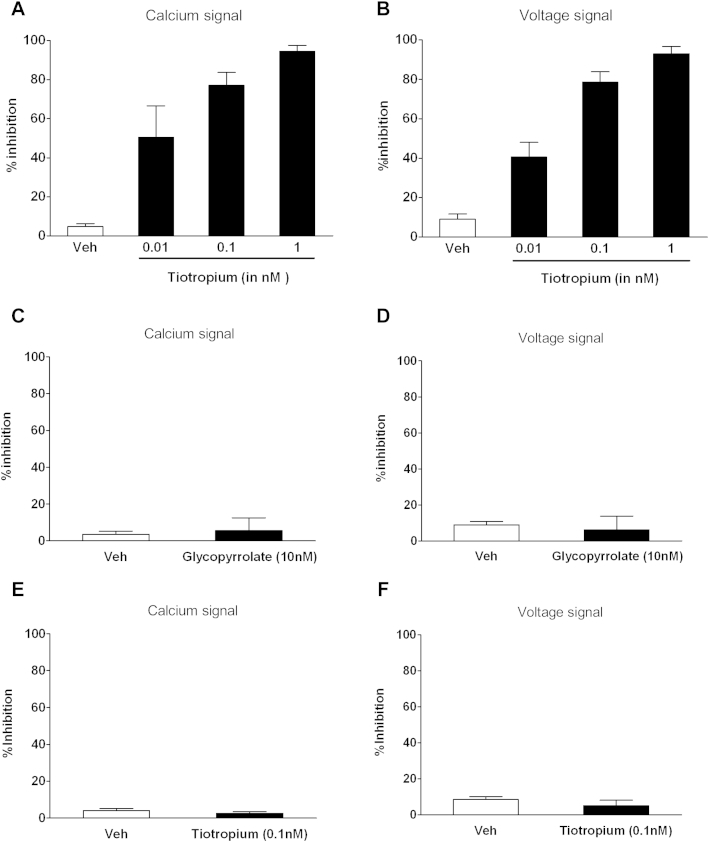
Inhaled tiotropium blocked cough and single C-fiber firing in the guinea pig to the transient receptor potential (TRP) V1 agonist capsaicin, a clinically relevant tussive stimulant. Tiotropium and ipratropium, a structurally similar muscarinic antagonist, inhibited capsaicin responses in isolated guinea pig vagal tissue, but glycopyrrolate and atropine did not. Tiotropium failed to modulate other TRP channel-mediated responses. Complementary data were generated in airway-specific primary ganglion neurons, demonstrating that tiotropium inhibited capsaicin-induced, but not TRPA1-induced, calcium movement and voltage changes.
For the first time, we have shown that tiotropium inhibits neuronal TRPV1-mediated effects through a mechanism unrelated to its anticholinergic activity. We speculate that some of the clinical benefit associated with taking tiotropium (eg, in symptom control) could be explained through this proposed mechanism of action.
最近的研究表明,长效毒蕈碱受体拮抗剂噻托溴铵,一种因其在慢性阻塞性肺疾病和哮喘患者中的支气管扩张活性而广泛处方的药物,可改善症状并在临床咳嗽刺激物挑战研究中减轻咳嗽。噻托溴铵调节咳嗽反应的机制尚不清楚,但有人提出抑制迷走神经张力,从而减少粘膜下腺体的粘液分泌和支气管扩张。
本研究旨在探讨噻托溴铵是否可以直接调节气道感觉神经活动,从而调节咳嗽反射。
我们使用豚鼠清醒咳嗽模型、分离的迷走感觉神经和分离的气道神经元组织和细胞基础测定以及体内单纤维记录电生理技术。
吸入噻托溴铵可阻断豚鼠对瞬时受体电位(TRP)V1 激动剂辣椒素的咳嗽和单个 C 纤维放电,辣椒素是一种临床相关的刺激性咳嗽刺激物。噻托溴铵和异丙托溴铵,一种结构相似的毒蕈碱拮抗剂,抑制了分离的豚鼠迷走神经组织中的辣椒素反应,但呱吡丙胺和阿托品则没有。噻托溴铵未能调节其他 TRP 通道介导的反应。在气道特异性原代神经节神经元中生成了补充数据,表明噻托溴铵抑制了辣椒素诱导的,但不抑制 TRPA1 诱导的钙运动和电压变化。
我们首次表明,噻托溴铵通过与抗胆碱能活性无关的机制抑制神经元 TRPV1 介导的作用。我们推测,服用噻托溴铵(例如在控制症状方面)所带来的一些临床益处可以通过这种拟议的作用机制来解释。