Department of Cardiology, Shanghai Tenth People's Hospital, Tongji University, School of Medicine, Shanghai, China.
Cardiovasc Diabetol. 2012 Jun 13;11:65. doi: 10.1186/1475-2840-11-65.
Previous studies suggested that the RhoA/ROCK pathway may contribute to vascular complications in diabetes. The present study was designed to investigate whether ROCK inhibitor fasudil could prevent high glucose-induced monocyte-endothelial cells adhesion, and whether this was related to fasudil effects on vascular endothelial cell expression of chemotactic factors, vascular cell adhesion molecule-1 (VCAM-1) and monocyte chemoattractant protein-1 (MCP-1).
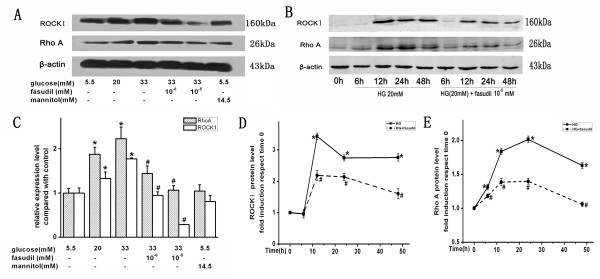
HUVECs were stimulated with high glucose (HG) or HG + fasudil in different concentration or different time. Monocyte-endothelial cell adhesion was determined using fluorescence-labeled monocytes. The mRNA and protein expression of VCAM-1 and MCP-1 were measured using real-time PCR and western blot. The protein levels of RhoA, ROCKI and p-MYPT were determined using western blot analysis. ELISA was employed to measure the expression of soluble VCAM-1 and MCP-1 in cell supernatants and human serum samples.
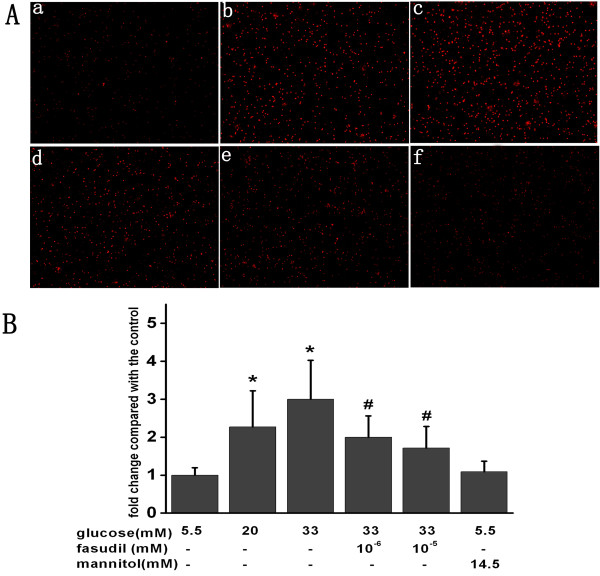
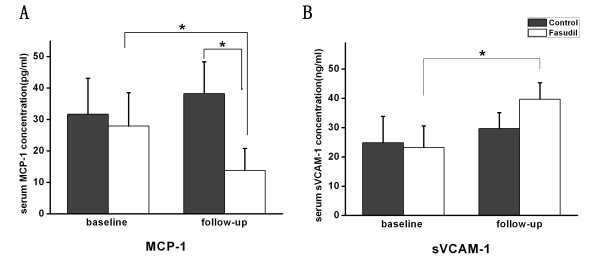
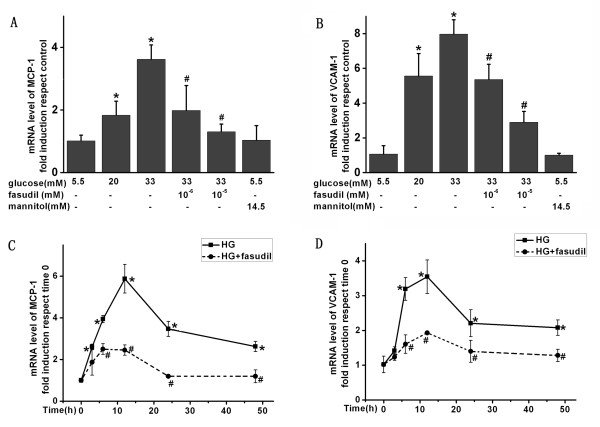
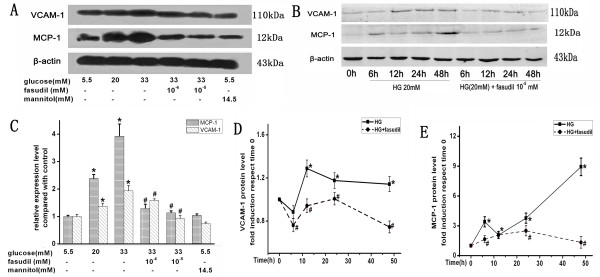
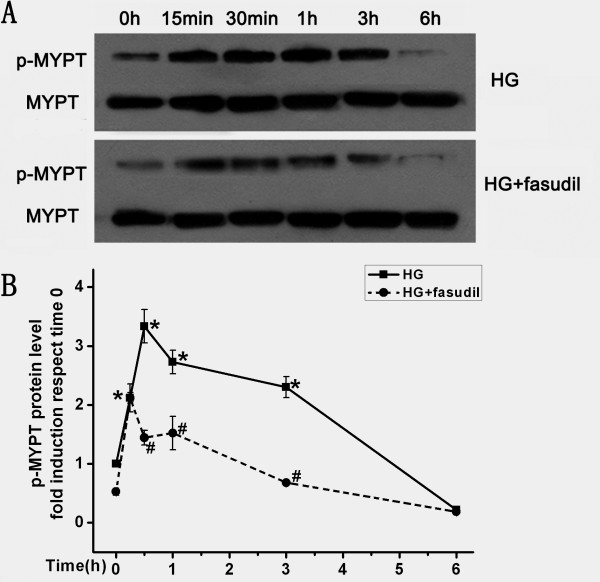
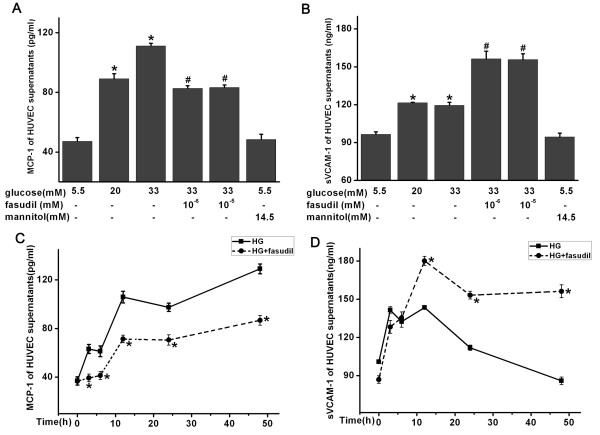
Fasudil significantly suppressed HG-induced adhesion of THP-1 to HUVECs. Fasudil reduced Rho/ROCK activity (as indicated by lower p-MYPT/MYPT ratio), and prevented HG induced increases in VCAM-1 and MCP-1 mRNA and protein levels. Fasudil also decreased MCP-1 concentration in HUVEC supernatants, but increased sVCAM-1 shedding into the media. In human diabetic subjects, 2 weeks of fasudil treatment significantly decreased serum MCP-1 level from 27.9 ± 10.6 pg/ml to 13.8 ± 7.0 pg/ml (P < 0.05), while sVCAM-1 increased from 23.2 ± 7.5 ng/ml to 39.7 ± 5.6 ng/ml after fasudil treatment (P < 0.05).
Treatment with the Rho/ROCK pathway inhibitor fasudil attenuated HG-induced monocyte-endothelial cell adhesion, possibly by reducing endothelial expression of VCAM-1 and MCP-1. These results suggest inhibition of Rho/ROCK signaling may have therapeutic potential in preventing diabetes associated vascular inflammation and atherogenesis.
先前的研究表明 RhoA/ROCK 通路可能与糖尿病中的血管并发症有关。本研究旨在探讨 ROCK 抑制剂法舒地尔是否可以预防高糖诱导的单核细胞-内皮细胞黏附,以及这种作用是否与法舒地尔对血管内皮细胞趋化因子、血管细胞黏附分子-1(VCAM-1)和单核细胞趋化蛋白-1(MCP-1)表达的影响有关。
用高浓度葡萄糖(HG)或不同浓度或时间的 HG+法舒地尔刺激 HUVECs。用荧光标记的单核细胞测定单核细胞-内皮细胞黏附。采用实时 PCR 和 Western blot 测定 VCAM-1 和 MCP-1 的 mRNA 和蛋白表达。采用 Western blot 分析测定 RhoA、ROCKI 和 p-MYPT 的蛋白水平。采用 ELISA 测定细胞上清液和人血清样本中可溶性 VCAM-1 和 MCP-1 的表达。
法舒地尔显著抑制了 HG 诱导的 THP-1 与 HUVECs 的黏附。法舒地尔降低了 Rho/ROCK 活性(表现为 p-MYPT/MYPT 比值降低),并防止了 HG 诱导的 VCAM-1 和 MCP-1 mRNA 和蛋白水平的增加。法舒地尔还降低了 HUVEC 上清液中的 MCP-1 浓度,但增加了 sVCAM-1 向培养基中的释放。在糖尿病患者中,法舒地尔治疗 2 周后,血清 MCP-1 水平从 27.9±10.6 pg/ml 显著降低至 13.8±7.0 pg/ml(P<0.05),而 sVCAM-1 从 23.2±7.5 ng/ml 增加至 39.7±5.6 ng/ml(P<0.05)。
Rho/ROCK 通路抑制剂法舒地尔治疗可减轻 HG 诱导的单核细胞-内皮细胞黏附,可能是通过降低内皮细胞 VCAM-1 和 MCP-1 的表达。这些结果表明抑制 Rho/ROCK 信号可能具有预防糖尿病相关血管炎症和动脉粥样硬化形成的治疗潜力。