Division Heart and Lungs, Department of Cardiology, University Medical Center Utrecht, Utrecht, The Netherlands.
J Cell Mol Med. 2012 Nov;16(11):2768-76. doi: 10.1111/j.1582-4934.2012.01594.x.
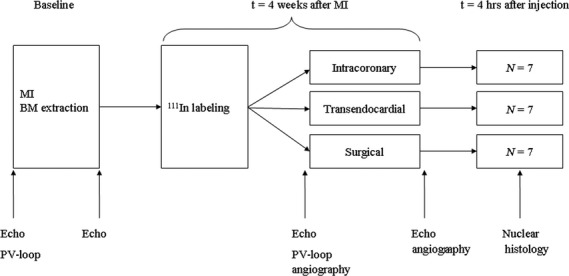
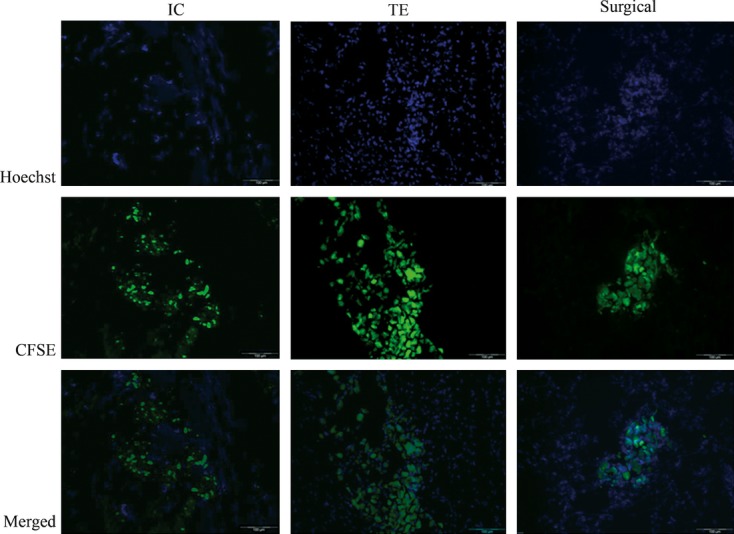
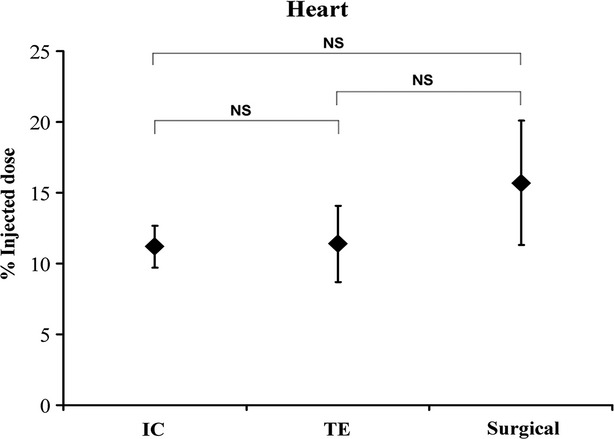
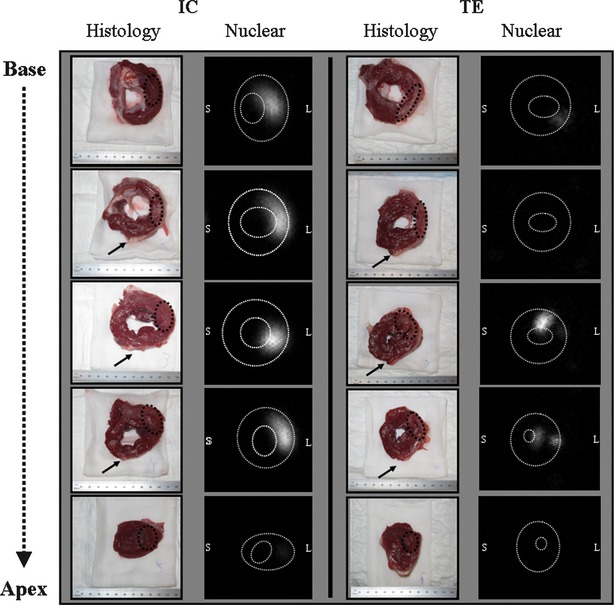
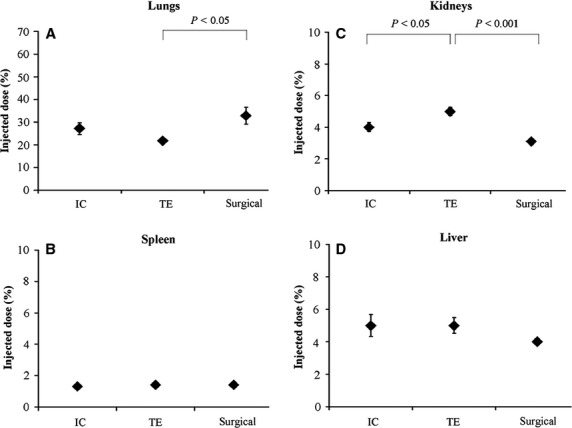
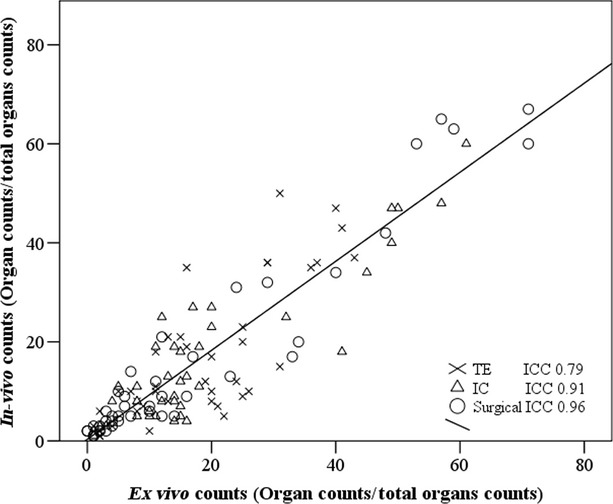
Stem cell therapy is a new strategy for chronic ischaemic heart disease in patients. However, no consensus exists on the most optimal delivery strategy. This randomized study was designed to assess cell delivery efficiency of three clinically relevant strategies: intracoronary (IC) and transendocardial (TE) using electromechanical mapping guidance (NOGA) compared to surgical delivery in a chronic pig model of ischaemic cardiomyopathy. Twenty-four animals underwent delivery of 10(7) autologous Indium-oxine-labelled bone marrow-derived mesenchymal stem cells (MSC) 4 weeks after infarction and were randomized to one of three groups (n = 8 each group): IC, TE or surgical delivery (reference group). Primary endpoint was defined as percentage (%) of injected dose per organ and assessed by in vivo gamma-emission counting. In addition, troponin and coronary flow were assessed before and after MSC injection. Blinded endpoint analysis showed no significant difference in efficiency after surgical (16 ± 4%), IC (11 ± 1%) and TE (11 ± 3%) (P = 0.52) injections. IC showed less variability in efficiency compared with TE and surgical injection. Overall, TE injection showed less distribution of MSC to visceral organs compared with other modalities. Troponin rise and IC flow did not differ between the percutaneous groups. This randomized study showed no significant difference in cell delivery efficiency to the myocardium in a clinically relevant ischaemic large animal model between IC and TE delivery. In addition, no differences in safety profile were observed. These results are important in view of the choice of percutaneous cell delivery modality in future clinical stem cell trials.
干细胞治疗是一种治疗慢性缺血性心脏病患者的新策略。然而,对于最优化的输送策略还没有达成共识。本随机研究旨在评估三种临床相关策略(经冠状动脉(IC)和经心肌内(TE)应用电机械标测引导(NOGA)与手术输送)在慢性缺血性心肌病猪模型中的细胞输送效率。24 只动物在梗塞后 4 周接受了 10(7)个自体铟-oxine 标记的骨髓间充质干细胞(MSC)的输送,并随机分为三组(每组 8 只):IC、TE 或手术输送(参照组)。主要终点定义为每个器官的注射剂量百分比(%),并通过体内γ发射计数进行评估。此外,在 MSC 注射前后评估肌钙蛋白和冠状动脉血流。盲法终点分析显示,手术(16±4%)、IC(11±1%)和 TE(11±3%)(P=0.52)注射后的效率没有显著差异。与 TE 和手术注射相比,IC 显示出较小的效率变异性。总体而言,TE 注射与其他方式相比,向内脏器官分布的 MSC 较少。经皮组之间肌钙蛋白升高和 IC 血流没有差异。本随机研究表明,在一种临床相关的缺血性大动物模型中,IC 和 TE 输送到心肌的细胞输送效率没有显著差异。此外,没有观察到安全性方面的差异。鉴于未来临床干细胞试验中经皮细胞输送方式的选择,这些结果非常重要。