Goldsmith J R, Jobin Christian
Department of Pharmacology, University of North Carolina, Chapel Hill, NC 27599, USA.
J Biomed Biotechnol. 2012;2012:817341. doi: 10.1155/2012/817341. Epub 2012 Jun 3.
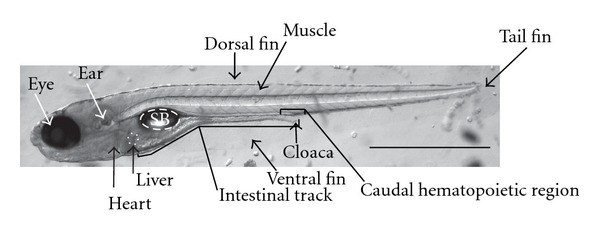
Although human pathologies have mostly been modeled using higher mammal systems such as mice, the lower vertebrate zebrafish has gained tremendous attention as a model system. The advantages of zebrafish over classical vertebrate models are multifactorial and include high genetic and organ system homology to humans, high fecundity, external fertilization, ease of genetic manipulation, and transparency through early adulthood that enables powerful imaging modalities. This paper focuses on four areas of human pathology that were developed and/or advanced significantly in zebrafish in the last decade. These areas are (1) wound healing/restitution, (2) gastrointestinal diseases, (3) microbe-host interactions, and (4) genetic diseases and drug screens. Important biological processes and pathologies explored include wound-healing responses, pancreatic cancer, inflammatory bowel diseases, nonalcoholic fatty liver disease, and mycobacterium infection. The utility of zebrafish in screening for novel genes important in various pathologies such as polycystic kidney disease is also discussed.
尽管人类病理学大多使用小鼠等高阶哺乳动物系统来建模,但低等脊椎动物斑马鱼作为一种模型系统已受到极大关注。斑马鱼相对于经典脊椎动物模型的优势是多方面的,包括与人类具有高度的基因和器官系统同源性、高繁殖力、体外受精、易于进行基因操作,以及在成年早期具有透明度,这使得强大的成像方式成为可能。本文重点关注过去十年中在斑马鱼身上得到显著发展和/或推进的人类病理学的四个领域。这些领域是:(1)伤口愈合/修复,(2)胃肠道疾病,(3)微生物与宿主相互作用,以及(4)遗传疾病和药物筛选。所探索的重要生物学过程和病理学包括伤口愈合反应、胰腺癌、炎症性肠病、非酒精性脂肪性肝病和分枝杆菌感染。还讨论了斑马鱼在筛选对各种病理学(如多囊肾病)重要的新基因方面的效用。