Rejsek Klement, Vranova Valerie, Formanek Pavel
Department of Geology and Soil Science, Mendel University in Brno, Zemedelska 3, 61300 Brno, Czech Republic.
ScientificWorldJournal. 2012;2012:250805. doi: 10.1100/2012/250805. Epub 2012 Jun 4.
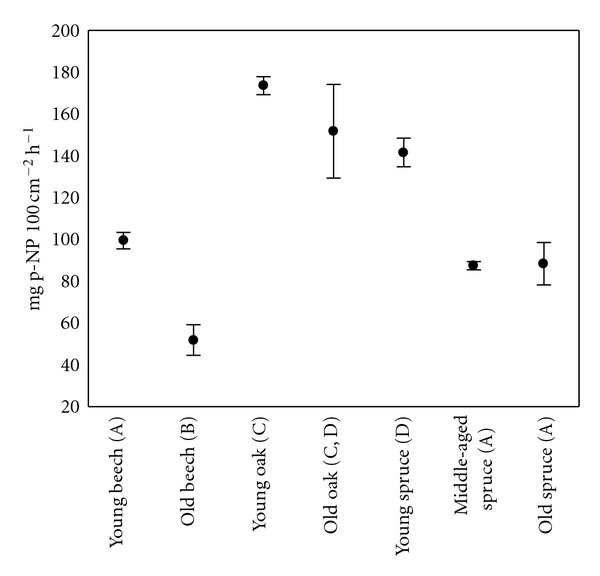
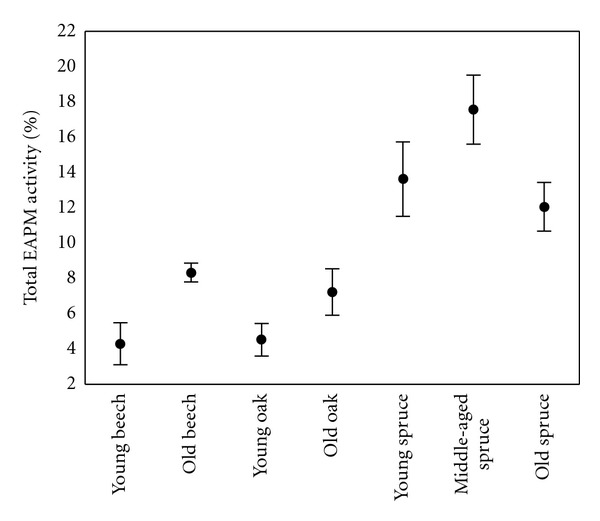
The aim of this study is to present a new method for determining the root-derived extracellular acid phosphomonoesterase (EAPM) activity fraction within the total EAPM activity of soil. EAPM activity was determined for roots, organic and mineral soil. Samples were collected using paired PVC cylinders, inserted to a depth of 15 cm, within seven selected forest stands. Root-derived EAPM formed between 4 and18% of the total EAPM activity of soil from forests of differing maturity. A new approach, presented in this work, enables separation of root-derived EAPM activity from total soil EAPM. Separation of root-derived EAPM from soil provides a better understanding of its role in P-cycling in terrestrial ecosystems. The method presented in this work is a first step towards the separation of root- and microbe-derived EAPM in soils, which are thought to possess different kinetic properties and different sensitivity to environmental change.
本研究的目的是提出一种新方法,用于测定土壤总胞外酸性磷酸单酯酶(EAPM)活性中源自根系的EAPM活性部分。测定了根系、有机土壤和矿质土壤的EAPM活性。在七个选定的林分中,使用成对的PVC圆柱体采集样本,插入深度为15厘米。在不同成熟度森林的土壤中,源自根系的EAPM占土壤总EAPM活性的4%至18%。本研究提出的一种新方法能够将源自根系的EAPM活性与土壤总EAPM活性分离。从土壤中分离出源自根系的EAPM,有助于更好地理解其在陆地生态系统磷循环中的作用。本研究提出的方法是朝着分离土壤中源自根系和微生物的EAPM迈出的第一步,据认为这两种EAPM具有不同的动力学特性和对环境变化的不同敏感性。