Medori Mauro, Michelini Lucia, Nogues Isabel, Loreto Francesco, Calfapietra Carlo
Institute of Agro-Environmental & Forest Biology-IBAF, National Research Council-CNR, Via Salaria km 29,300, 00015 Monterotondo Scalo, Rome, Italy.
ScientificWorldJournal. 2012;2012:525827. doi: 10.1100/2012/525827. Epub 2012 Jun 4.
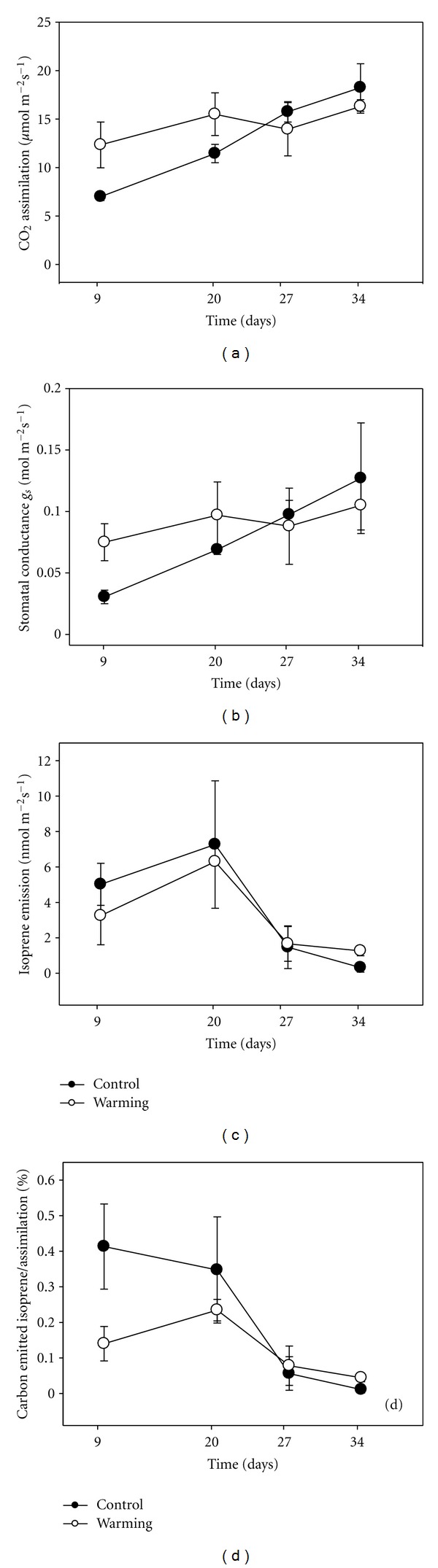
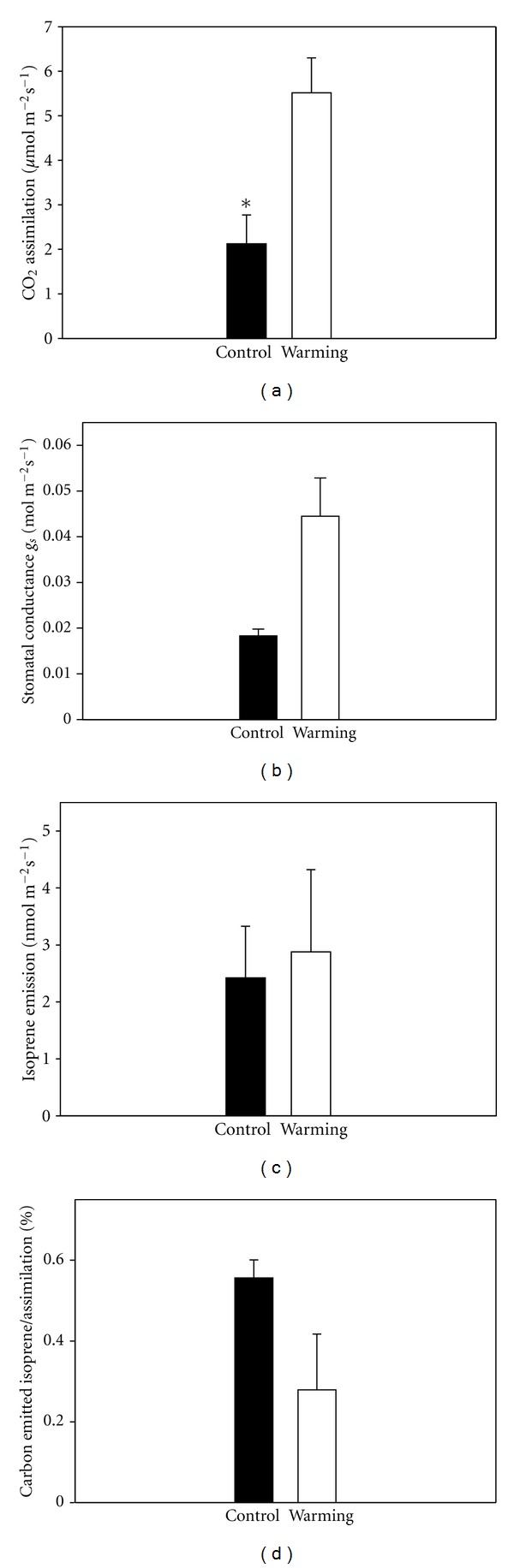
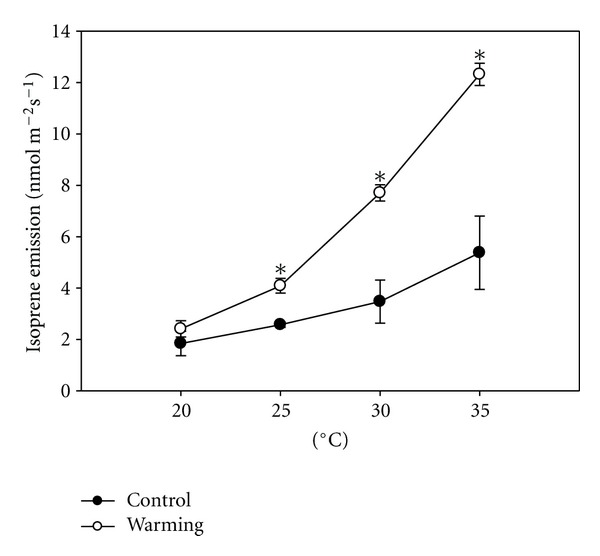
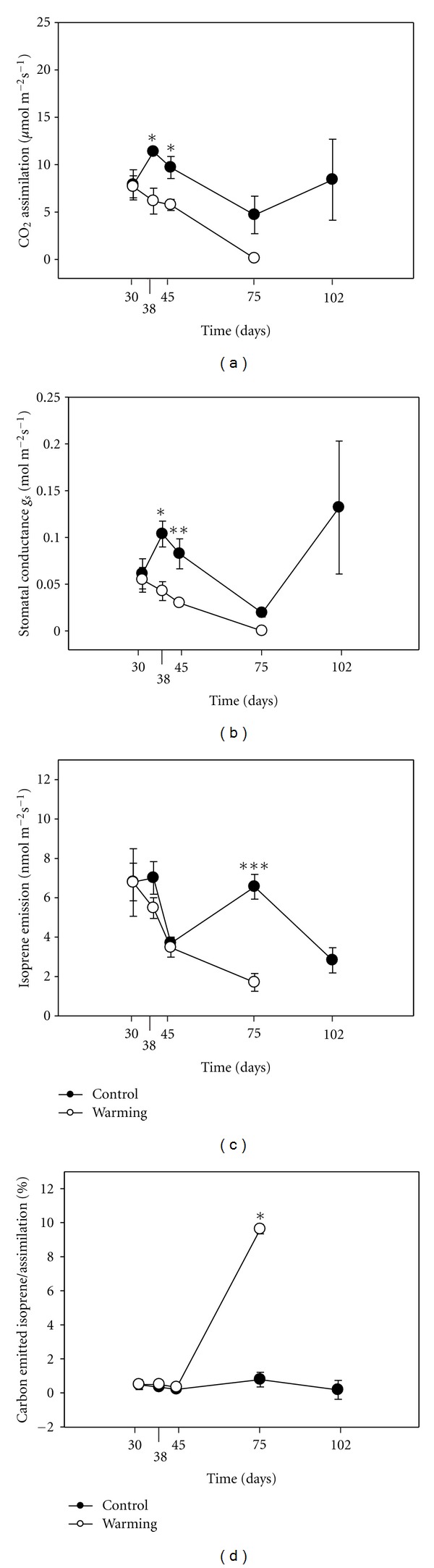
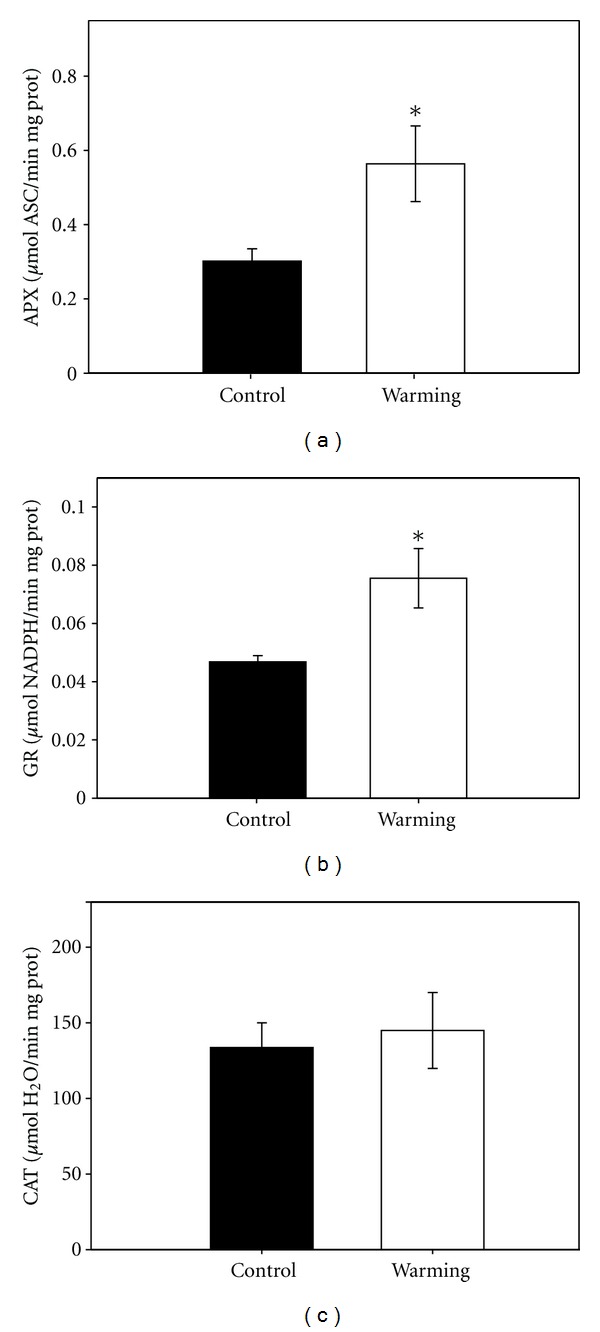
Most of the perennial plant species, particularly trees, emit volatile organic compounds (BVOCs) such as isoprene and monoterpenes, which in several cases have been demonstrated to protect against thermal shock and more generally against oxidative stress. In this paper, we show the response of three strong isoprene emitter species, namely, Phragmites australis, Populus x euramericana, and Salix phylicifolia exposed to artificial or natural warming of the root system in different conditions. This aspect has not been investigated so far while it is well known that warming the air around a plant stimulates considerably isoprene emission, as also shown in this paper. In the green house experiments where the warming corresponded with high stress conditions, as confirmed by higher activities of the main antioxidant enzymes, we found that isoprene uncoupled from photosynthesis at a certain stage of the warming treatment and that even when photosynthesis approached to zero isoprene emission was still ongoing. In the field experiment, in a typical cold-limited environment, warming did not affect isoprene emission whereas it increased significantly CO₂ assimilation. Our findings suggest that the increase of isoprene could be a good marker of heat stress, whereas the decrease of isoprene a good marker of accelerated foliar senescence, two hypotheses that should be better investigated in the future.
大多数多年生植物物种,尤其是树木,会释放挥发性有机化合物(BVOCs),如异戊二烯和单萜类化合物,在一些情况下,这些化合物已被证明可以抵御热冲击,更普遍地抵御氧化应激。在本文中,我们展示了三种强异戊二烯释放物种,即芦苇、欧美杨和柳叶菜柳,在不同条件下根系受到人工或自然升温时的反应。到目前为止,这方面尚未得到研究,然而众所周知,正如本文所示,植物周围空气升温会显著刺激异戊二烯的释放。在温室实验中,升温与高胁迫条件相对应,主要抗氧化酶的活性较高证实了这一点,我们发现在升温处理的某个阶段,异戊二烯与光合作用解偶联,甚至当光合作用接近零时,异戊二烯仍在持续释放。在田间实验中,在典型的冷限制环境中,升温并未影响异戊二烯的释放,而显著增加了二氧化碳同化。我们的研究结果表明,异戊二烯的增加可能是热胁迫的良好指标,而异戊二烯的减少可能是叶片加速衰老的良好指标,这两个假设未来应进一步深入研究。