Hawai'i Institute of Marine Biology, University of Hawai'i, Kaneohe, Hawai'i, United States of America.
PLoS One. 2012;7(6):e38440. doi: 10.1371/journal.pone.0038440. Epub 2012 Jun 6.
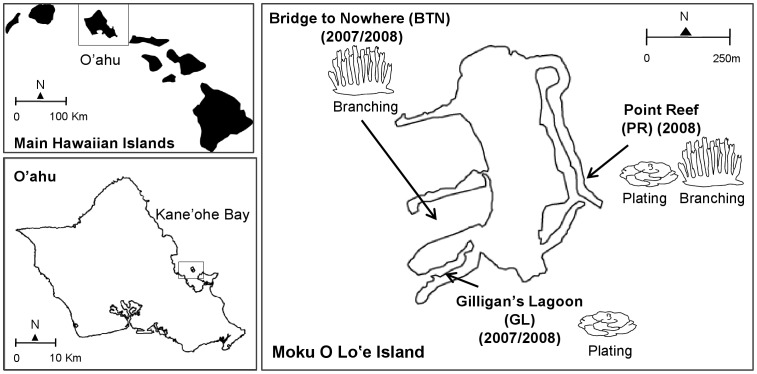
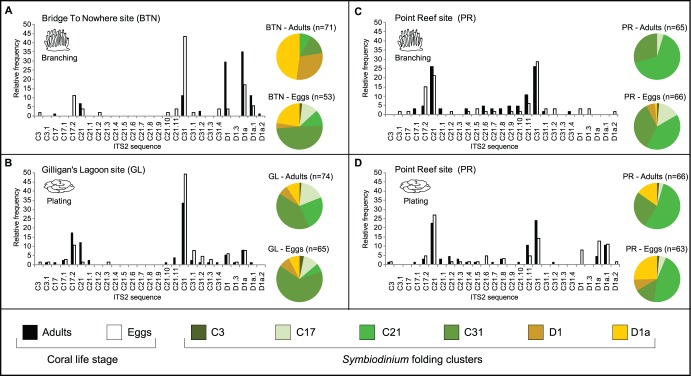
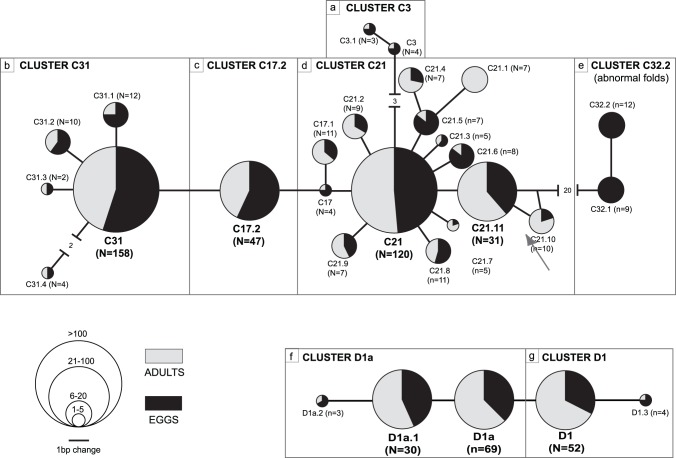
Parental effects are ubiquitous in nature and in many organisms play a particularly critical role in the transfer of symbionts across generations; however, their influence and relative importance in the marine environment has rarely been considered. Coral reefs are biologically diverse and productive marine ecosystems, whose success is framed by symbiosis between reef-building corals and unicellular dinoflagellates in the genus Symbiodinium. Many corals produce aposymbiotic larvae that are infected by Symbiodinium from the environment (horizontal transmission), which allows for the acquisition of new endosymbionts (different from their parents) each generation. In the remaining species, Symbiodinium are transmitted directly from parent to offspring via eggs (vertical transmission), a mechanism that perpetuates the relationship between some or all of the Symbiodinium diversity found in the parent through multiple generations. Here we examine vertical transmission in the Hawaiian coral Montipora capitata by comparing the Symbiodinium ITS2 sequence assemblages in parent colonies and the eggs they produce. Parental effects on sequence assemblages in eggs are explored in the context of the coral genotype, colony morphology, and the environment of parent colonies. Our results indicate that ITS2 sequence assemblages in eggs are generally similar to their parents, and patterns in parental assemblages are different, and reflect environmental conditions, but not colony morphology or coral genotype. We conclude that eggs released by parent colonies during mass spawning events are seeded with different ITS2 sequence assemblages, which encompass phylogenetic variability that may have profound implications for the development, settlement and survival of coral offspring.
亲代效应在自然界中普遍存在,在许多生物中,它们在共生体跨代传递中起着特别关键的作用;然而,它们在海洋环境中的影响和相对重要性却很少被考虑。珊瑚礁是生物多样性和生产力很高的海洋生态系统,其成功取决于造礁珊瑚与单细胞甲藻属中的共生体之间的共生关系。许多珊瑚产生无共生体的幼虫,这些幼虫被环境中的共生体(水平传播)感染,从而每一代都可以获得新的共生体(与它们的父母不同)。在其余的物种中,共生体通过卵(垂直传播)直接从亲代传递给后代,这种机制使一些或所有在亲代中发现的共生体多样性在多个世代中得以延续。在这里,我们通过比较亲代群体及其产生的卵中的共生体 ITS2 序列组合,来研究夏威夷珊瑚 Montipora capitata 中的垂直传递。我们在珊瑚基因型、珊瑚形态和亲代群体环境的背景下,探讨了对卵中序列组合的亲代效应。我们的结果表明,卵中的 ITS2 序列组合通常与其父母相似,而亲代组合中的模式不同,反映了环境条件,但与珊瑚形态或珊瑚基因型无关。我们得出结论,在大规模产卵事件中由亲代群体释放的卵中,带有不同的 ITS2 序列组合,这些组合包含了可能对珊瑚后代的发育、定居和生存产生深远影响的系统发育变异性。