Nica Dragos V, Bura Marian, Gergen Iosif, Harmanescu Monica, Bordean Despina-Maria
Banat's University of Agricultural Sciences and Veterinary Medicine from Timisoara, Faculty of Food Processing Technology, Calea Aradului 119, RO 300645, Timisoara, Romania.
Chem Cent J. 2012 Jun 15;6(1):55. doi: 10.1186/1752-153X-6-55.
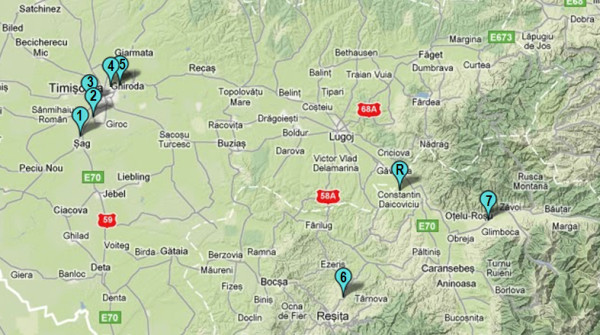
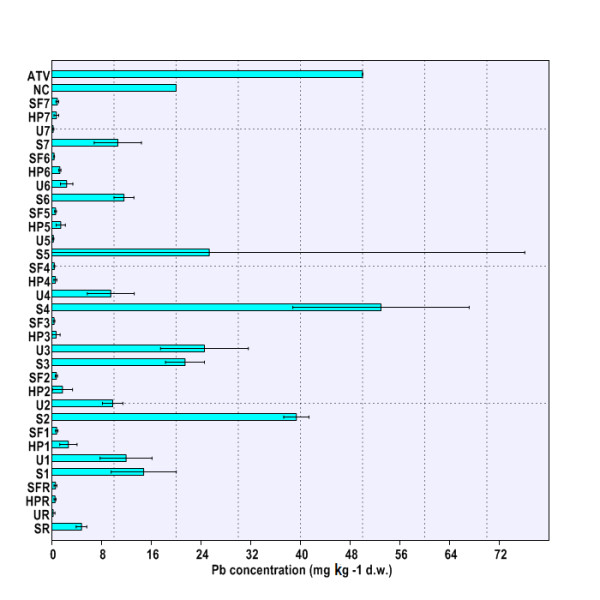
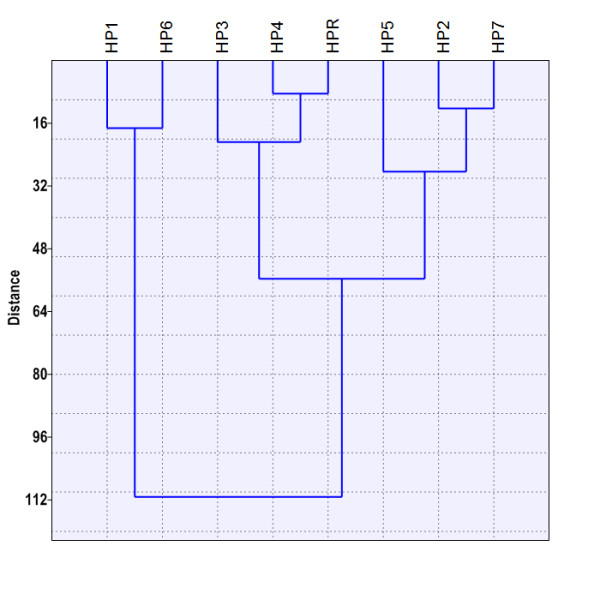
Copper (Cu), zinc (Zn), cadmium (Cd), and lead (Pb) can pose serious threats to environmental health because they tend to bioaccumulate in terrestrial ecosystems. We investigated under field conditions the transfer of these heavy metals in a soil-plant-snail food chain in Banat area, Romania. The main goal of this paper was to assess the Roman snail (Helix pomatia) usefulness in environmental monitoring as bioindicator of heavy metal accumulation. Eight sampling sites, selected by different history of heavy metal (HM) exposure, were chosen to be sampled for soil, nettle leaves, and newly matured snails. This study also aimed to identify the putative effects of HM accumulation in the environment on phenotypic variability in selected shell features, which included shell height (SH), relative shell height (RSH), and whorl number (WN).
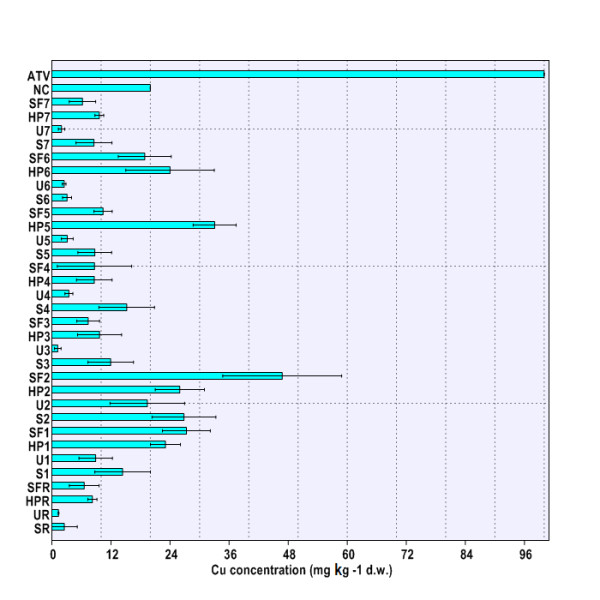
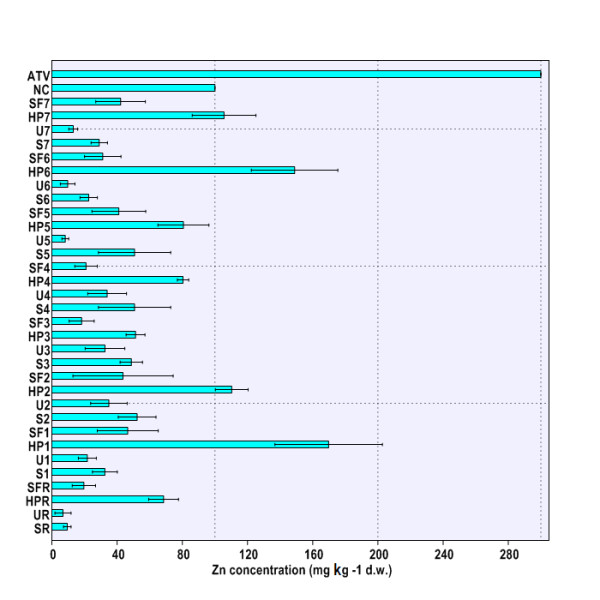
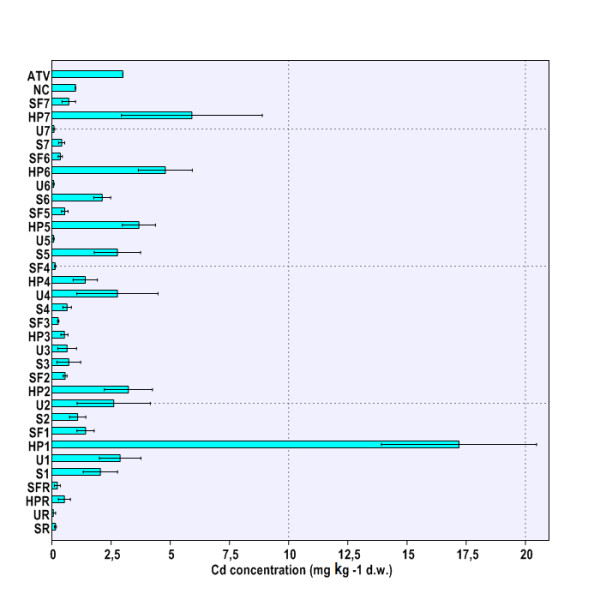
Significantly higher amounts of HMs were accumulated in snail hepatopancreas and not in foot. Cu, Zn, and Cd have biomagnified in the snail body, particularly in the hepatopancreas. In contrast, Pb decreased when going up into the food chain. Zn, Cd, and Pb correlated highly with each other at all levels of the investigated food chain. Zn and Pb exhibited an effective soil-plant transfer, whereas in the snail body only foot Cu concentration was correlated with that in soil. There were significant differences among sampling sites for WN, SH, and RSH when compared with reference snails. WN was strongly correlated with Cd and Pb concentrations in nettle leaves but not with Cu and Zn. SH was independent of HM concentrations in soil, snail hepatopancreas, and foot. However, SH correlated negatively with nettle leaves concentrations for each HM except Cu. In contrast, RSH correlated significantly only with Pb concentration in hepatopancreas.
The snail hepatopancreas accumulates high amounts of HMs, and therefore, this organ can function as a reliable biomarker for tracking HM bioavailability in soil. Long-term exposure to HMs via contaminated food might influence the variability of shell traits in snail populations. Therefore, our results highlight the Roman snail (Helix pomatia) potential to be used in environmental monitoring studies as bioindicator of HM pollution.
铜(Cu)、锌(Zn)、镉(Cd)和铅(Pb)会对环境健康构成严重威胁,因为它们往往会在陆地生态系统中生物累积。我们在罗马尼亚巴纳特地区的田间条件下,研究了这些重金属在土壤-植物-蜗牛食物链中的转移情况。本文的主要目的是评估罗马蜗牛(Helix pomatia)作为重金属累积生物指示剂在环境监测中的作用。通过选择不同重金属(HM)暴露历史的八个采样点,对土壤、荨麻叶和新成熟的蜗牛进行采样。本研究还旨在确定环境中HM累积对选定壳特征表型变异的假定影响,这些特征包括壳高(SH)、相对壳高(RSH)和螺层数(WN)。
蜗牛肝胰腺中积累的重金属量显著高于足部。铜、锌和镉在蜗牛体内生物放大,尤其是在肝胰腺中。相比之下,铅在食物链中向上传递时含量降低。在研究的食物链的各个层面,锌、镉和铅之间高度相关。锌和铅表现出有效的土壤-植物转移,而在蜗牛体内,只有足部的铜浓度与土壤中的铜浓度相关。与对照蜗牛相比,采样点之间的螺层数、壳高和相对壳高存在显著差异。螺层数与荨麻叶中的镉和铅浓度密切相关,但与铜和锌无关。壳高与土壤、蜗牛肝胰腺和足部中的重金属浓度无关。然而,壳高与除铜以外的每种重金属在荨麻叶中的浓度呈负相关。相比之下,相对壳高仅与肝胰腺中的铅浓度显著相关。
蜗牛肝胰腺积累了大量的重金属,因此,该器官可作为追踪土壤中重金属生物有效性的可靠生物标志物。通过受污染食物长期接触重金属可能会影响蜗牛种群壳性状的变异性。因此,我们的结果突出了罗马蜗牛(Helix pomatia)作为重金属污染生物指示剂用于环境监测研究的潜力。