Alhaj Hamoud Yousef, Shaghaleh Hiba, Zia-Ur-Rehman Muhammad, Rizwan Muhammad, Umair Muhammad, Usman Muhammad, Ayub Muhammad Ashar, Riaz Umair, Alnusairi Ghalia S H, Alghanem Suliman Mohammed Suliman
The National Key Laboratory of Water Disaster Prevention and College of Hydrology and Water Resources, Hohai University, Nanjing, 210098, China.
Key Lab of Integrated Regulation and Resource Development on Shallow Lakes, Ministry of Education, College of Environment, Hohai University, Nanjing, 210098, China.
Heliyon. 2024 Jan 20;10(3):e24712. doi: 10.1016/j.heliyon.2024.e24712. eCollection 2024 Feb 15.
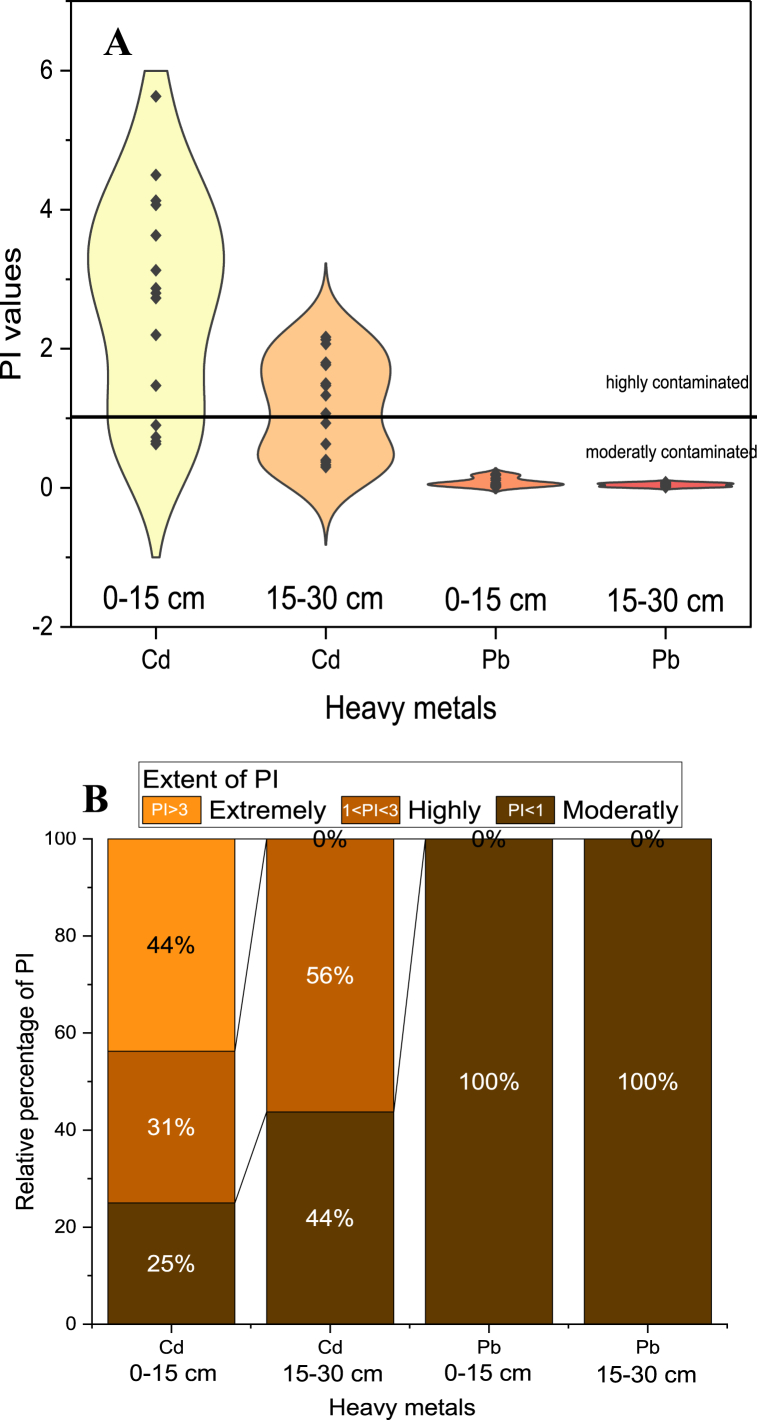
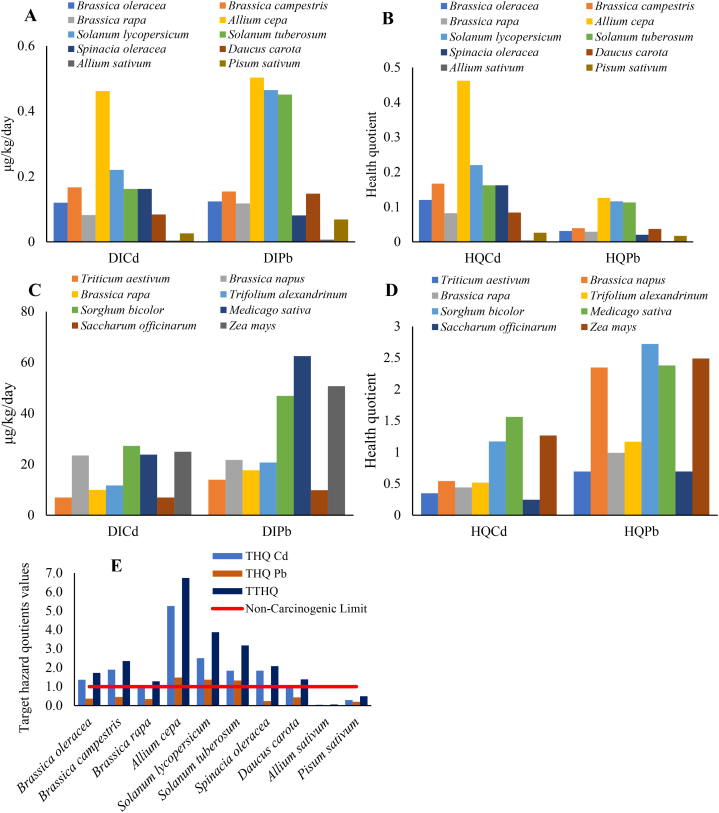
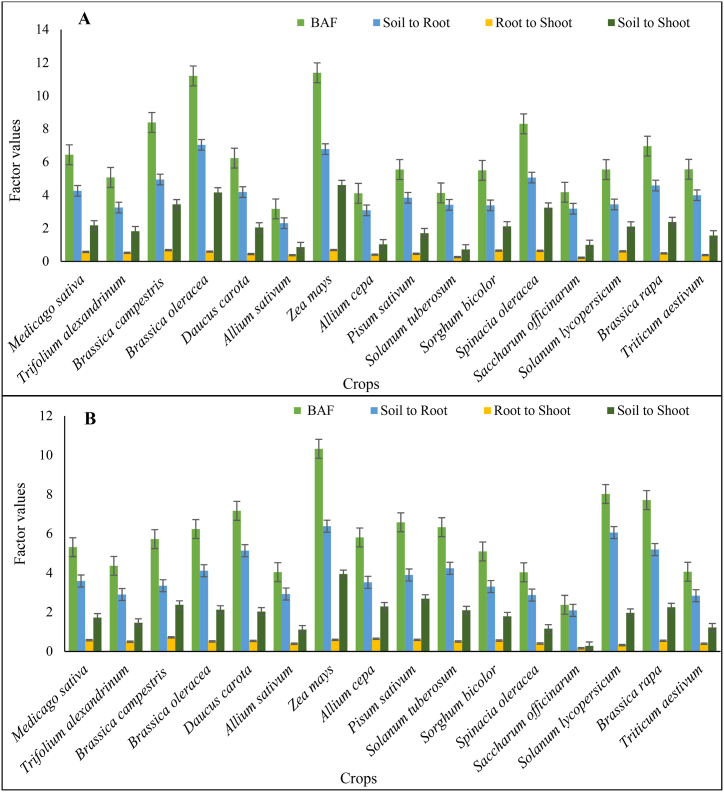
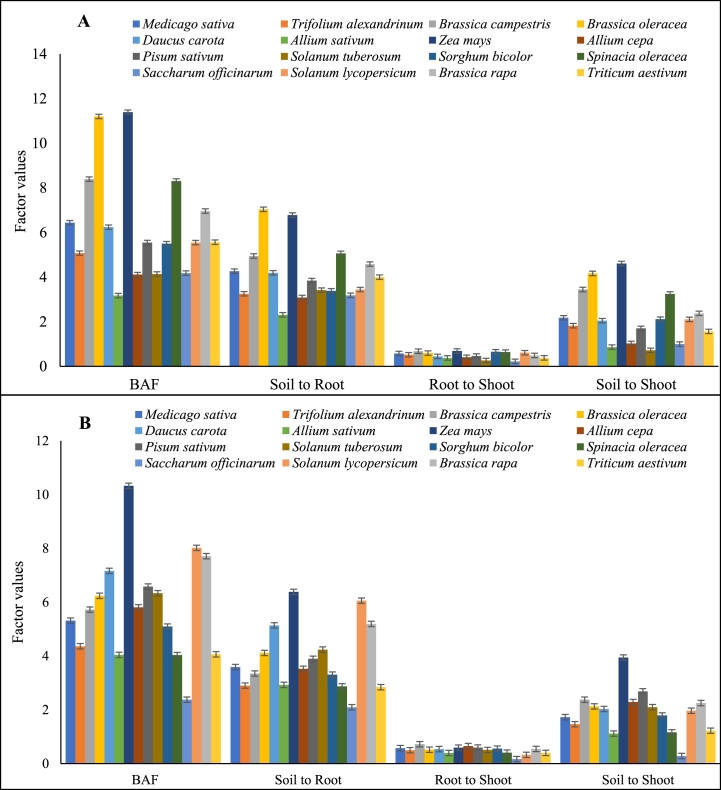
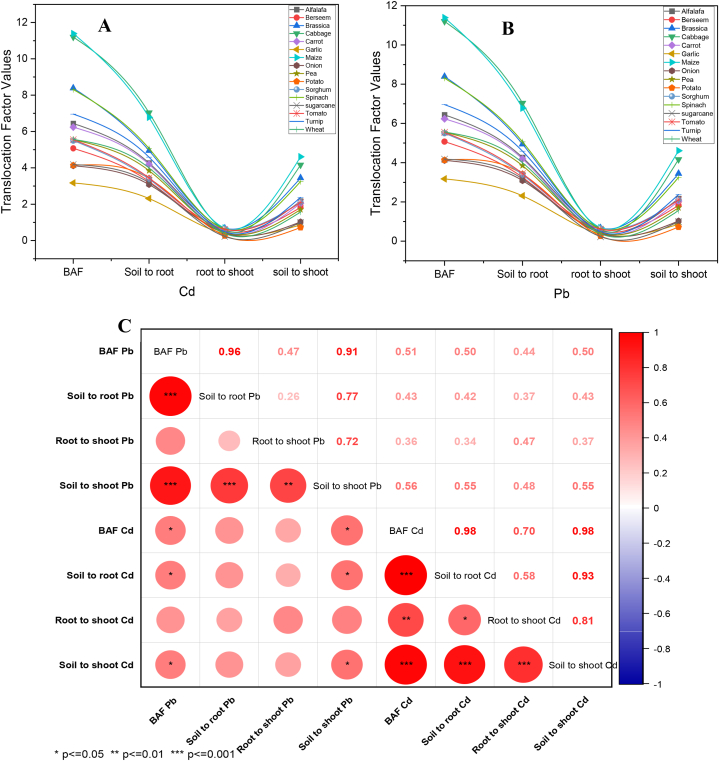
The contamination of farm soils with heavy metals (HMs) has raised significant concerns due to the increased bioavailability and accumulation of HMs in agricultural food crops. To address this issue, a survey experiment was conducted in the suburbs of Multan and Faisalabad to investigate the spatial distribution, bioaccumulation, translocation, and health risks of cadmium (Cd) and lead (Pb) in agricultural crops. The results show a considerable concentration of Cd and Pb in soils irrigated with wastewater, even though these levels were below the permissible limits in water and soil matrices. The pollution index for Cd was mostly greater than 1 at the selected sites, indicating its accumulation in soil over time due to wastewater irrigation. Conversely, the pollution index for Pb was below 1 at all sites. Among the plants, accumulated the highest concentration of Cd and Pb. The translocation factor from soil to root was highest for (7.037 for Cd) and (6.383 for Pb). The target hazard quotient (THQ) value of Cd exceeded the non-carcinogenic limit for most vegetables. The highest value was found in (5.256) and the lowest in (0.040). In contrast, the THQ level of Pb was below the non-carcinogenic limit for most vegetables, except for (1.479), (1.367), and (1.326). The study highlights that poses the highest health risk for humans, while poses the highest risk for animals due to Cd and Pb contamination. These results underscore the urgent need for effective measures to mitigate the health risks associated with HM contamination in crops and soils.
由于重金属(HMs)在农业粮食作物中的生物有效性增加和积累,农田土壤受到重金属污染已引起了人们的极大关注。为了解决这个问题,在木尔坦和费萨拉巴德郊区进行了一项调查实验,以研究镉(Cd)和铅(Pb)在农作物中的空间分布、生物累积、转运以及健康风险。结果表明,用废水灌溉的土壤中Cd和Pb的浓度相当高,尽管这些水平低于水和土壤基质中的允许限值。在选定地点,Cd的污染指数大多大于1,表明由于废水灌溉,Cd在土壤中随时间积累。相反,所有地点Pb的污染指数均低于1。在植物中, 积累的Cd和Pb浓度最高。从土壤到根的转运系数 (Cd为7.037)和 (Pb为6.383)最高。大多数蔬菜中Cd的目标危害商(THQ)值超过了非致癌限值。在 (5.256)中发现的值最高,在 (0.040)中发现的值最低。相比之下,除了 (1.479)、 (1.367)和 (1.326)外,大多数蔬菜中Pb的THQ水平低于非致癌限值。该研究强调,由于Cd和Pb污染, 对人类构成的健康风险最高,而 对动物构成的风险最高。这些结果强调迫切需要采取有效措施,以减轻与作物和土壤中重金属污染相关的健康风险。