Nephrology Department, Ruijin Hospital, Shanghai Jiao Tong University School of Medicine, Shanghai, China.
PLoS One. 2012;7(6):e38904. doi: 10.1371/journal.pone.0038904. Epub 2012 Jun 14.
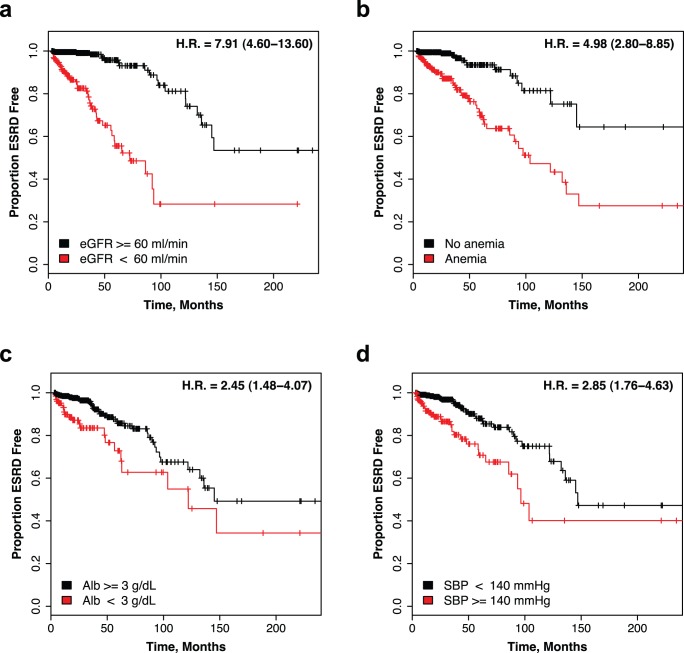
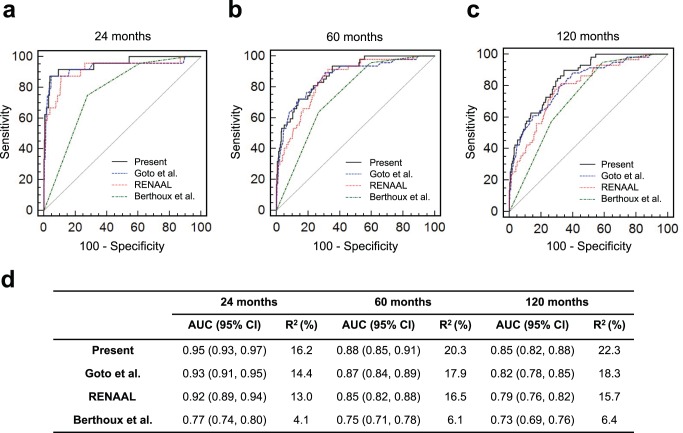
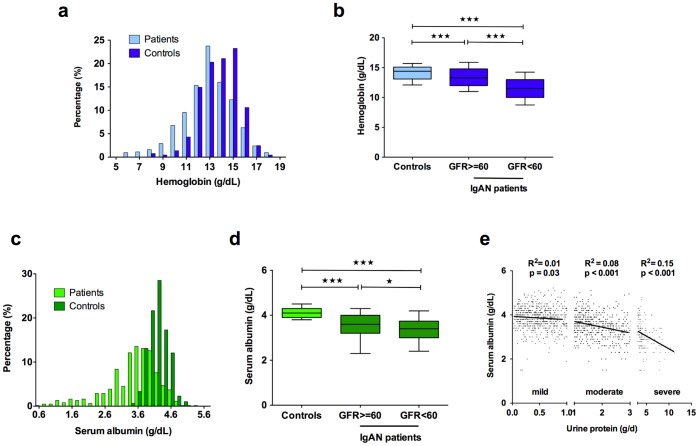
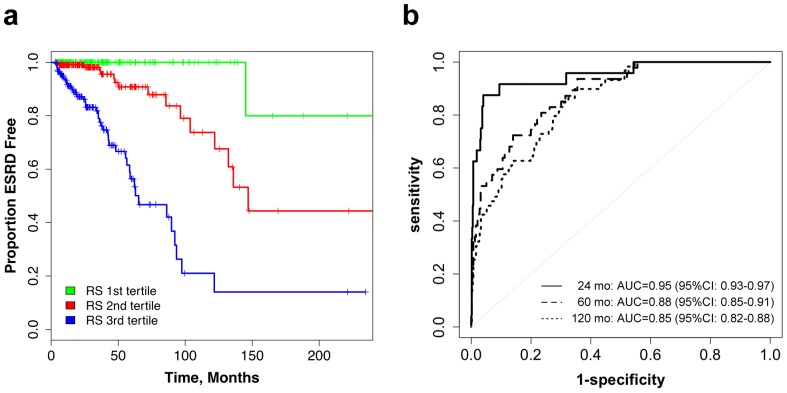
IgA nephropathy (IgAN) is a common cause of end-stage renal disease (ESRD) in Asia. In this study, based on a large cohort of Chinese patients with IgAN, we aim to identify independent predictive factors associated with disease progression to ESRD. We collected retrospective clinical data and renal outcomes on 619 biopsy-diagnosed IgAN patients with a mean follow-up time of 41.3 months. In total, 67 individuals reached the study endpoint defined by occurrence of ESRD necessitating renal replacement therapy. In the fully adjusted Cox proportional hazards model, there were four baseline variables with a significant independent effect on the risk of ESRD. These included: eGFR [HR = 0.96(0.95-0.97)], serum albumin [HR = 0.47(0.32-0.68)], hemoglobin [HR = 0.79(0.72-0.88)], and SBP [HR = 1.02(1.00-1.03)]. Based on these observations, we developed a 4-variable equation of a clinical risk score for disease progression. Our risk score explained nearly 22% of the total variance in the primary outcome. Survival ROC curves revealed that the risk score provided improved prediction of ESRD at 24th, 60th and 120th month of follow-up compared to the three previously proposed risk scores. In summary, our data indicate that IgAN patients with higher systolic blood pressure, lower eGFR, hemoglobin, and albumin levels at baseline are at a greatest risk of progression to ESRD. The new progression risk score calculated based on these four baseline variables offers a simple clinical tool for risk stratification.
IgA 肾病 (IgAN) 是亚洲终末期肾病 (ESRD) 的常见病因。本研究基于中国 IgAN 患者的大样本队列,旨在确定与疾病进展为 ESRD 相关的独立预测因素。我们收集了 619 例经活检确诊的 IgAN 患者的回顾性临床数据和肾脏结局,平均随访时间为 41.3 个月。共有 67 人达到了研究终点,即需要肾脏替代治疗的 ESRD 发生。在完全调整的 Cox 比例风险模型中,有 4 个基线变量对 ESRD 风险具有显著的独立影响。这些变量包括:eGFR [HR = 0.96(0.95-0.97)]、血清白蛋白 [HR = 0.47(0.32-0.68)]、血红蛋白 [HR = 0.79(0.72-0.88)] 和 SBP [HR = 1.02(1.00-1.03)]。基于这些观察结果,我们开发了一个用于疾病进展的临床风险评分的 4 变量方程。我们的风险评分解释了主要结局的近 22%的总方差。生存 ROC 曲线显示,与之前提出的 3 个风险评分相比,风险评分在随访的第 24、60 和 120 个月时对 ESRD 的预测能力有所提高。综上所述,我们的数据表明,基线时收缩压较高、eGFR、血红蛋白和白蛋白水平较低的 IgAN 患者进展为 ESRD 的风险最大。基于这四个基线变量计算的新进展风险评分提供了一种简单的临床风险分层工具。