Department of Cellular and Molecular Physiology, Penn State University College of Medicine, Hershey, PA 17033, USA.
Biochem J. 2012 Sep 15;446(3):455-67. doi: 10.1042/BJ20111961.
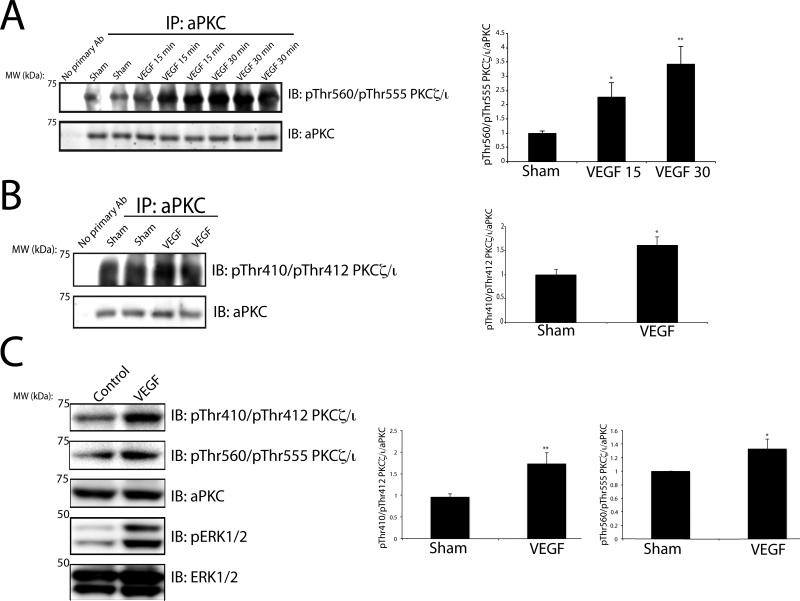
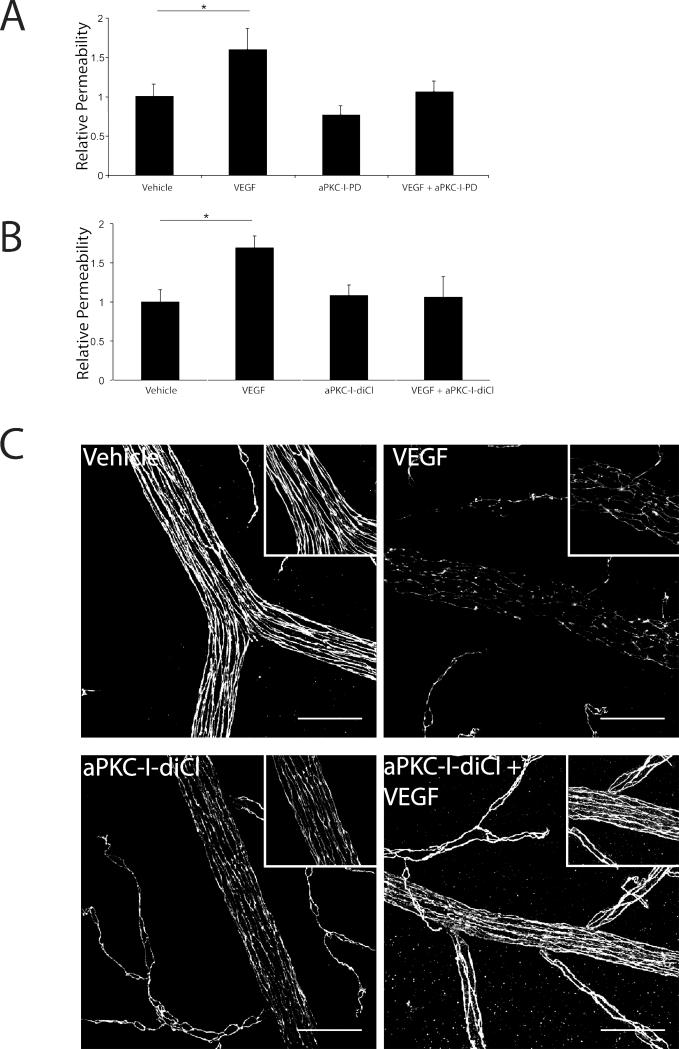
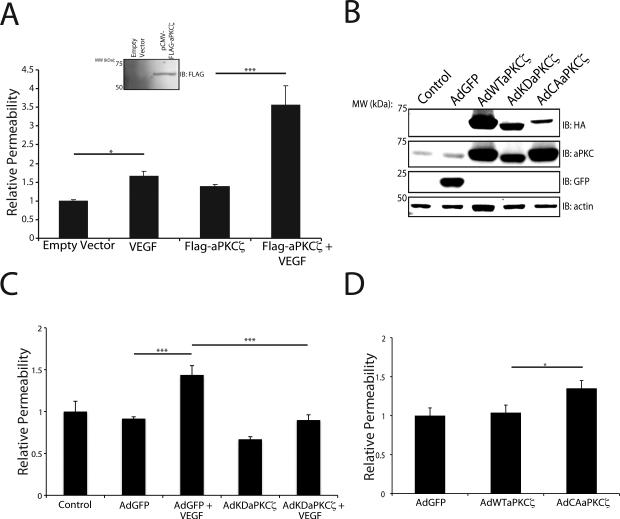
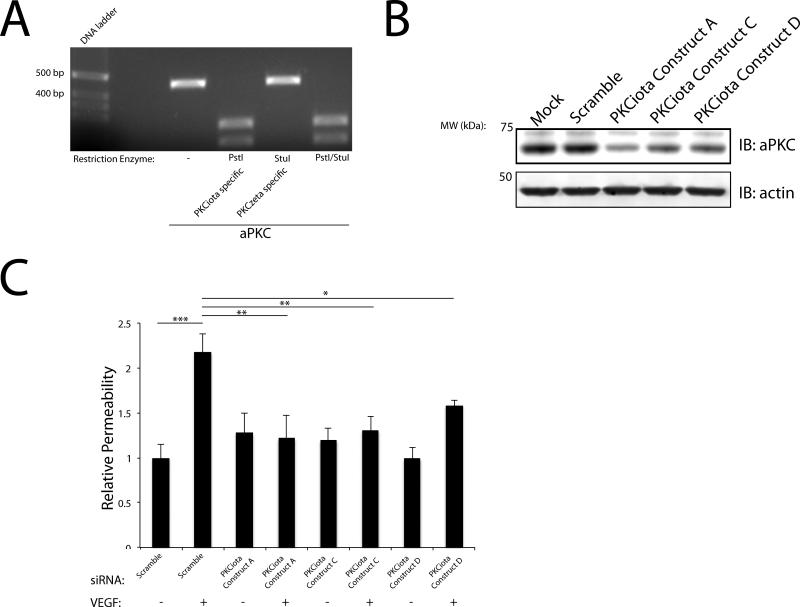
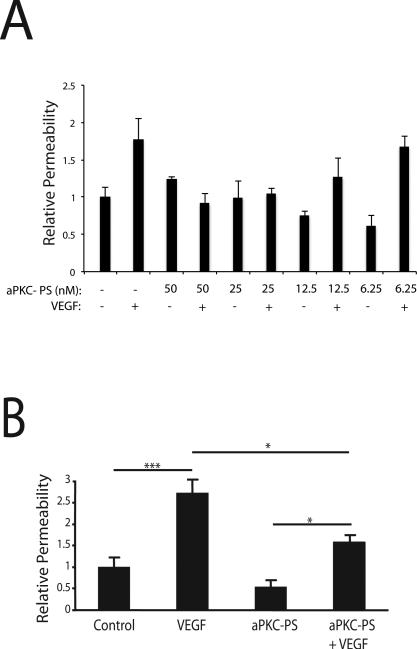
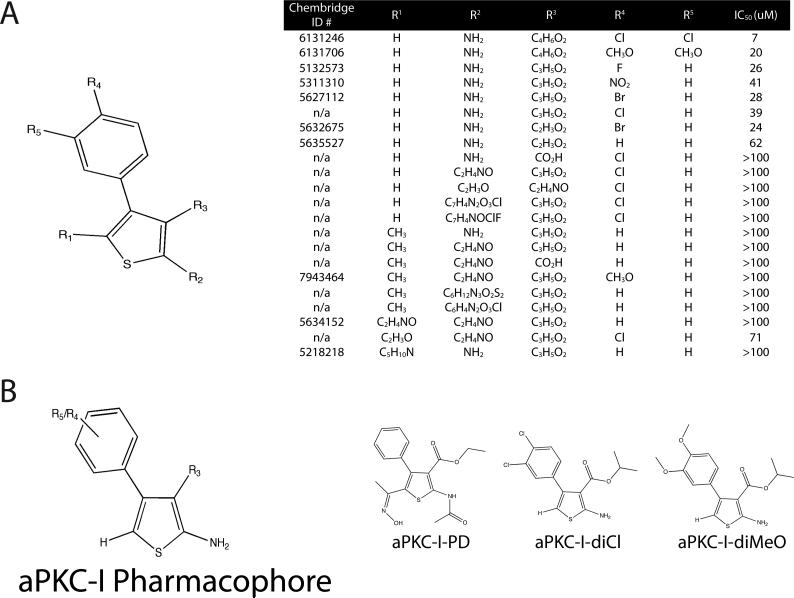
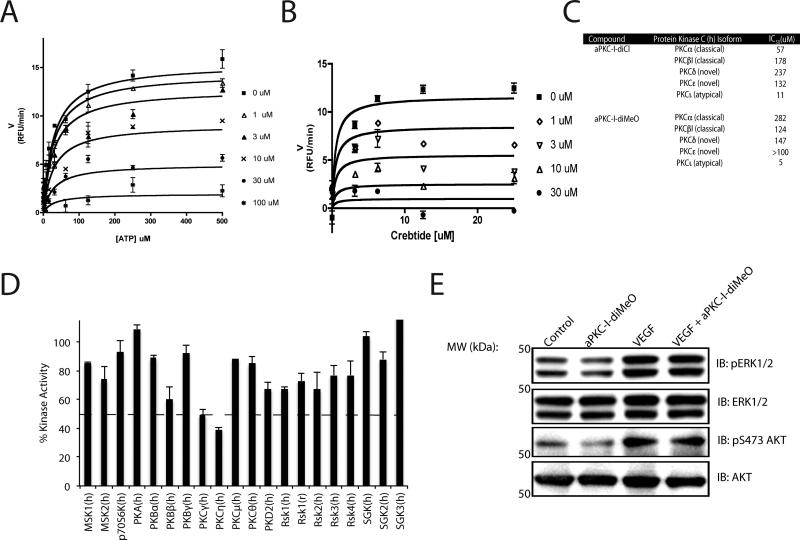
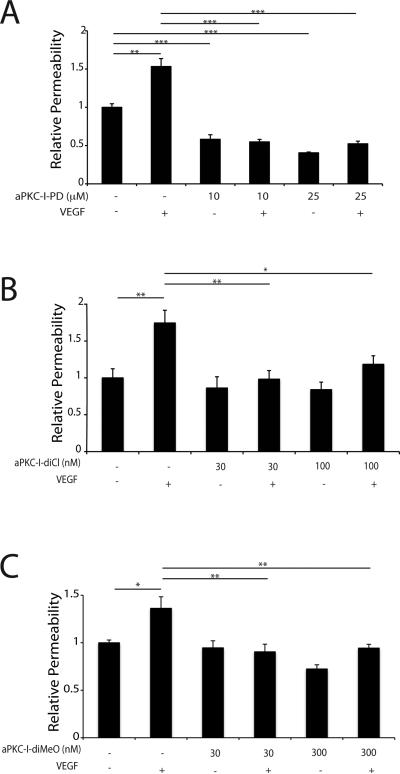
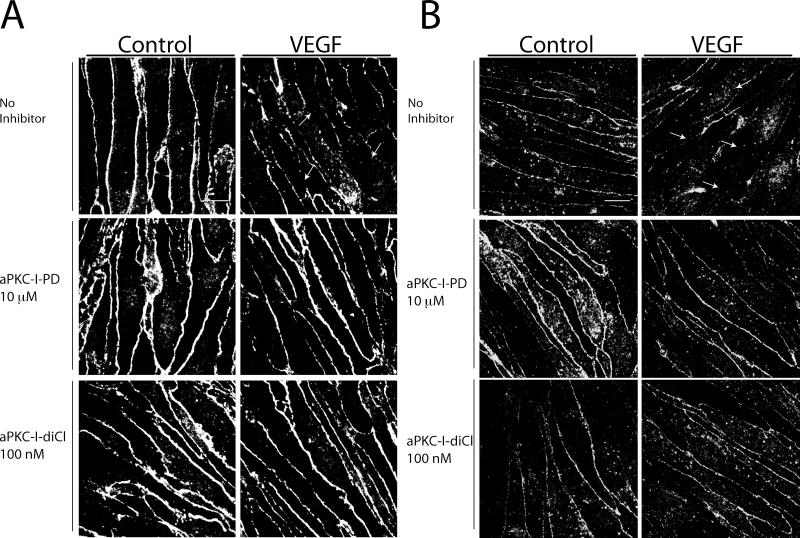
Pro-inflammatory cytokines and growth factors such as VEGF (vascular endothelial growth factor) contribute to the loss of the BRB (blood-retinal barrier) and subsequent macular oedema in various retinal pathologies. VEGF signalling requires PKCβ [conventional PKC (protein kinase C)] activity; however, PKCβ inhibition only partially prevents VEGF-induced endothelial permeability and does not affect pro-inflammatory cytokine-induced permeability, suggesting the involvement of alternative signalling pathways. In the present study, we provide evidence for the involvement of aPKC (atypical PKC) signalling in VEGF-induced endothelial permeability and identify a novel class of inhibitors of aPKC that prevent BRB breakdown in vivo. Genetic and pharmacological manipulations of aPKC isoforms were used to assess their contribution to endothelial permeability in culture. A chemical library was screened using an in vitro kinase assay to identify novel small-molecule inhibitors, and further medicinal chemistry was performed to delineate a novel pharmacophore. We demonstrate that aPKC isoforms are both sufficient and required for VEGF-induced endothelial permeability. Furthermore, these specific, potent, non-competitive, small-molecule inhibitors prevented VEGF-induced tight junction internalization and retinal endothelial permeability in response to VEGF in both primary culture and in rodent retina. The results of the present study suggest that aPKC inhibition with 2-amino-4-phenyl-thiophene derivatives may be developed to preserve the BRB in retinal diseases such as diabetic retinopathy or uveitis, and the BBB (blood-brain barrier) in the presence of brain tumours.
促炎细胞因子和生长因子,如 VEGF(血管内皮生长因子),导致各种视网膜病变中 BRB(血视网膜屏障)的丧失和随后的黄斑水肿。VEGF 信号需要 PKCβ [传统 PKC(蛋白激酶 C)] 活性;然而,PKCβ 抑制仅部分阻止 VEGF 诱导的内皮通透性,并且不影响促炎细胞因子诱导的通透性,表明涉及替代信号通路。在本研究中,我们提供了证据表明 aPKC(非典型 PKC)信号参与 VEGF 诱导的内皮通透性,并确定了一类新型的 aPKC 抑制剂,可防止体内 BRB 破裂。使用遗传和药理学操纵 aPKC 同工型来评估它们在培养物中对内皮通透性的贡献。使用体外激酶测定筛选化学文库,以鉴定新型小分子抑制剂,并进一步进行药物化学研究以描绘新型药效团。我们证明 aPKC 同工型对于 VEGF 诱导的内皮通透性既充分又必需。此外,这些特异性、有效、非竞争性的小分子抑制剂可防止 VEGF 诱导的紧密连接内化和 VEGF 诱导的视网膜内皮通透性,无论是在原代培养物还是在啮齿动物视网膜中。本研究的结果表明,用 2-氨基-4-苯基-噻吩衍生物抑制 aPKC 可能会开发出来,以在糖尿病性视网膜病变或葡萄膜炎等视网膜疾病中以及在存在脑肿瘤的情况下保护 BRB,在存在脑肿瘤的情况下保护 BBB(血脑屏障)。