University of Lausanne, Lausanne, Switzerland.
Clin Med Insights Oncol. 2012;6:243-52. doi: 10.4137/CMO.S7999. Epub 2012 Jun 7.
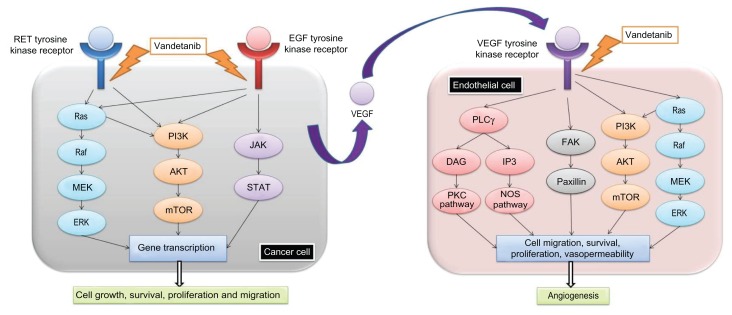
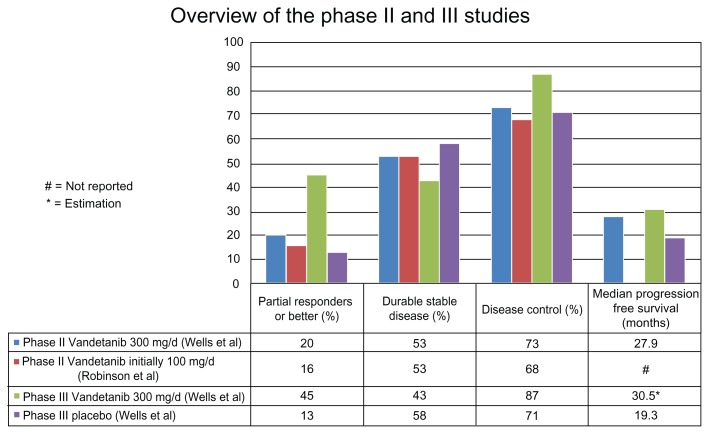
Medullary thyroid cancer (MTC) represents an aggressive form of thyroid malignancy. Some may occur spontaneously or can be associated with Multiple Endocrine Neoplasia syndromes, or Familial Medullary Thyroid Cancer syndrome. In these patients, the protooncogene RET (rearranged during transfection) is mutated. In patients who have unresectable or metastatic disease, the long term prognosis is poor. New treatments for this disease have focused on the use of targeted agents that inhibit the receptor tyrosine kinase of RET. One of these treatments, Vandetanib (Caprelsa, Astra Zeneca), recently has received approval from the Food and Drug Administration for the treatment of patients with progressive locally advanced and/or metastatic disease. This review highlights the studies that led to the drug's approval, and discusses on the potential financial costs of treatment and side effects of this therapy. The main clinical studies evaluating Vandetanib for the treatment of other solid tumors will also be reviewed.
甲状腺髓样癌(MTC)是一种侵袭性甲状腺恶性肿瘤。有些可能是自发发生的,也可能与多发性内分泌肿瘤综合征或家族性甲状腺髓样癌综合征有关。在这些患者中,原癌基因 RET(转染时重排)发生突变。对于无法切除或转移的疾病患者,长期预后较差。针对这种疾病的新治疗方法集中在使用靶向药物来抑制 RET 的受体酪氨酸激酶。其中一种治疗方法,凡德他尼(Caprelsa,阿斯利康),最近已获得美国食品和药物管理局批准用于治疗进展期局部晚期和/或转移性疾病的患者。本综述重点介绍了导致该药物批准的研究,并讨论了该治疗的潜在财务成本和副作用。还将回顾评估凡德他尼治疗其他实体肿瘤的主要临床研究。