Department of Cell Membrane Biology, Institute of Scientific and Industrial Research, Osaka University, Ibaraki, Osaka, Japan.
PLoS One. 2012;7(6):e38941. doi: 10.1371/journal.pone.0038941. Epub 2012 Jun 12.
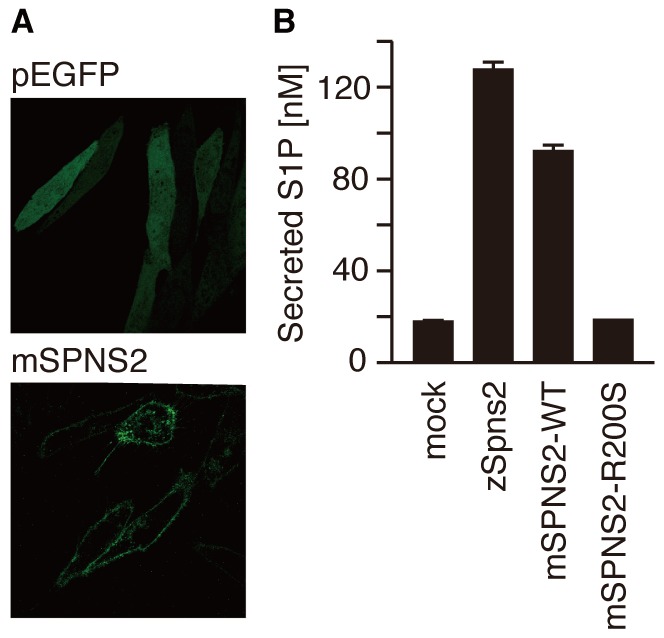
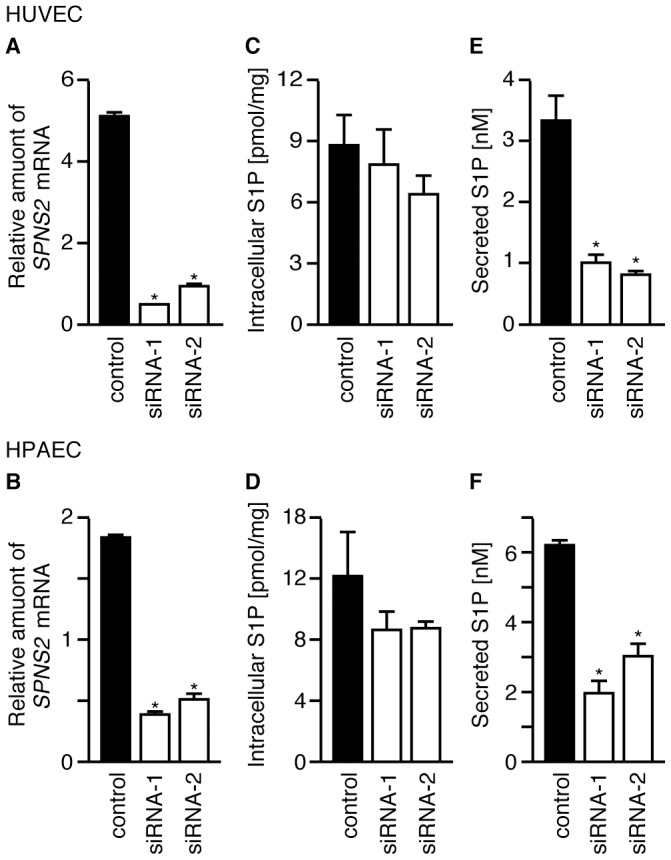
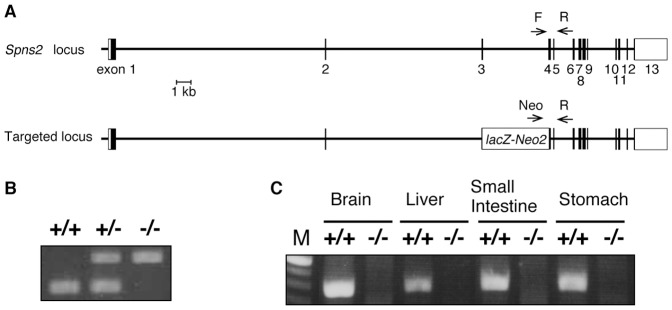
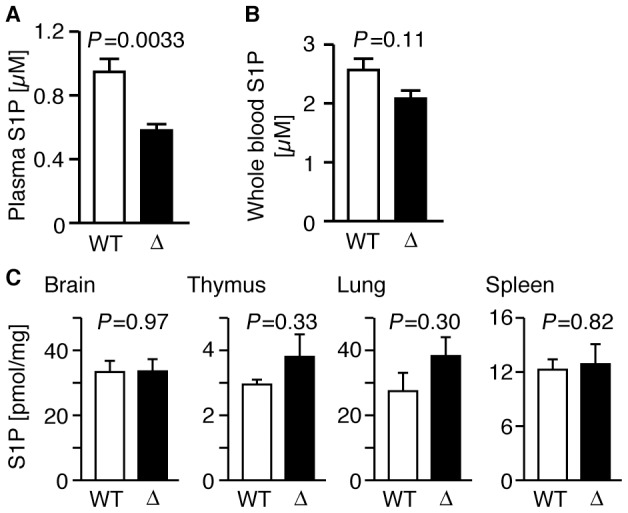
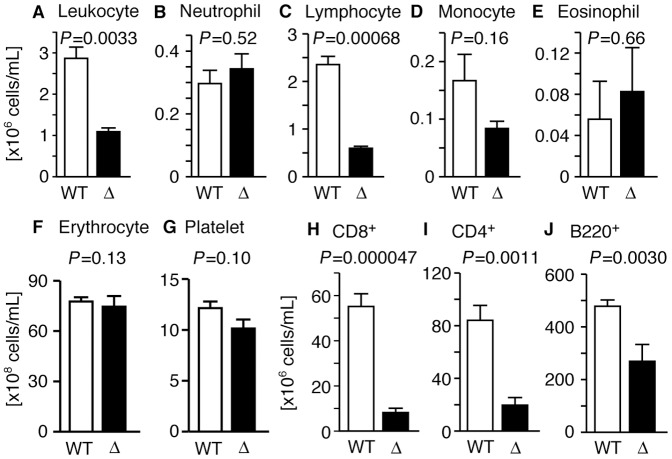
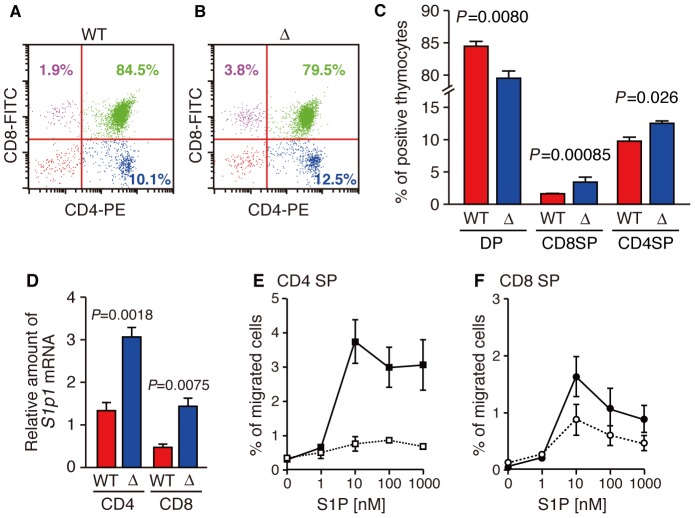
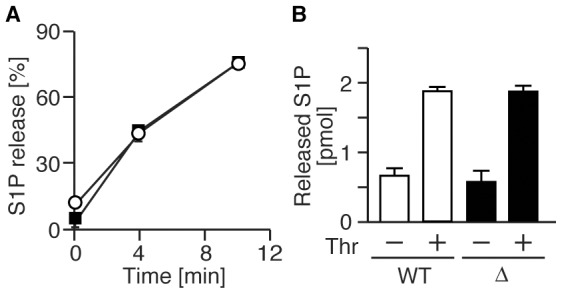
Sphingosine-1-phosphate (S1P), a sphingolipid metabolite that is produced inside the cells, regulates a variety of physiological and pathological responses via S1P receptors (S1P1-5). Signal transduction between cells consists of three steps; the synthesis of signaling molecules, their export to the extracellular space and their recognition by receptors. An S1P concentration gradient is essential for the migration of various cell types that express S1P receptors, such as lymphocytes, pre-osteoclasts, cancer cells and endothelial cells. To maintain this concentration gradient, plasma S1P concentration must be at a higher level. However, little is known about the molecular mechanism by which S1P is supplied to extracellular environments such as blood plasma. Here, we show that SPNS2 functions as an S1P transporter in vascular endothelial cells but not in erythrocytes and platelets. Moreover, the plasma S1P concentration of SPNS2-deficient mice was reduced to approximately 60% of wild-type, and SPNS2-deficient mice were lymphopenic. Our results demonstrate that SPNS2 is the first physiological S1P transporter in mammals and is a key determinant of lymphocyte egress from the thymus.
鞘氨醇-1-磷酸(S1P)是一种细胞内产生的鞘脂代谢物,通过 S1P 受体(S1P1-5)调节多种生理和病理反应。细胞间的信号转导包括三个步骤:信号分子的合成、它们向细胞外空间的输出以及它们被受体的识别。S1P 浓度梯度对于表达 S1P 受体的各种细胞类型的迁移至关重要,例如淋巴细胞、破骨前体细胞、癌细胞和内皮细胞。为了维持这种浓度梯度,血浆 S1P 浓度必须处于较高水平。然而,对于 S1P 如何被供应到如血浆等细胞外环境的分子机制知之甚少。在这里,我们表明 SPNS2 在血管内皮细胞中作为 S1P 转运蛋白发挥作用,但在红细胞和血小板中不起作用。此外,SPNS2 缺陷小鼠的血浆 S1P 浓度降低到野生型的约 60%,并且 SPNS2 缺陷小鼠出现淋巴细胞减少症。我们的结果表明 SPNS2 是哺乳动物中第一个生理 S1P 转运蛋白,是淋巴细胞从胸腺中迁出的关键决定因素。