Stem Cell Program, Institute for Cell Engineering, The Johns Hopkins University School of Medicine, and Division of Pediatric Oncology, Sidney Kimmel Comprehensive Cancer Center at Johns Hopkins, Baltimore, Maryland 21205, USA.
Cytometry A. 2013 Jan;83(1):114-26. doi: 10.1002/cyto.a.22090. Epub 2012 Jun 26.
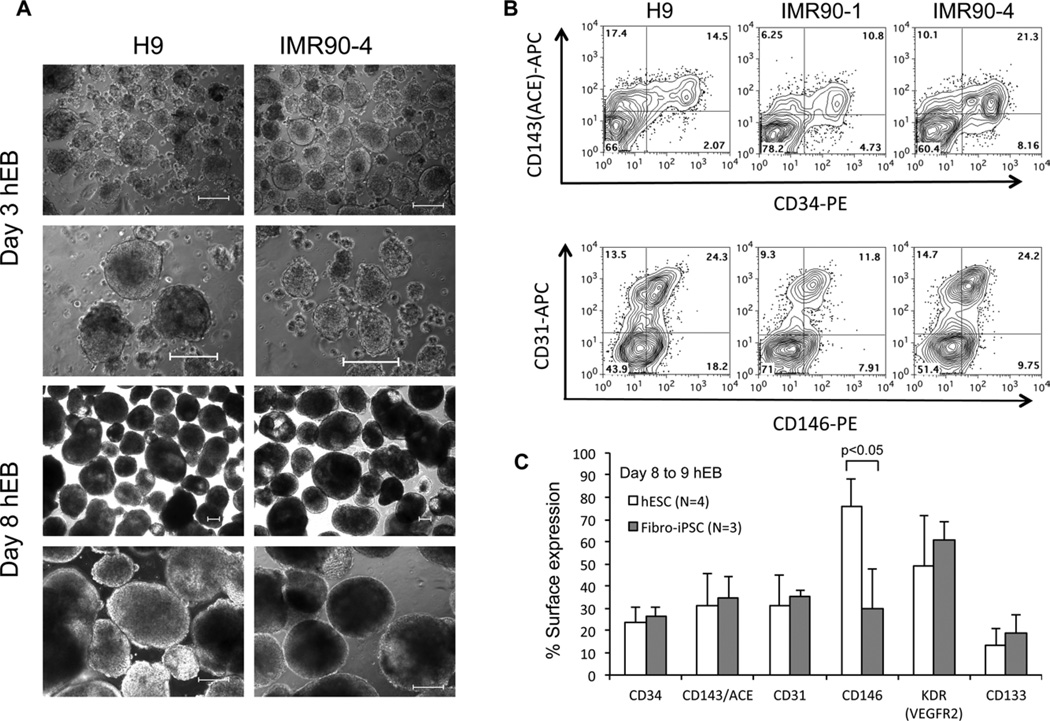
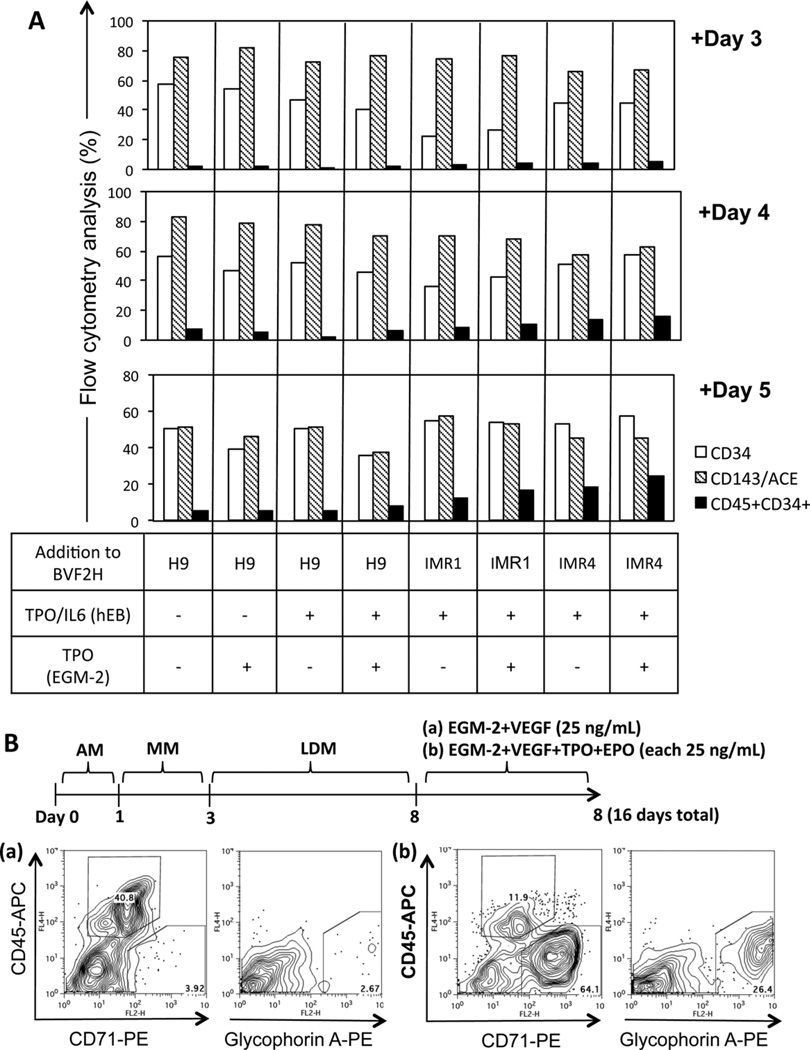
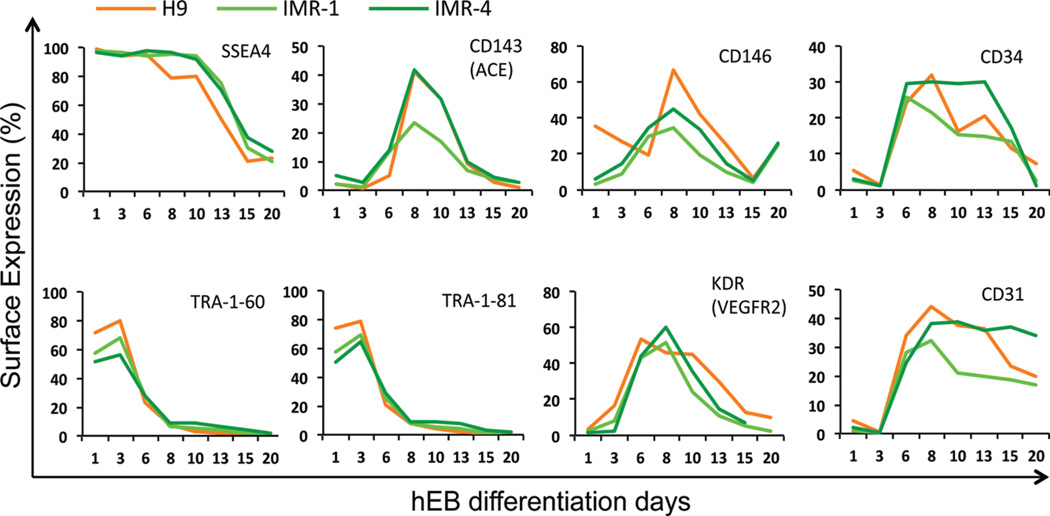
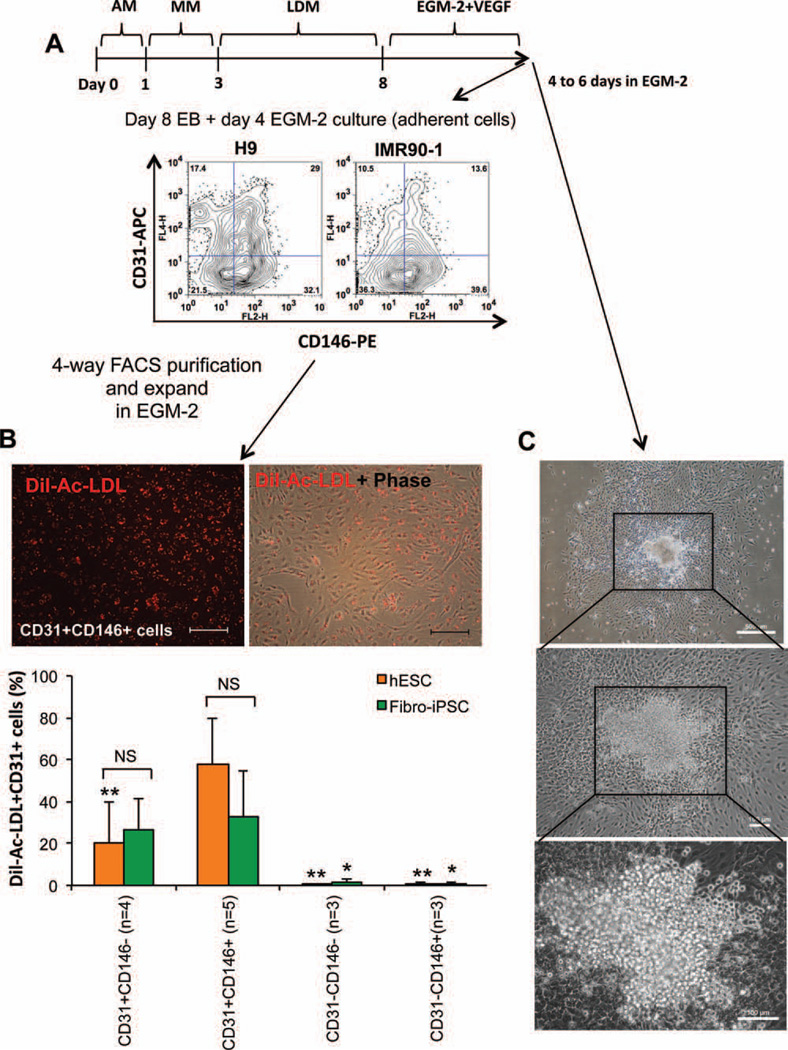
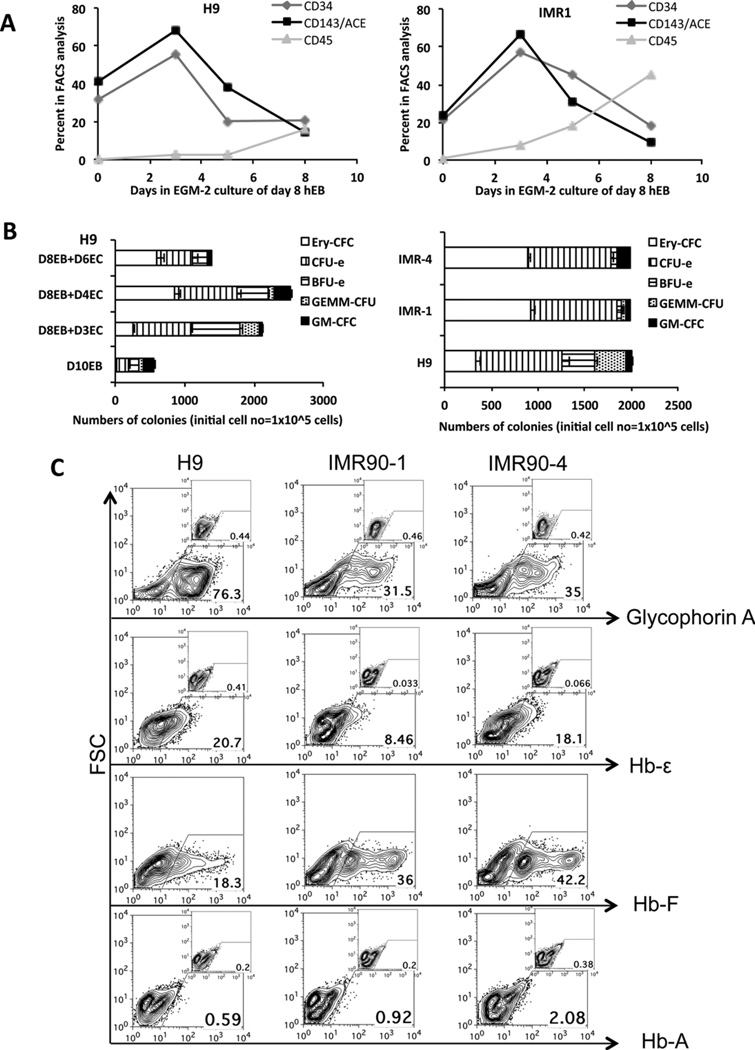
The hematopoietic and vascular lineages are intimately entwined as they arise together from bipotent hemangioblasts and hemogenic endothelial precursors during human embryonic development. In vitro differentiation of human pluripotent stem cells toward these lineages provides opportunities for elucidating the mechanisms of hematopoietic genesis. We previously demonstrated the stepwise in vitro differentiation of human embryonic stem cells (hESC) to definitive erythromyelopoiesis through clonogenic bipotent primitive hemangioblasts. This system recapitulates an orderly hematopoiesis similar to human yolk sac development via the generation of mesodermal-hematoendothelial progenitor cells that give rise to endothelium followed by embryonic primitive and definitive hematopoietic cells. Here, we report that under modified feeder-free endothelial culture conditions, multipotent CD34⁺ CD45⁺ hematopoietic progenitors arise in mass quantities from differentiated hESC and human induced pluripotent stem cells (hiPSC). These hematopoietic progenitors arose directly from adherent endothelial/stromal cell layers in a manner resembling in vivo hematopoiesis from embryonic hemogenic endothelium. Although fibroblast-derived hiPSC lines were previously found inefficient in hemato-endothelial differentiation capacity, our culture system also supported robust hiPSC hemato-vascular differentiation at levels comparable to hESC. We present comparative differentiation results for simultaneously generating hematopoietic and vascular progenitors from both hESC and fibroblast-hiPSC. This defined, optimized, and low-density differentiation system will be ideal for direct single-cell time course studies of the earliest hematopoietic events using time-lapse videography, or bulk kinetics using flow cytometry analyses on emerging hematopoietic progenitors.
造血和血管谱系在人类胚胎发育过程中从多能性的血岛细胞和造血内皮前体细胞共同产生时紧密交织在一起。体外诱导人多能干细胞向这些谱系分化为阐明造血发生的机制提供了机会。我们之前通过克隆形成的多潜能原始血岛细胞证明了人胚胎干细胞(hESC)向确定性红骨髓造血的体外逐步分化。该系统通过中胚层-造血内皮祖细胞的产生再现了类似于人类卵黄囊发育的有序造血,这些祖细胞产生内皮细胞,随后产生胚胎原始和确定性造血细胞。在这里,我们报告在改良的无饲养层内皮培养条件下,大量多能性 CD34 ⁺ CD45 ⁺ 造血祖细胞从分化的 hESC 和人诱导多能干细胞(hiPSC)中大量出现。这些造血祖细胞以类似于体内从胚胎造血内皮产生的方式直接从贴壁的内皮/基质细胞层产生。尽管先前发现来源于成纤维细胞的 hiPSC 系在造血内皮分化能力方面效率低下,但我们的培养系统也支持强大的 hiPSC 造血血管分化,其水平可与 hESC 相媲美。我们同时从 hESC 和成纤维细胞-hiPSC 生成造血和血管祖细胞的比较分化结果。该定义明确、优化和低密度的分化系统非常适合使用延时摄像术直接对最早的造血事件进行单细胞时程研究,或使用流式细胞术分析对新兴的造血祖细胞进行批量动力学研究。