Kellogg Scott H, Tatarsky Andrew
Alcohol Treat Q. 2012 Jan;30(1):109-128. doi: 10.1080/07347324.2012.635544. Epub 2012 Jan 4.
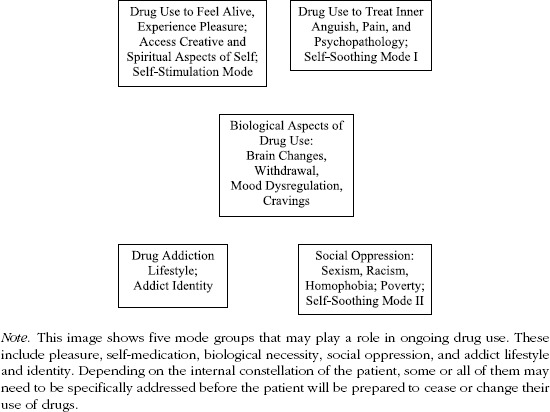
This article is focused on improving the quality of addiction treatment. Based on observations that patients are leaving treatment too early and/or are continuing to use substances during their care, the authors propose six actions that could help reorient and revitalize this kind of clinical work: (1) conceptualize and treat addictive disorders within a psychiatric/mental health framework; (2) make the creation of a strong therapeutic alliance a core part of the healing process; (3) understand patients' addictions and other problems using models based on multiple internal parts, voices, or modes; (4) make contingency management and the use of positive reinforcement systems a standard and central practice in all treatment settings; (5) envision long-term change and healing through the lens of identity theory; and (6) integrate the growing developments in recovery culture with formal treatment.
本文聚焦于提高成瘾治疗的质量。基于患者过早离开治疗和/或在治疗期间继续使用药物的观察结果,作者提出了六项行动,这些行动有助于重新定位和振兴此类临床工作:(1)在精神科/心理健康框架内对成瘾性障碍进行概念化和治疗;(2)将建立强大的治疗联盟作为康复过程的核心部分;(3)使用基于多个内在部分、声音或模式的模型来理解患者的成瘾问题和其他问题;(4)将应急管理和积极强化系统的使用作为所有治疗环境中的标准和核心实践;(5)通过身份理论的视角来设想长期的改变和康复;(6)将康复文化的不断发展与正规治疗相结合。