Unal Cigdem, Eren Guler Gamze, Isil Eda, Alponat Ahmet, Sarlak Ahmet
Department of Plastic, Reconstructive and Aesthetic Surgery, Kocaeli University Medical Faculty, Umuttepe, Kocaeli, Turkey.
Indian J Plast Surg. 2012 Jan;45(1):140-3. doi: 10.4103/0970-0358.96617.
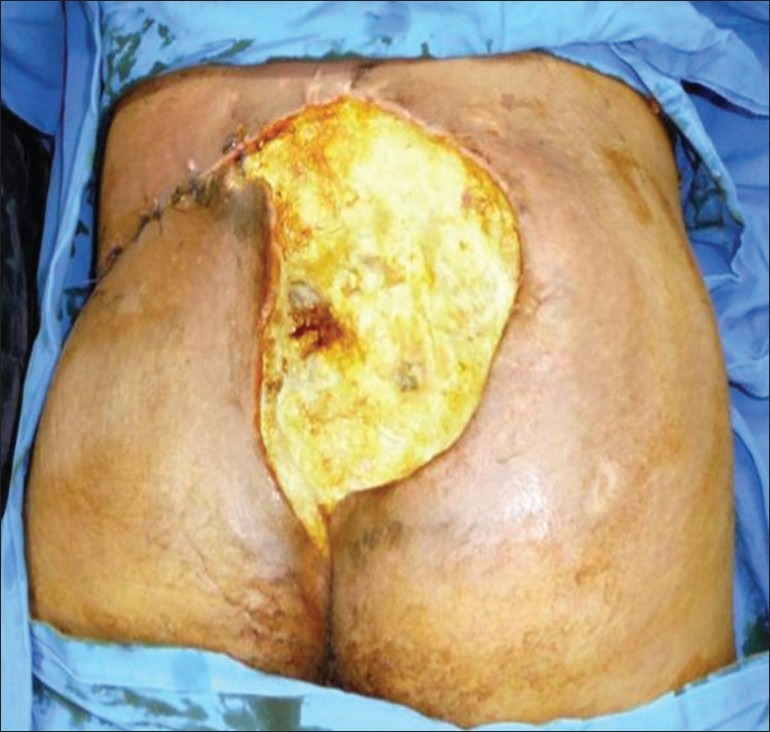
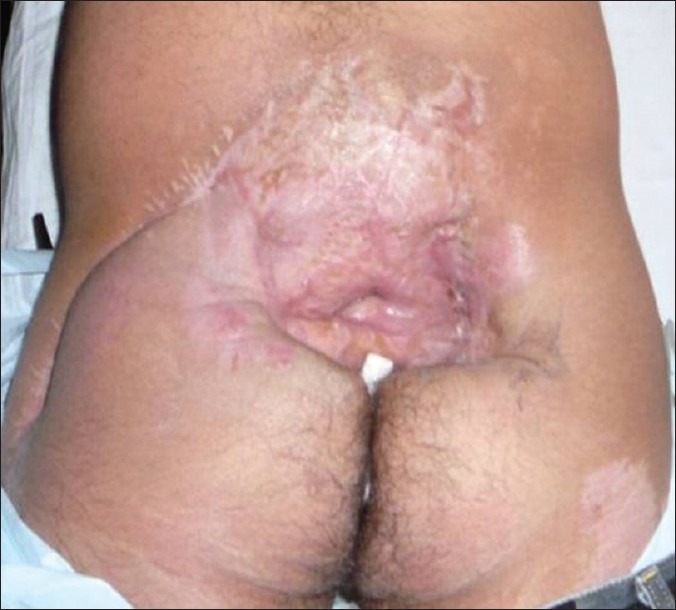
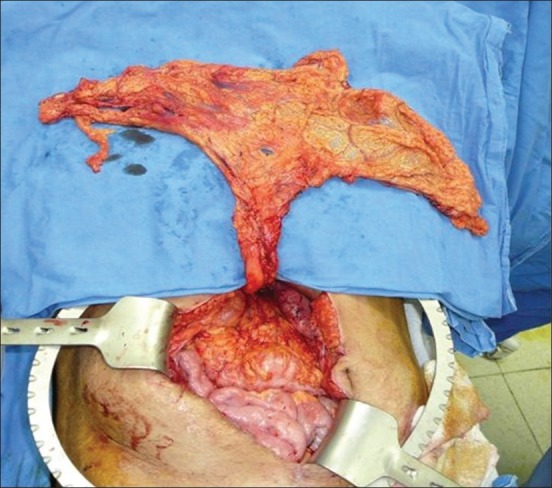
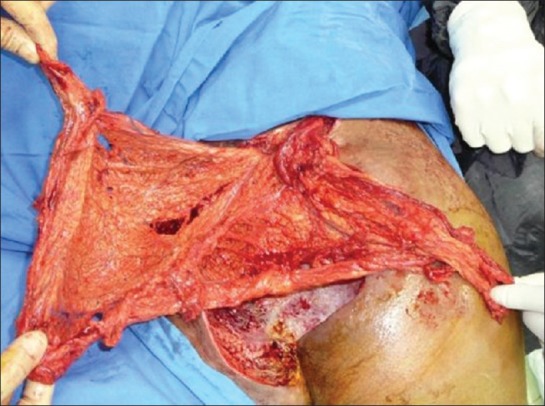
Reconstruction of the lumbosacral region after surgical excision of irradiated and recurrent spinal giant cell tumours remains a challenging problem. In this case report, we describe the use of the pedicled omentum flap in reconstruction of an irradiated and infected wide sacral defect of a 19-year-old male patient. The patient had radiotherapy and subsequent wide surgical resection after recurrence of the tumour. A myocutaneous flap from the gluteal area had failed previously. Local flap options could not be used because of the recent radiotherapy to the gluteal area. Since the patient had a laparotomy for tumour resection and a colostomy, abdominal muscles were not considered reliable for reconstructive procedures. A pedicled omentum flap was chosen as a reconstructive option because of its rich blood supply, large surface area, and angiogenic capacity. This report aims to describe the use of the pedicled omentum flap for reconstruction of the lumbosacral area following surgical resection of a spinal tumour, when gluteal and abdominal flap options for reconstruction are jeopardised.
对接受过放疗且复发的脊柱巨细胞瘤进行手术切除后,腰骶部的重建仍然是一个具有挑战性的问题。在本病例报告中,我们描述了带蒂大网膜瓣在一名19岁男性患者接受放疗且感染的广泛骶骨缺损重建中的应用。该患者在肿瘤复发后接受了放疗及后续的广泛手术切除。先前取自臀区的肌皮瓣失败了。由于近期对臀区进行了放疗,无法使用局部皮瓣。由于患者因肿瘤切除进行了剖腹手术和结肠造口术,腹部肌肉被认为对重建手术不可靠。由于带蒂大网膜瓣血供丰富、表面积大且具有血管生成能力,因此被选为重建方案。本报告旨在描述在臀区和腹部皮瓣重建方案不可行时,带蒂大网膜瓣在脊柱肿瘤手术切除后腰骶部重建中的应用。