Division of Psychiatry, University of Edinburgh, Royal Edinburgh Hospital, Edinburgh, UK.
Transl Psychiatry. 2012 Jul 3;2(7):e130. doi: 10.1038/tp.2012.60.
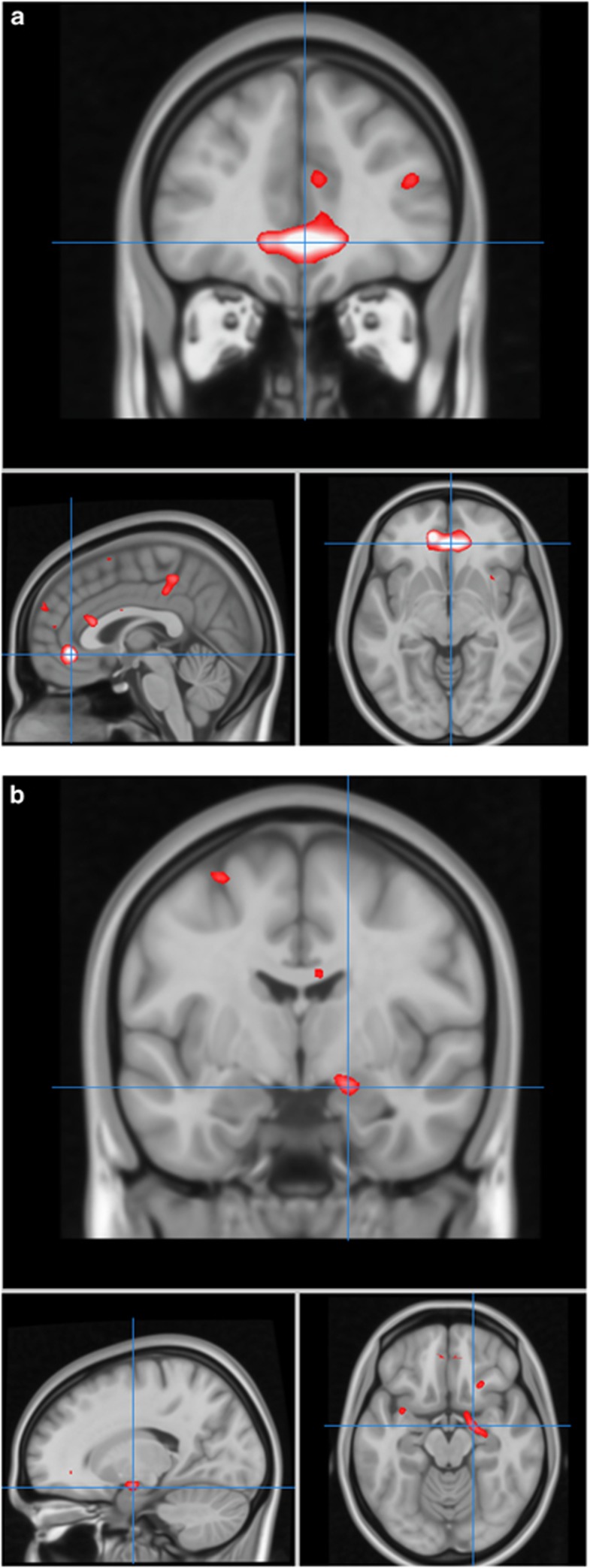
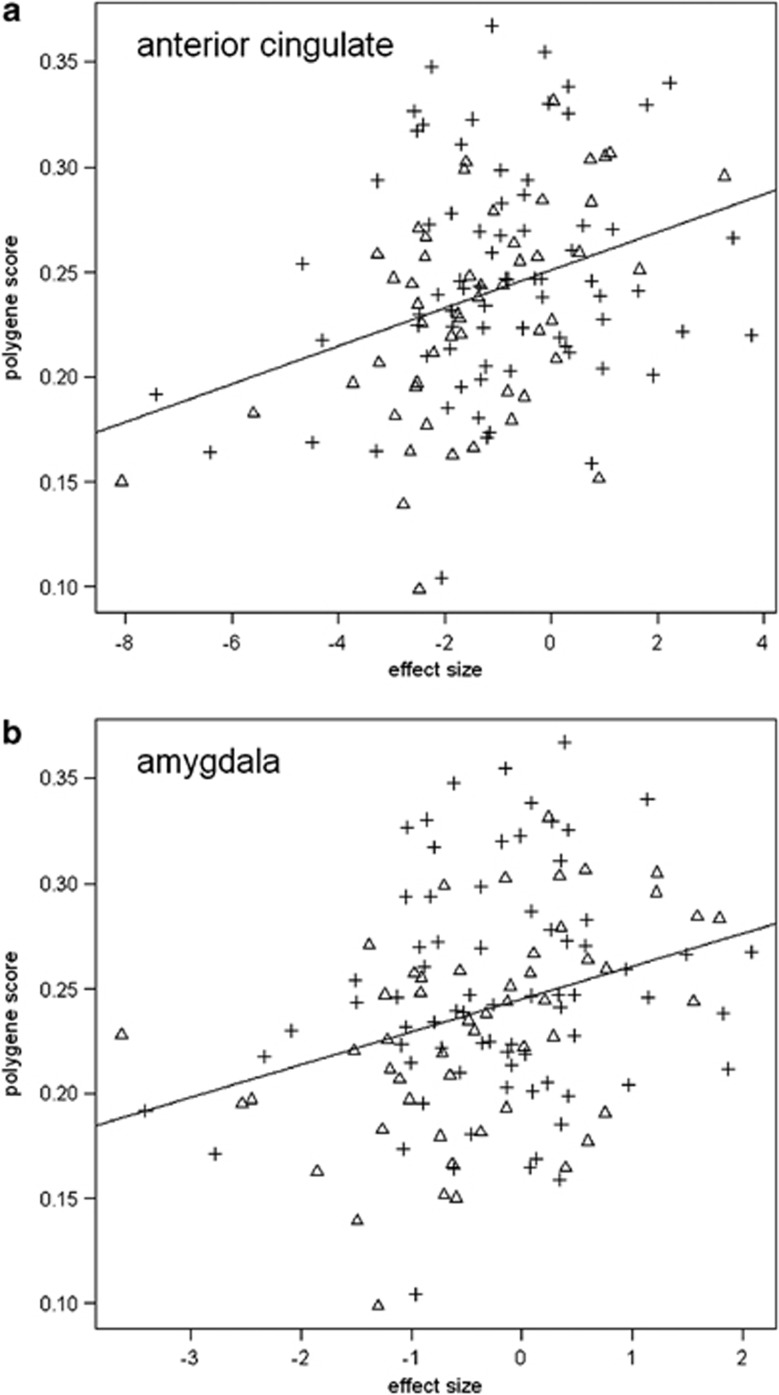
Genome-wide association studies (GWAS) have demonstrated a significant polygenic contribution to bipolar disorder (BD) where disease risk is determined by the summation of many alleles of small individual magnitude. Modelling polygenic risk scores may be a powerful way of identifying disrupted brain regions whose genetic architecture is related to that of BD. We determined the extent to which common genetic variation underlying risk to BD affected neural activation during an executive processing/language task in individuals at familial risk of BD and healthy controls. Polygenic risk scores were calculated for each individual based on GWAS data from the Psychiatric GWAS Consortium Bipolar Disorder Working Group (PGC-BD) of over 16 000 subjects. The familial group had a significantly higher polygene score than the control group (P=0.04). There were no significant group by polygene interaction effects in terms of association with brain activation. However, we did find that an increasing polygenic risk allele load for BD was associated with increased activation in limbic regions previously implicated in BD, including the anterior cingulate cortex and amygdala, across both groups. The findings suggest that this novel polygenic approach to examine brain-imaging data may be a useful means of identifying genetically mediated traits mechanistically linked to the aetiology of BD.
全基因组关联研究(GWAS)表明,双相情感障碍(BD)存在显著的多基因贡献,疾病风险由许多小个体效应等位基因的总和决定。多基因风险评分模型可能是一种识别受破坏的脑区的有效方法,这些脑区的遗传结构与 BD 有关。我们确定了在 BD 家族风险个体和健康对照组中,BD 风险相关的常见遗传变异在执行加工/语言任务期间对神经激活的影响程度。基于超过 16000 名受试者的精神疾病 GWAS 联盟双相情感障碍工作组(PGC-BD)的 GWAS 数据,为每个个体计算了多基因风险评分。家族组的多基因评分明显高于对照组(P=0.04)。在与大脑激活的关联方面,没有发现组与多基因相互作用的显著影响。然而,我们确实发现,BD 的多基因风险等位基因负荷增加与包括前扣带回皮层和杏仁核在内的先前与 BD 有关的边缘区域的激活增加有关,两组均如此。研究结果表明,这种新的多基因方法检查脑成像数据可能是一种有用的手段,可以识别与 BD 病因学有机制联系的遗传介导特征。