Department of Cellular Neurophysiology, Institute of Experimental Medicine, Academy of Sciences of the Czech Republic, Prague, Czech Republic.
PLoS One. 2012;7(6):e39959. doi: 10.1371/journal.pone.0039959. Epub 2012 Jun 27.
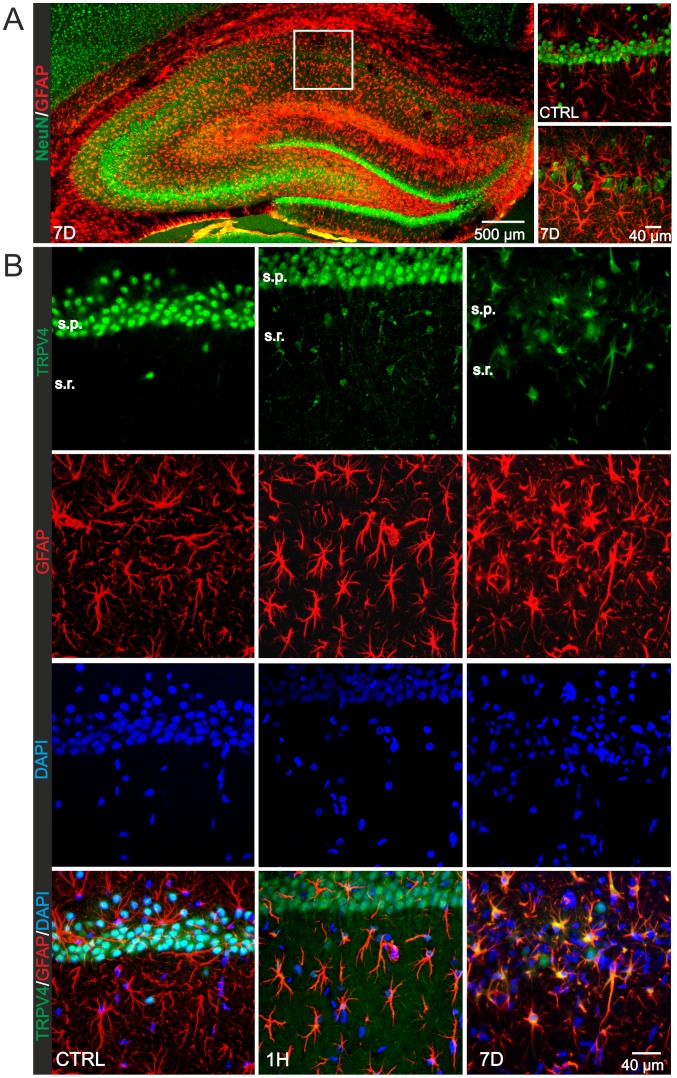
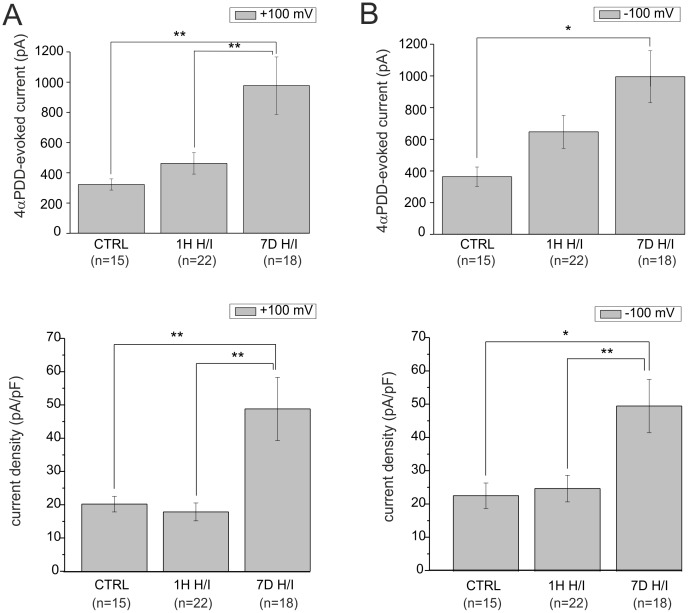
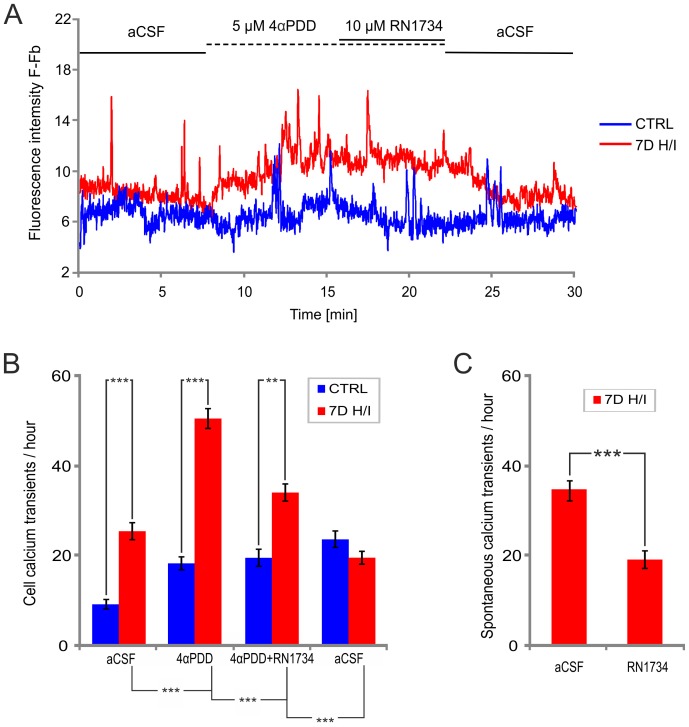
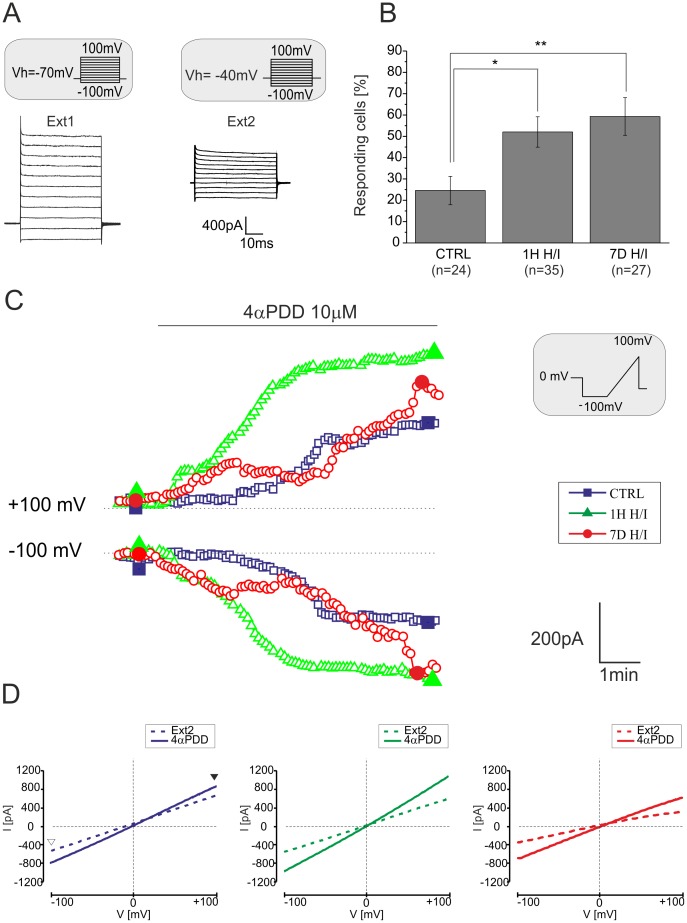
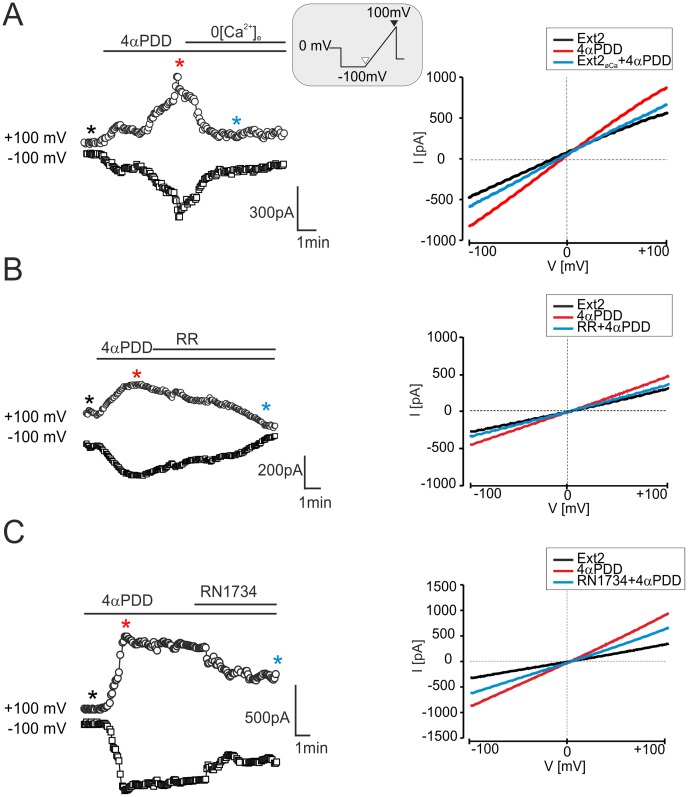
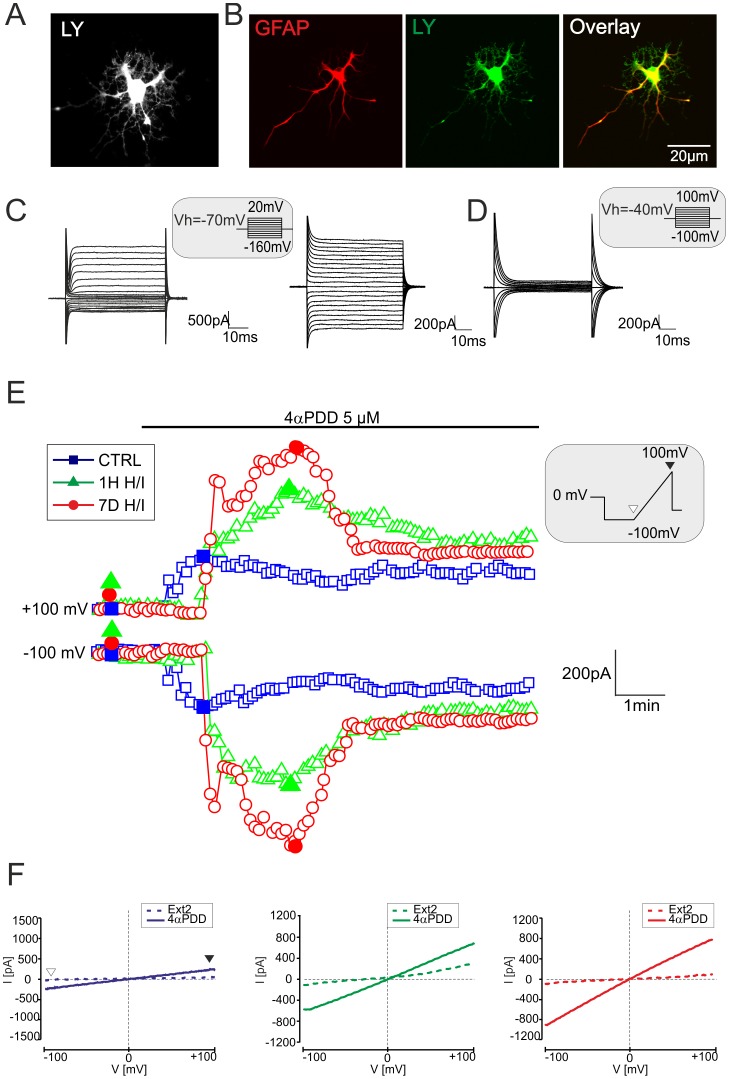
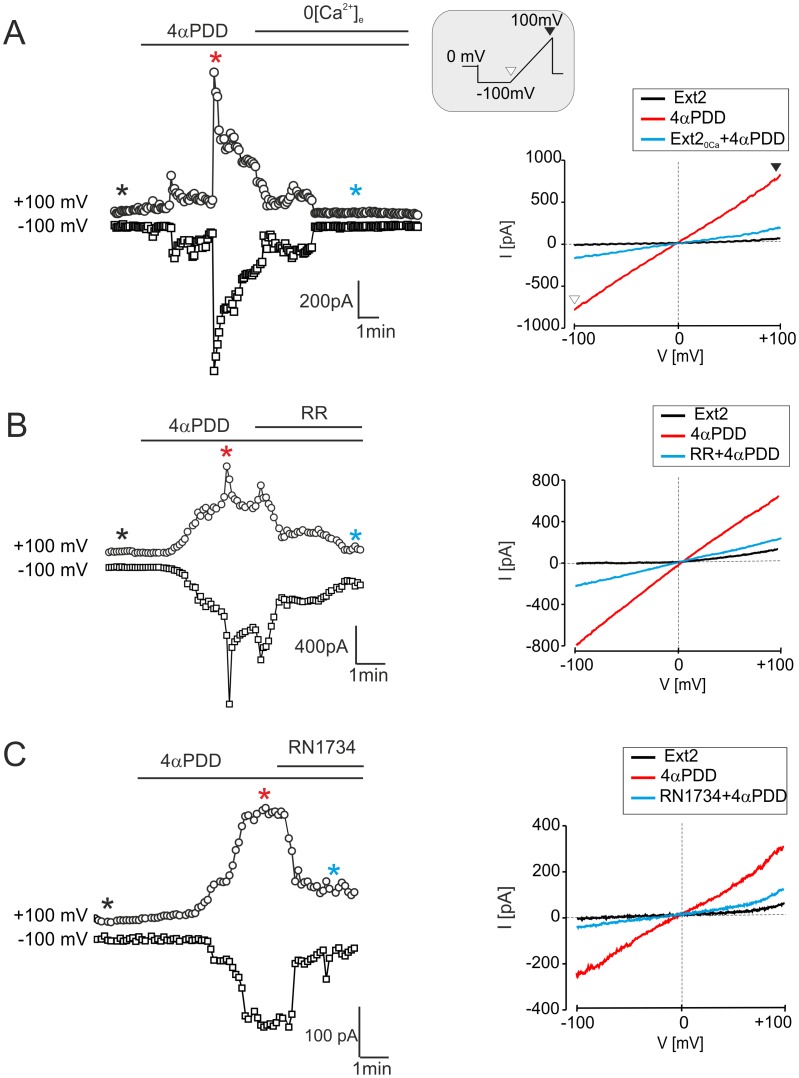
The polymodal transient receptor potential vanilloid 4 (TRPV4) channel, a member of the TRP channel family, is a calcium-permeable cationic channel that is gated by various stimuli such as cell swelling, low pH and high temperature. Therefore, TRPV4-mediated calcium entry may be involved in neuronal and glia pathophysiology associated with various disorders of the central nervous system, such as ischemia. The TRPV4 channel has been recently found in adult rat cortical and hippocampal astrocytes; however, its role in astrocyte pathophysiology is still not defined. In the present study, we examined the impact of cerebral hypoxia/ischemia (H/I) on the functional expression of astrocytic TRPV4 channels in the adult rat hippocampal CA1 region employing immunohistochemical analyses, the patch-clamp technique and microfluorimetric intracellular calcium imaging on astrocytes in slices as well as on those isolated from sham-operated or ischemic hippocampi. Hypoxia/ischemia was induced by a bilateral 15-minute occlusion of the common carotids combined with hypoxic conditions. Our immunohistochemical analyses revealed that 7 days after H/I, the expression of TRPV4 is markedly enhanced in hippocampal astrocytes of the CA1 region and that the increasing TRPV4 expression coincides with the development of astrogliosis. Additionally, adult hippocampal astrocytes in slices or cultured hippocampal astrocytes respond to the TRPV4 activator 4-alpha-phorbol-12,-13-didecanoate (4αPDD) by an increase in intracellular calcium and the activation of a cationic current, both of which are abolished by the removal of extracellular calcium or exposure to TRP antagonists, such as Ruthenium Red or RN1734. Following hypoxic/ischemic injury, the responses of astrocytes to 4αPDD are significantly augmented. Collectively, we show that TRPV4 channels are involved in ischemia-induced calcium entry in reactive astrocytes and thus, might participate in the pathogenic mechanisms of astroglial reactivity following ischemic insult.
多模式瞬时受体电位香草酸 4 型(TRPV4)通道是 TRP 通道家族的一员,是一种钙渗透性阳离子通道,可被各种刺激物如细胞肿胀、低 pH 值和高温门控。因此,TRPV4 介导的钙内流可能参与与中枢神经系统各种疾病相关的神经元和神经胶质病理生理学,如缺血。最近在成年大鼠皮质和海马星形胶质细胞中发现了 TRPV4 通道;然而,其在星形胶质细胞病理生理学中的作用仍未确定。在本研究中,我们通过免疫组织化学分析、膜片钳技术和切片上以及从假手术或缺血海马体分离的星形胶质细胞的微荧光细胞内钙成像,研究了脑缺氧/缺血(H/I)对成年大鼠海马 CA1 区星形胶质细胞功能性 TRPV4 通道表达的影响。采用双侧颈总动脉 15 分钟闭塞联合缺氧条件诱导缺氧/缺血。我们的免疫组织化学分析显示,H/I 后 7 天,CA1 区海马星形胶质细胞中 TRPV4 的表达明显增强,并且 TRPV4 表达的增加与星形胶质细胞增生的发展相一致。此外,切片中的成年海马星形胶质细胞或培养的海马星形胶质细胞对 TRPV4 激活剂 4-α-佛波醇-12,13-二癸酸酯(4αPDD)的反应是细胞内钙的增加和阳离子电流的激活,这两者都被去除细胞外钙或暴露于 TRP 拮抗剂如钌红或 RN1734 所消除。在缺氧/缺血损伤后,星形胶质细胞对 4αPDD 的反应明显增强。总的来说,我们表明 TRPV4 通道参与了缺血诱导的反应性星形胶质细胞中的钙内流,因此,可能参与了缺血性损伤后星形胶质细胞反应的致病机制。