Wang Hui, Gao Haokao, Guo Ning, Niu Gang, Ma Ying, Kiesewetter Dale O, Chen Xiaoyuan
Laboratory of Molecular Imaging and Nanomedicine (LOMIN), National Institute of Biomedical Imaging and Bioengineering (NIBIB), National Institutes of Health (NIH), Bethesda, MD 20892, USA.
Theranostics. 2012;2(6):607-17. doi: 10.7150/thno.4611. Epub 2012 Jun 15.
Vascular endothelial growth factor (VEGF) is one of the most important mediators of angiogenesis. Single-chain (sc)-VEGF protein containing an N-terminal Cys-tag has been designed for site-specific modification with a variety of imaging and therapeutic moieties. Site-specific labeling of scVEGF with thiol-reactive prosthetic group, N-[2-(4-(18)F-fluorobenzamido) ethyl] maleimide ([(18)F]FBEM) for positron emission tomography (PET) imaging of VEFGR may provide a new tracer which has great potential for clinical translation.
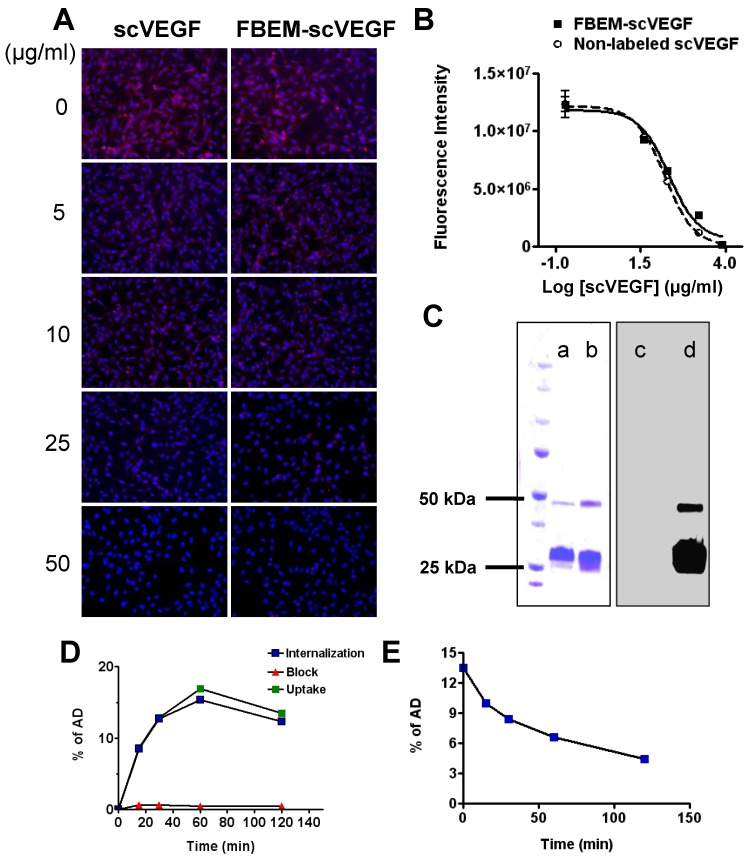
[(18)F]FBEM-scVEGF was synthesized by site-specific conjugation of (18)F-FBEM to a thiol group in Cys-tag of scVEGF at room temperature. The functional activity after labeling was tested by immunofluorescence staining, cellular uptake and efflux. The tumor targeting and in vivo properties were evaluated by biodistribution and microPET studies in tumor-bearing mice.
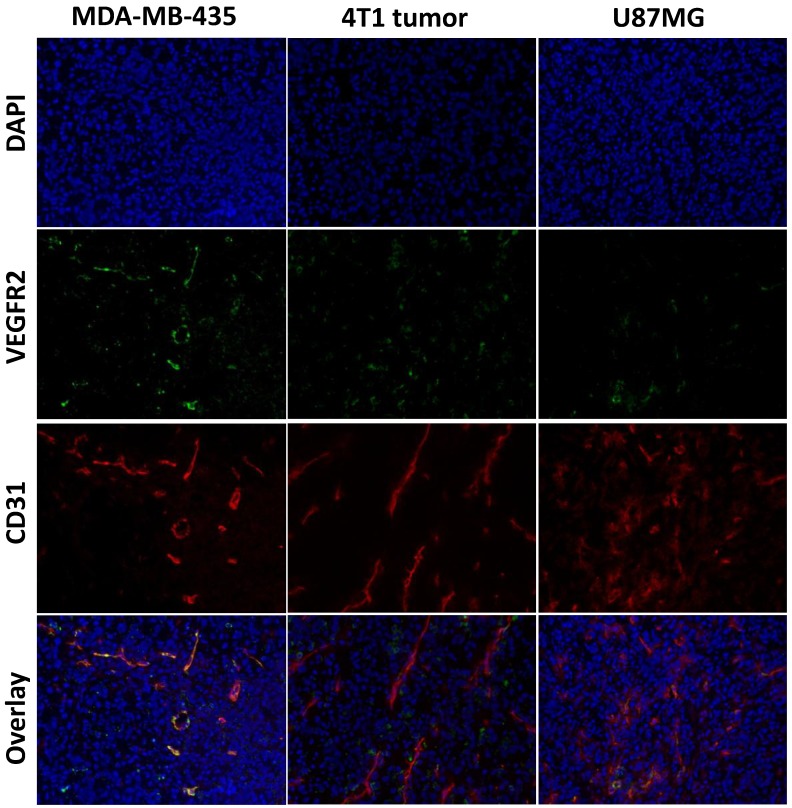
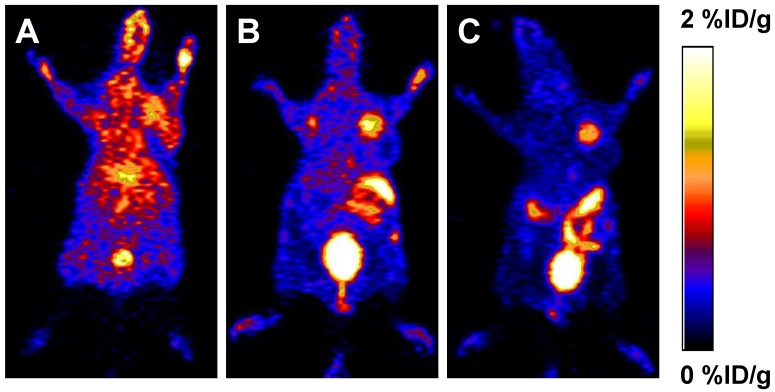
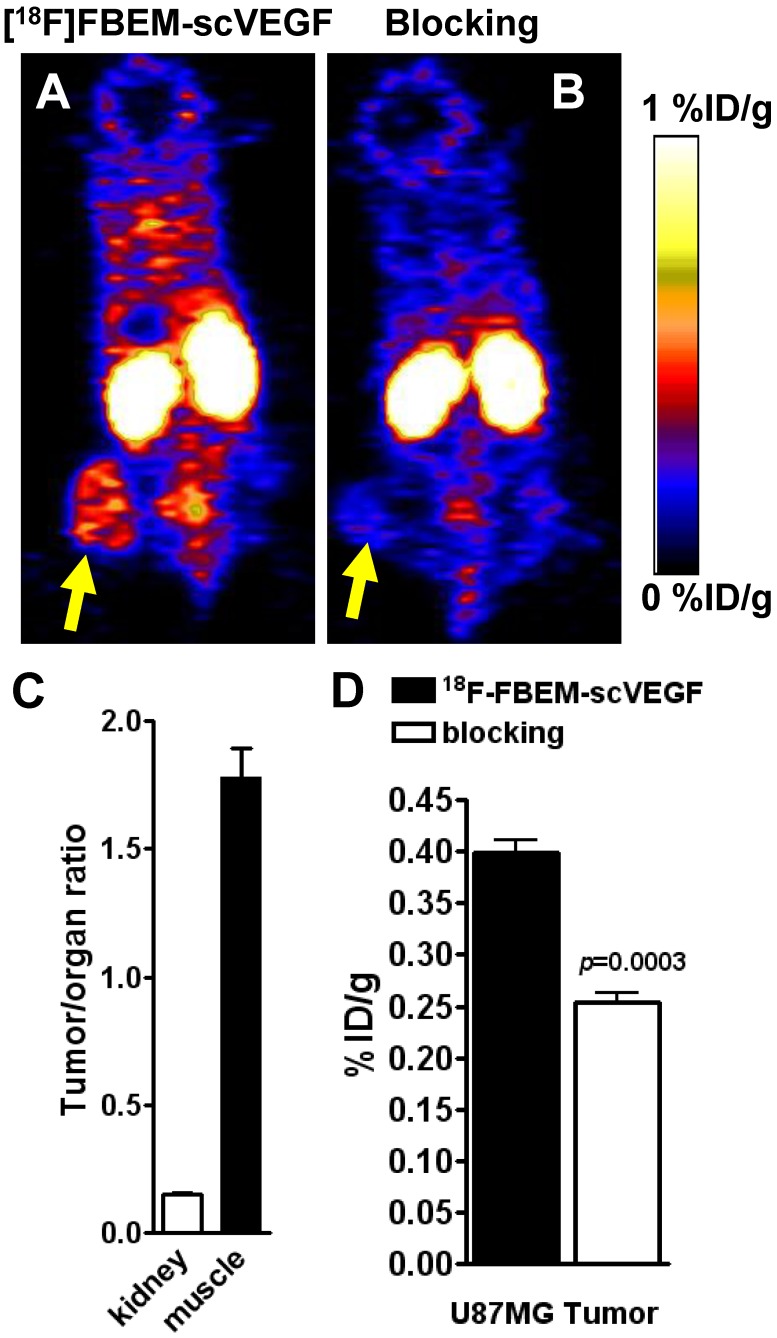
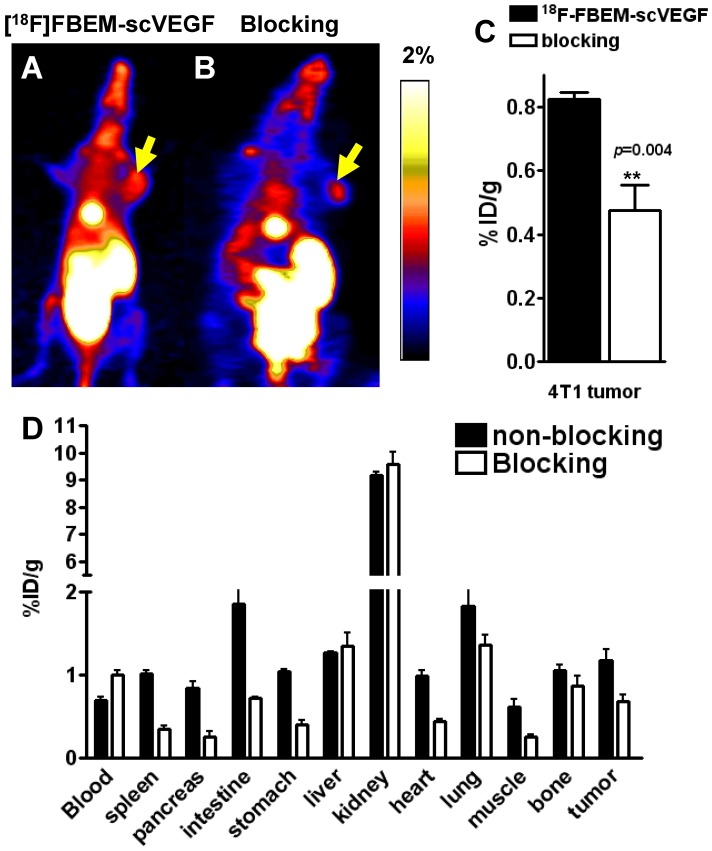
The radiolabeling yield and specific activity of [(18)F]FBEM-scVEGF were 20.6 ± 15.1% (based on starting [(18)F]FBEM, uncorrected, n = 5) and 58.8 ± 12.4 GBq/µmol, respectively. Noninvasive microPET and direct tissue sampling experiments demonstrated that [(18)F]FBEM-scVEGF had VEGFR specific tumor uptake in MDA-MB-435, U87MG and 4T1 xenograft models. The optimal tumor uptake was achieved at 2 h p.i., which can be partially, but significantly blocked by co-injection of non-labeled scVEGF protein. Overall, [(18)F]FBEM-scVEGF showed VEGFR specific tumor uptake.
The scVEGF was site-specifically labeled with (18)F via [(18)F]FBEM prosthetic group and the tracer [(18)F]FBEM-scVEGF exhibited high receptor binding affinity and tumor targeting efficacy. Further study of [(18)F] FBEM-scVEGF to evaluate angiogenesis in cancer and other disease types is warranted.
血管内皮生长因子(VEGF)是血管生成最重要的介质之一。含N端半胱氨酸标签的单链(sc)-VEGF蛋白已被设计用于与多种成像和治疗部分进行位点特异性修饰。用硫醇反应性辅基N-[2-(4-(18)F-氟苯甲酰胺基)乙基]马来酰亚胺([(18)F]FBEM)对scVEGF进行位点特异性标记以用于VEGFR的正电子发射断层扫描(PET)成像,可能会提供一种具有巨大临床转化潜力的新型示踪剂。
[(18)F]FBEM-scVEGF通过在室温下将(18)F-FBEM与scVEGF半胱氨酸标签中的硫醇基团进行位点特异性偶联而合成。标记后的功能活性通过免疫荧光染色、细胞摄取和流出进行测试。通过在荷瘤小鼠中的生物分布和微型PET研究评估肿瘤靶向性和体内特性。
[(18)F]FBEM-scVEGF的放射性标记产率和比活分别为20.6±15.1%(基于起始[(18)F]FBEM,未校正,n = 5)和58.8±12.4 GBq/µmol。无创微型PET和直接组织采样实验表明,[(18)F]FBEM-scVEGF在MDA-MB-435、U87MG和4T1异种移植模型中具有VEGFR特异性肿瘤摄取。最佳肿瘤摄取在注射后2小时达到,可通过共同注射未标记的scVEGF蛋白部分但显著地被阻断。总体而言,[(18)F]FBEM-scVEGF显示出VEGFR特异性肿瘤摄取。
scVEGF通过[(18)F]FBEM辅基被(18)F位点特异性标记,示踪剂[(18)F]FBEM-scVEGF表现出高受体结合亲和力和肿瘤靶向效能。对[(18)F]FBEM-scVEGF进行进一步研究以评估癌症和其他疾病类型中的血管生成是有必要的。