Department of Psychiatry, Molecular Psychiatry, Rostock University Medical School, Rostock, Germany.
PLoS One. 2012;7(6):e39302. doi: 10.1371/journal.pone.0039302. Epub 2012 Jun 29.
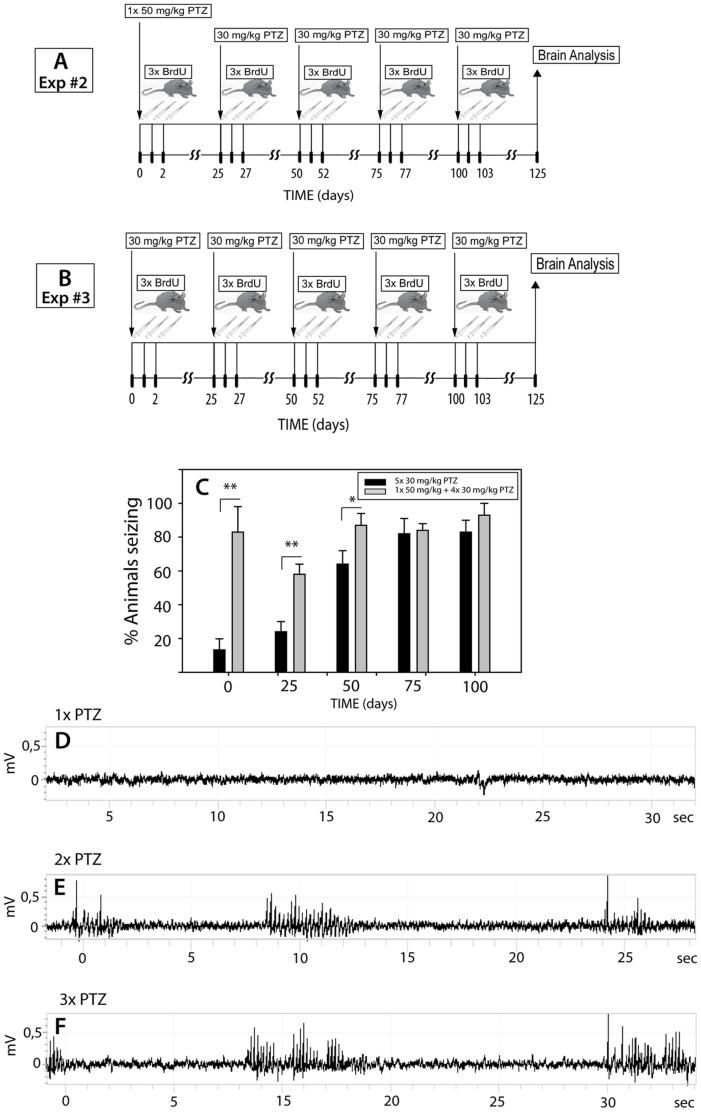
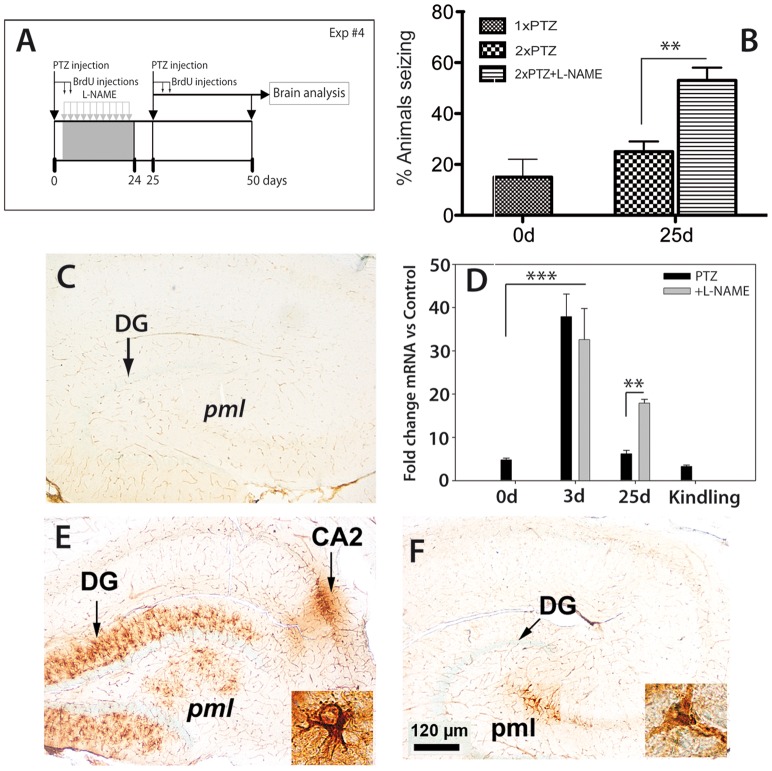
Neurogenesis persists throughout life in the adult mammalian brain. Because neurogenesis can only be assessed in postmortem tissue, its functional significance remains undetermined, and identifying an in vivo correlate of neurogenesis has become an important goal. By studying pentylenetetrazole-induced brain stimulation in a rat model of kindling we accidentally discovered that 25±1 days periodic stimulation of Sprague-Dawley rats led to a highly efficient increase in seizure susceptibility.
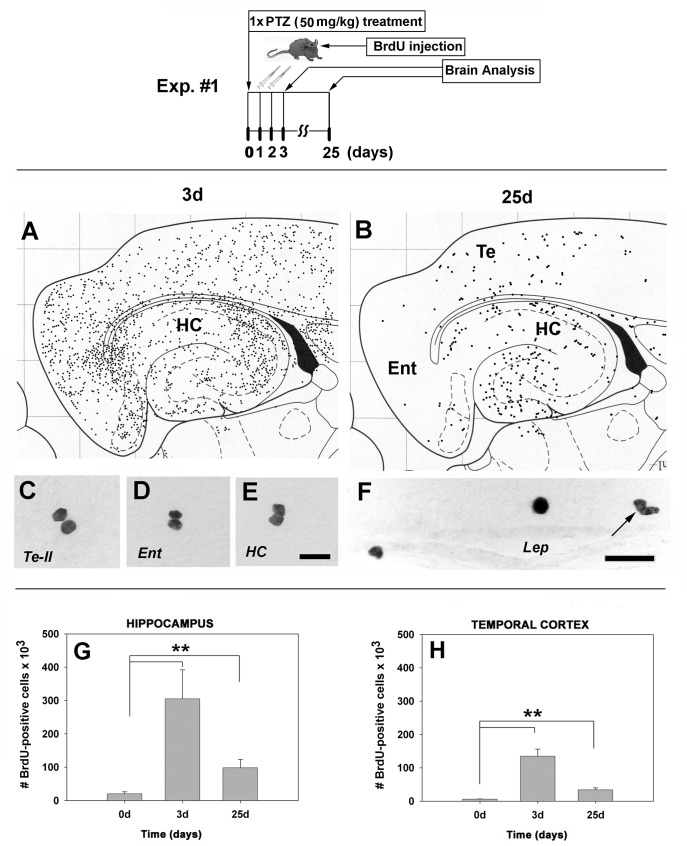
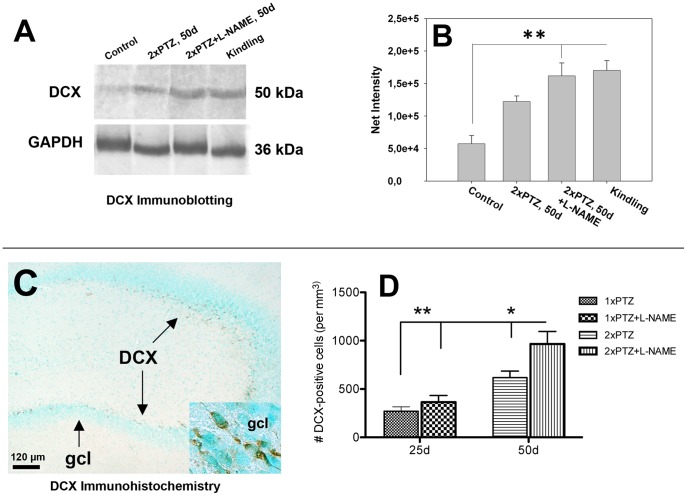
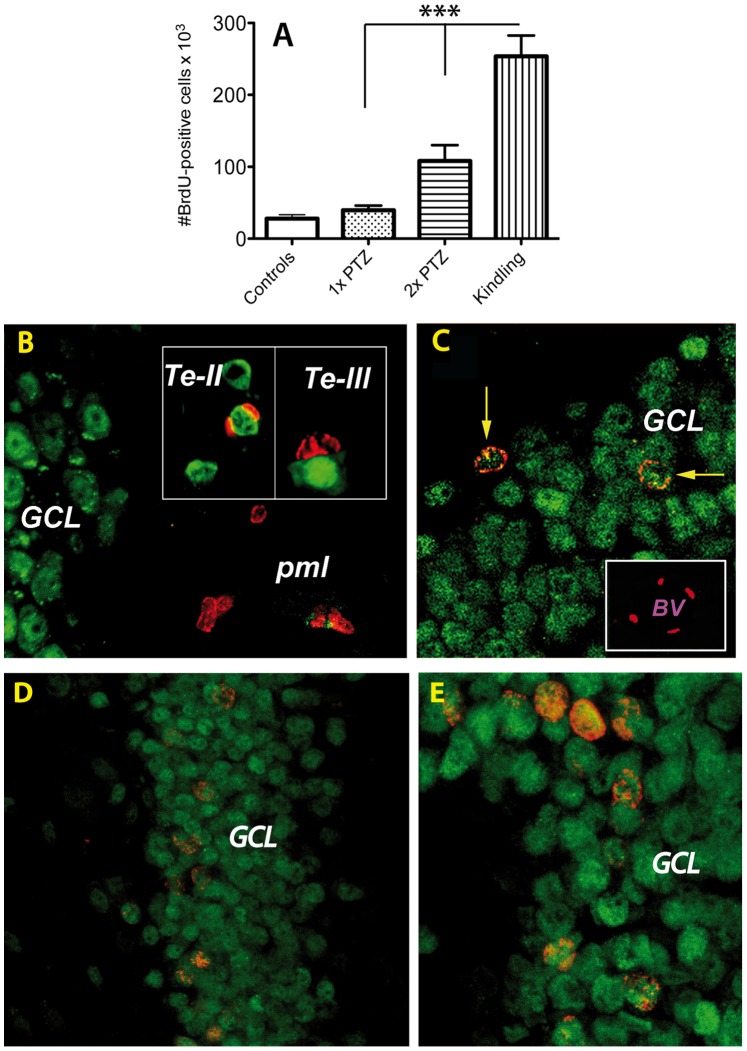
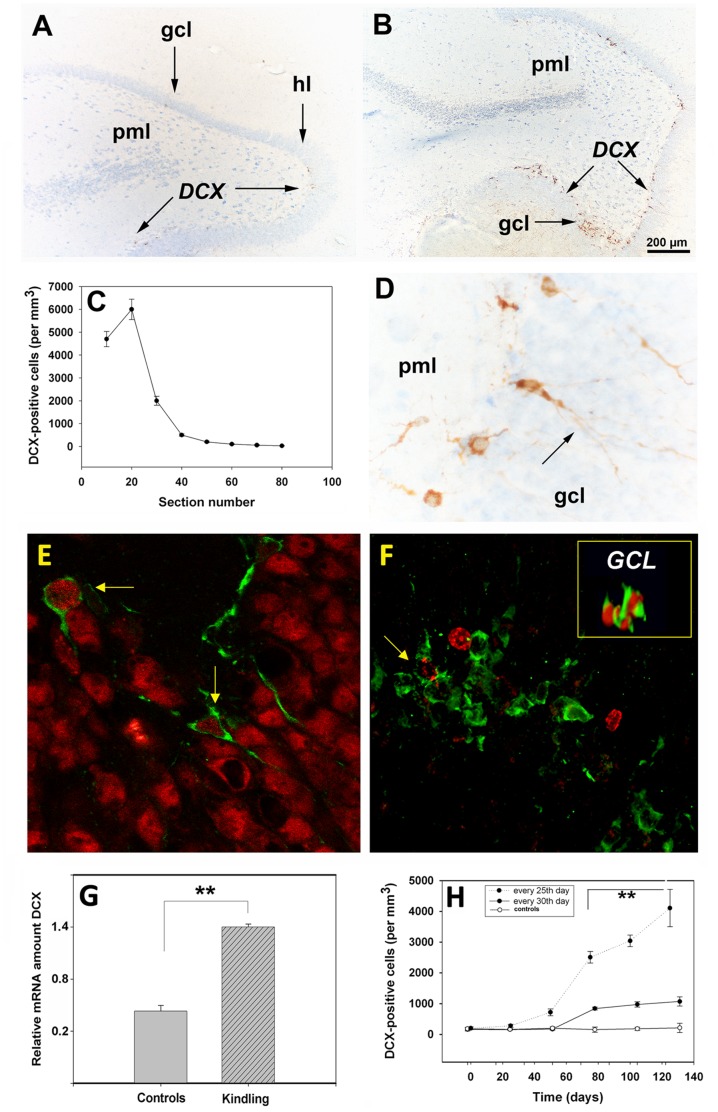
METHODOLOGY/PRINCIPAL FINDINGS: By EEG, RT-PCR, western blotting and immunohistochemistry, we show that repeated convulsive seizures with a periodicity of 25±1 days led to an enrichment of newly generated neurons, that were BrdU-positive in the dentate gyrus at day 25±1 post-seizure. At the same time, there was a massive increase in the number of neurons expressing the migratory marker, doublecortin, at the boundary between the granule cell layer and the polymorphic layer in the dorsal hippocampus. Some of these migrating neurons were also positive for NeuN, a marker for adult neurons.
CONCLUSION/SIGNIFICANCE: Our results suggest that the increased susceptibility to seizure at day 25±1 post-treatment is coincident with a critical time required for newborn neurons to differentiate and integrate into the existing hippocampal network, and outlines the importance of the dorsal hippocampus for seizure-related neurogenesis. This model can be used as an in vivo correlate of neurogenesis to study basic questions related to neurogenesis and to the neurogenic mechanisms that contribute to the development of epilepsy.
神经发生在成年哺乳动物大脑中贯穿一生。由于神经发生只能在死后组织中评估,其功能意义仍未确定,因此确定神经发生的体内相关物已成为一个重要目标。通过研究戊四氮诱导的点燃大鼠模型中的脑刺激,我们意外地发现,25±1 天周期性刺激 Sprague-Dawley 大鼠可导致癫痫易感性的高效增加。
方法/主要发现:通过 EEG、RT-PCR、western blot 和免疫组织化学,我们表明,具有 25±1 天周期性的反复惊厥性发作导致新生成的神经元丰富,这些神经元在发作后 25±1 天在齿状回中呈 BrdU 阳性。同时,在背侧海马的颗粒细胞层和多形细胞层之间的边界处,表达迁移标志物双皮质素的神经元数量大量增加。这些迁移神经元中的一些也对成年神经元标志物 NeuN 呈阳性。
结论/意义:我们的结果表明,在治疗后 25±1 天,癫痫易感性增加与新生神经元分化并整合到现有的海马网络所需的关键时间一致,并概述了背侧海马在与癫痫相关的神经发生中的重要性。该模型可用作神经发生的体内相关物,以研究与神经发生和有助于癫痫发生的神经发生机制相关的基本问题。