Nutrition and Diabetes Research Laboratory, Pennington Biomedical Research Center, Louisiana State University System, Baton Rouge, LA 70808, USA.
Int J Nanomedicine. 2012;7:2999-3012. doi: 10.2147/IJN.S30887. Epub 2012 Jun 18.
To compare the effects of dietary fibers on hepatic cellular signaling in mice.
Mice were randomly divided into four groups (n = 9/group): high-fat diet (HFD) control, cellulose, psyllium, and sugarcane fiber (SCF) groups. All mice were fed a HFD with or without 10% dietary fiber (w/w) for 12 weeks. Body weight, food intake, fasting glucose, and fasting insulin levels were measured. At the end of the study, hepatic fibroblast growth factor (FGF) 21, AMP-activated protein kinase (AMPK) and insulin signaling protein content were determined.
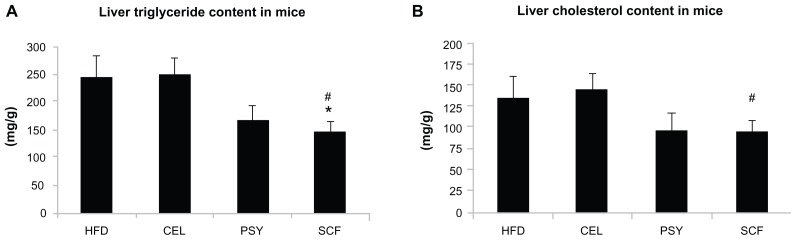
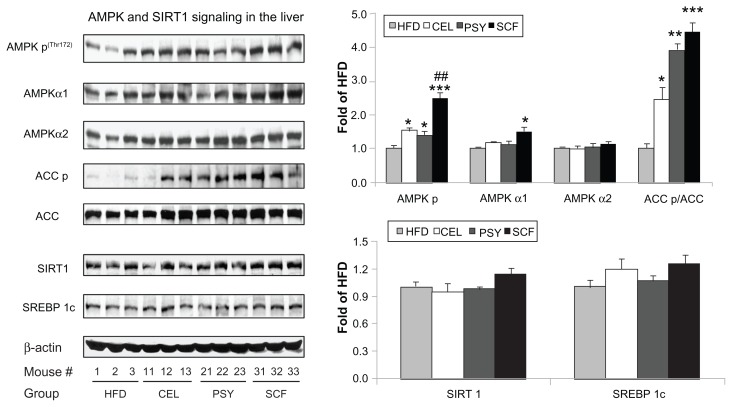
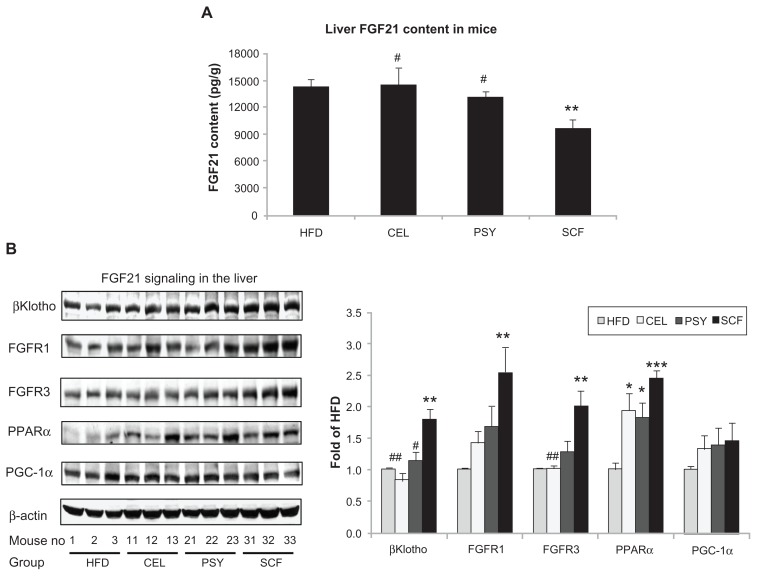
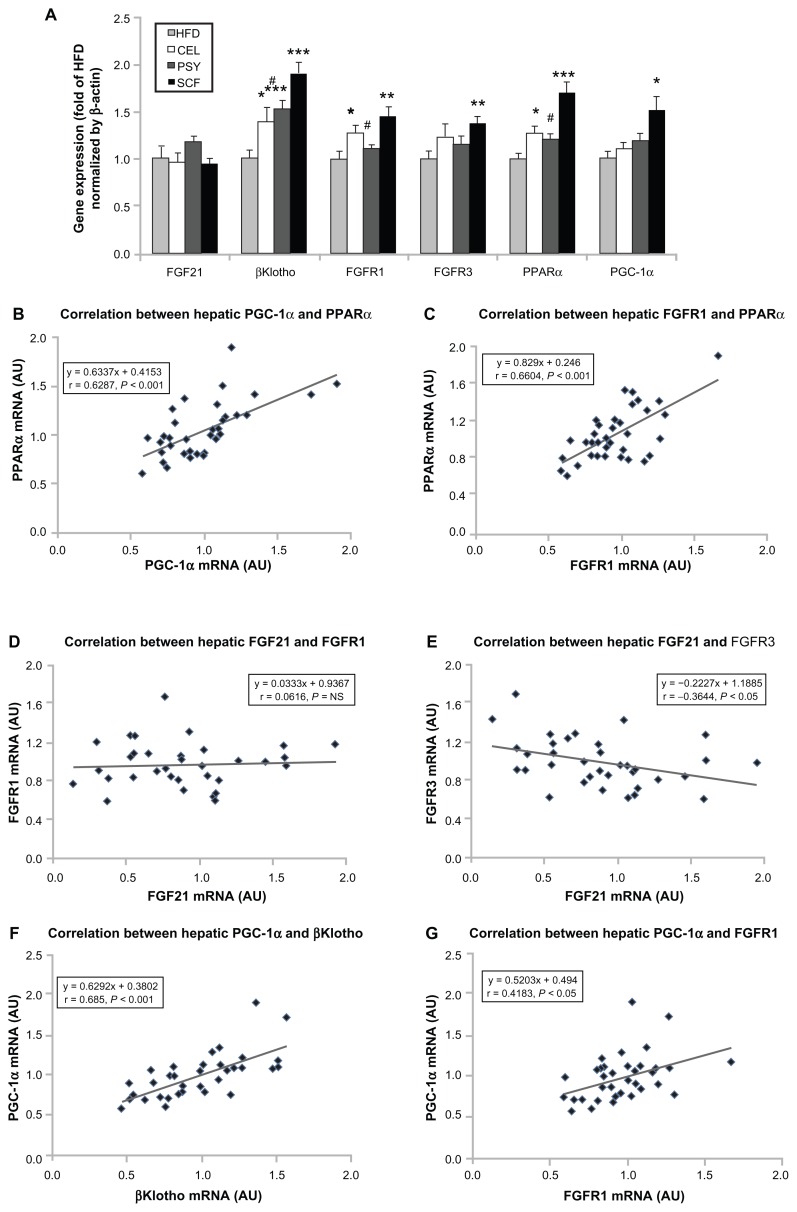
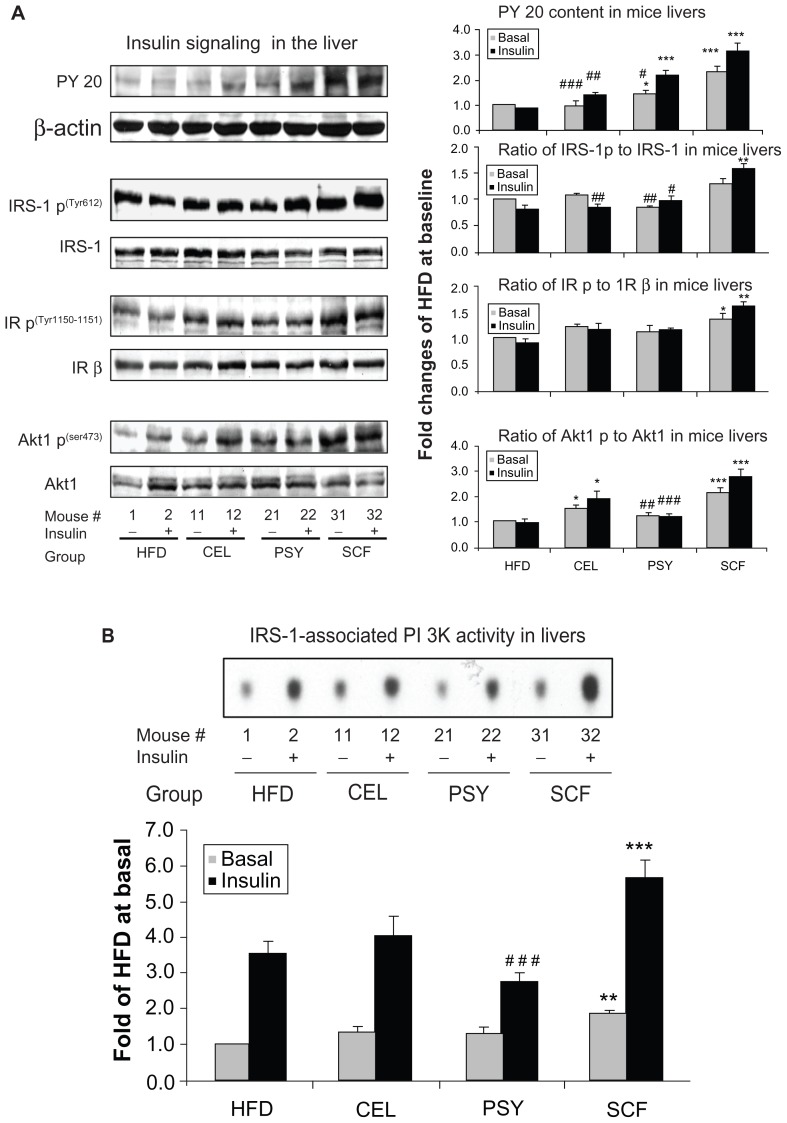
Hepatic FGF21 content was significantly lowered, but βKlotho, fibroblast growth factor receptor 1, fibroblast growth factor receptor 3, and peroxisome proliferator-activated receptor alpha proteins were significantly increased in the SCF group compared with those in the HFD group (P < 0.01). SCF supplementation also significantly enhanced insulin and AMPK signaling, as well as decreased hepatic triglyceride and cholesterol in comparison with the HFD mice. The study has shown that dietary fiber, especially SCF, significantly attenuates lipid accumulation in the liver by enhancing hepatic FGF21, insulin, and AMPK signaling in mice fed a HFD.
This study suggests that the modulation of gastrointestinal factors by dietary fibers may play a key role in both enhancing hepatic multiple cellular signaling and reducing lipid accumulation.
比较膳食纤维对小鼠肝细胞信号转导的影响。
将小鼠随机分为四组(每组 9 只):高脂肪饮食(HFD)对照组、纤维素组、车前子组和甘蔗纤维(SCF)组。所有小鼠均喂食高脂肪饮食,同时分别添加 10%(w/w)的膳食纤维(纤维素、车前子、SCF),共 12 周。测量体重、食物摄入量、空腹血糖和空腹胰岛素水平。研究结束时,测定肝成纤维细胞生长因子(FGF)21、AMP 激活的蛋白激酶(AMPK)和胰岛素信号蛋白含量。
与 HFD 组相比,SCF 组肝 FGF21 含量显著降低,但βKlotho、成纤维细胞生长因子受体 1、成纤维细胞生长因子受体 3 和过氧化物酶体增殖物激活受体α蛋白含量显著升高(P < 0.01)。与 HFD 小鼠相比,SCF 补充还显著增强了胰岛素和 AMPK 信号转导,并降低了肝甘油三酯和胆固醇。研究表明,膳食纤维,尤其是 SCF,通过增强 HFD 喂养小鼠的肝 FGF21、胰岛素和 AMPK 信号转导,显著减轻肝脏脂质积累。
本研究表明,膳食纤维对胃肠道因子的调节可能在增强肝脏多种细胞信号转导和减少脂质积累方面发挥关键作用。