Department of Anesthesiology, Pain and Palliative Medicine, Pain and Nociception Neuroscience Research Group, HB Nijmegen, The Netherlands.
J Pain Res. 2012;5:139-50. doi: 10.2147/JPR.S30487. Epub 2012 Jun 13.
Women who undergo breast cancer surgery have a high risk of developing persistent pain. We investigated brain processing of painful stimuli using electroencephalograms (EEG) to identify event-related potentials (ERPs) in patients with persistent pain after breast cancer treatment.
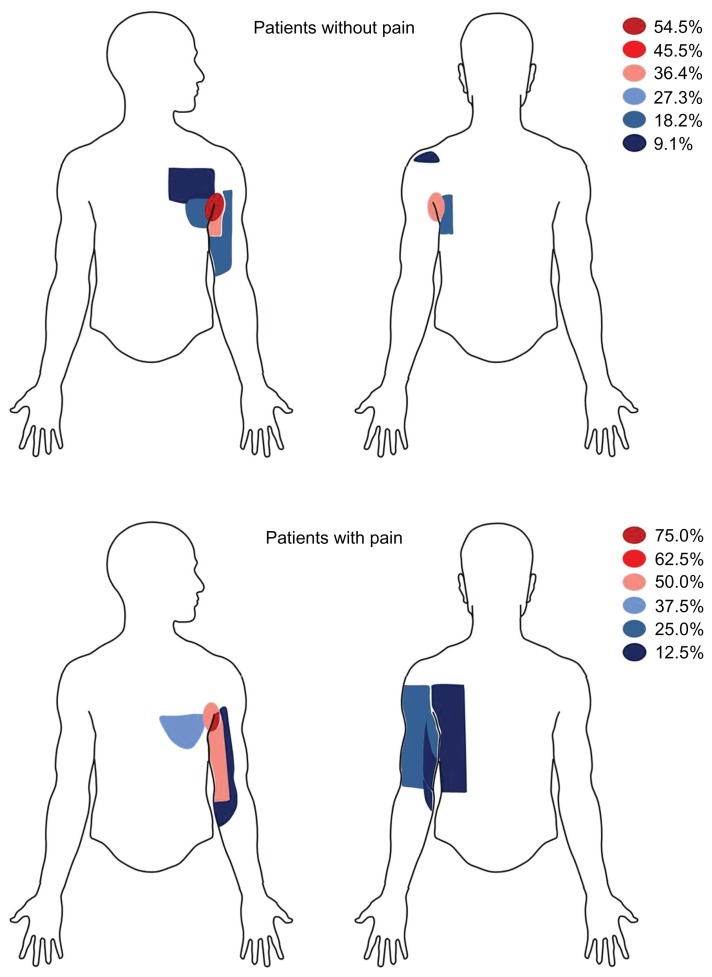
Nineteen patients (eight women with persistent pain, eleven without persistent pain), who were surgically treated more than 1 year previously for breast cancer (mastectomy, lumpectomy, and axillary lymph node dissection) and/or had chemoradiotherapy, were recruited and compared with eleven healthy female volunteers. A block of 20 painful electrical stimuli was applied to the calf, somatopically remote from the initially injured or painful area. Simultaneously an EEG was recorded, and a visual analog scale (VAS) pain rating obtained.
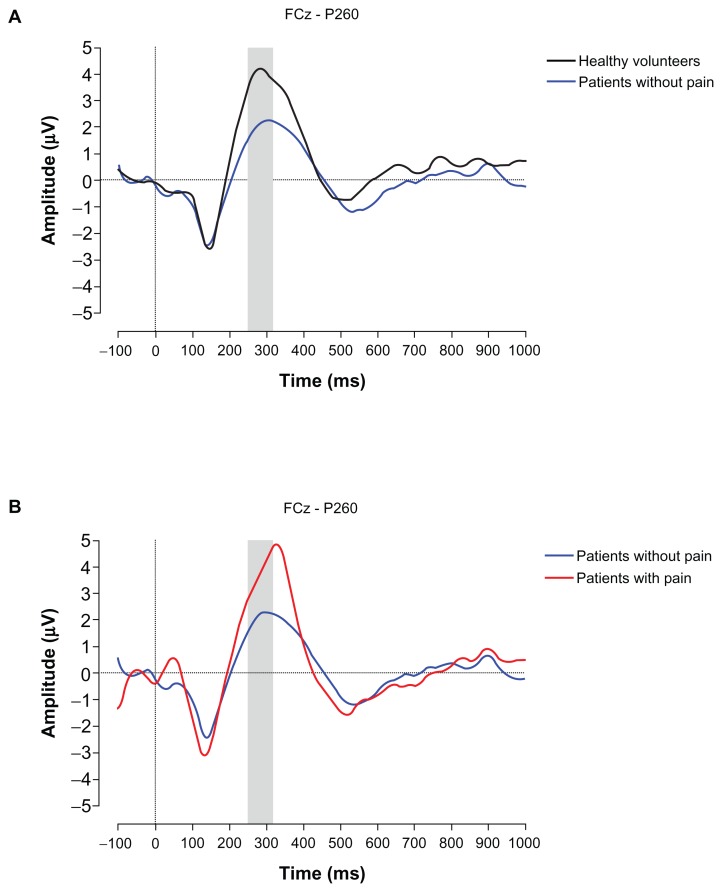
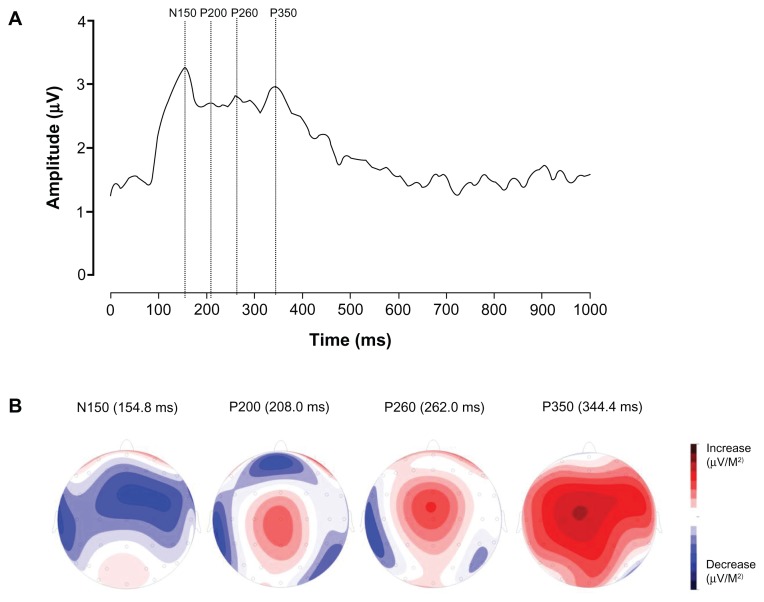
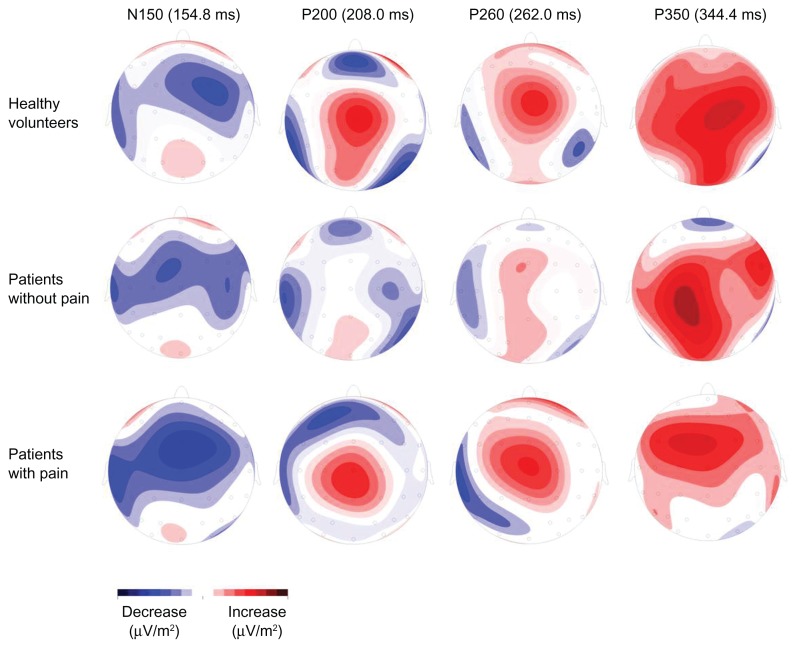
In comparison with healthy volunteers, breast cancer treatment without persistent pain is associated with accelerated stimulus processing (reduced P260 latency) and shows a tendency to be less intense (lower P260 amplitude). In comparison to patients without persistent pain, persistent pain after breast cancer treatment is associated with stimulus processing that is both delayed (ie, increased latency of the ERP positivity between 250-310 ms [P260]), and enhanced (ie, enhanced P260 amplitude).
These results show that treatment and persistent pain have opposite effects on cortical responsiveness.
接受乳腺癌手术的女性有发生持续性疼痛的高风险。我们通过脑电图(EEG)研究了疼痛刺激的大脑处理,以识别乳腺癌治疗后持续性疼痛患者的事件相关电位(ERP)。
我们招募了 19 名患者(8 名有持续性疼痛,11 名无持续性疼痛),这些患者在 1 年多以前接受了乳腺癌手术(乳房切除术、肿块切除术和腋窝淋巴结清扫术)和/或接受了化疗和放疗,并与 11 名健康女性志愿者进行了比较。一组 20 个疼痛电刺激被施加到小腿上,与最初受伤或疼痛区域的躯体部位相隔很远。同时记录脑电图,并获得视觉模拟评分(VAS)疼痛评分。
与健康志愿者相比,无持续性疼痛的乳腺癌治疗与刺激处理加速(P260 潜伏期缩短)有关,并且疼痛强度有降低的趋势(P260 振幅降低)。与无持续性疼痛的乳腺癌患者相比,乳腺癌治疗后的持续性疼痛与刺激处理延迟(即 ERP 正性波之间的潜伏期增加 250-310 毫秒[P260])和增强(即 P260 振幅增强)有关。
这些结果表明,治疗和持续性疼痛对皮质反应性有相反的影响。