Department of Pharmacology and Therapeutics, College of Medicine, University of Florida, Gainesville, Florida, United States of America.
PLoS One. 2012;7(7):e39398. doi: 10.1371/journal.pone.0039398. Epub 2012 Jul 6.
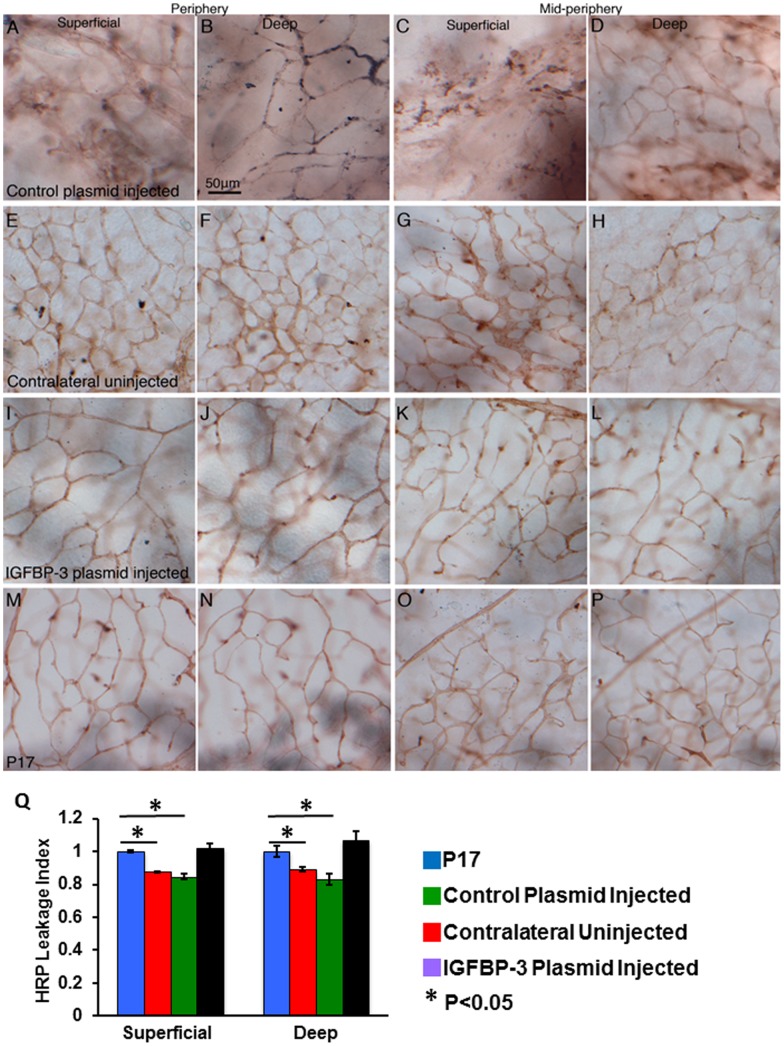
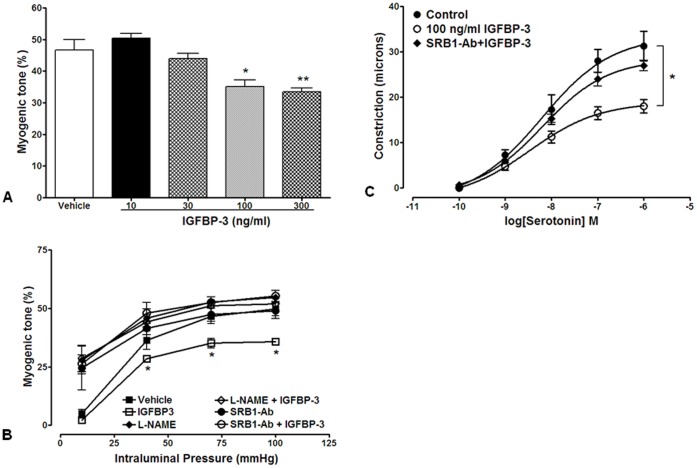
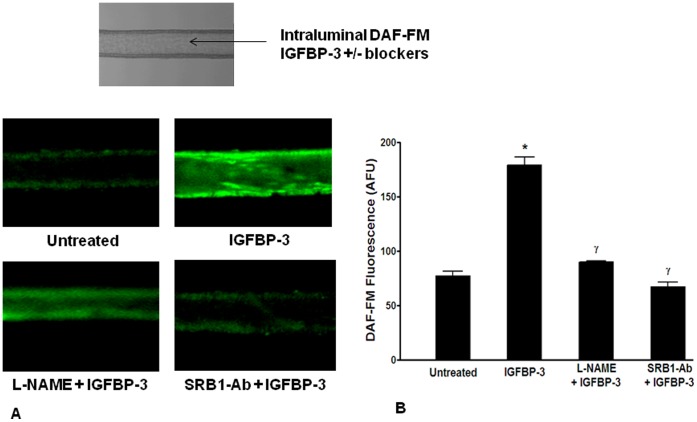
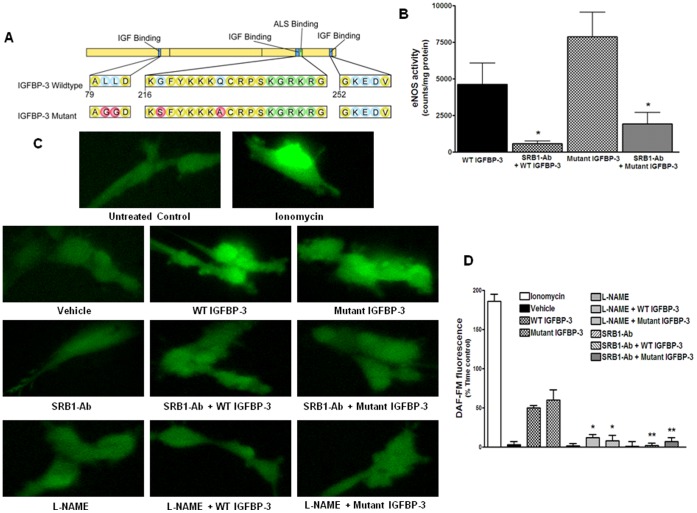
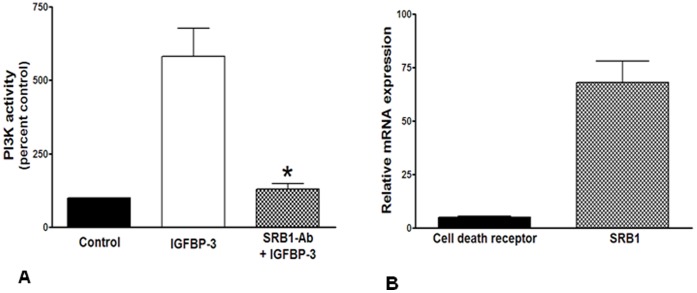
Previously, we showed that insulin growth factor (IGF)-1 binding protein-3 (IGFBP-3), independent of IGF-1, reduces pathological angiogenesis in a mouse model of the oxygen-induced retinopathy (OIR). The current study evaluates novel endothelium-dependent functions of IGFBP-3 including blood retinal barrier (BRB) integrity and vasorelaxation. To evaluate vascular barrier function, either plasmid expressing IGFBP-3 under the regulation of an endothelial-specific promoter or a control plasmid was injected into the vitreous humor of mouse pups (P1) and compared to the non-injected eyes of the same pups undergoing standard OIR protocol. Prior to sacrifice, the mice were given an injection of horseradish peroxidase (HRP). IGFBP-3 plasmid-injected eyes displayed near-normal vessel morphology and enhanced vascular barrier function. Further, in vitro IGFBP-3 protects retinal endothelial cells from VEGF-induced loss of junctional integrity by antagonizing the dissociation of the junctional complexes. To assess the vasodilatory effects of IGFBP-3, rat posterior cerebral arteries were examined in vitro. Intraluminal IGFBP-3 decreased both pressure- and serotonin-induced constrictions by stimulating nitric oxide (NO) release that were blocked by L-NAME or scavenger receptor-B1 neutralizing antibody (SRB1-Ab). Both wild-type and IGF-1-nonbinding mutant IGFBP-3 (IGFBP-3NB) stimulated eNOS activity/NO release to a similar extent in human microvascular endothelial cells (HMVECs). NO release was neither associated with an increase in intracellular calcium nor decreased by Ca(2+)/calmodulin-dependent protein kinase II (CamKII) blockade; however, dephosphorylation of eNOS-Thr(495) was observed. Phosphatidylinositol 3-kinase (PI3K) activity and Akt-Ser(473) phosphorylation were both increased by IGFBP-3 and selectively blocked by the SRB1-Ab or PI3K blocker LY294002. In conclusion, IGFBP-3 mediates protective effects on BRB integrity and mediates robust NO release to stimulate vasorelaxation via activation of SRB1. This response is IGF-1- and calcium-independent, but requires PI3K/Akt activation, suggesting that IGFBP-3 has novel protective effects on retinal and systemic vasculature and may be a therapeutic candidate for ocular complications such as diabetic retinopathy.
先前,我们发现胰岛素样生长因子结合蛋白 3(IGFBP-3)可独立于 IGF-1 减少氧诱导的视网膜病变(OIR)小鼠模型中的病理性血管生成。本研究评估了 IGFBP-3 的新的内皮依赖性功能,包括血视网膜屏障(BRB)完整性和血管舒张。为了评估血管屏障功能,将表达受内皮特异性启动子调节的 IGFBP-3 的质粒或对照质粒注入幼鼠(P1)的玻璃体腔,并与接受标准 OIR 方案的同一幼鼠的未注射眼进行比较。在处死之前,向小鼠注射辣根过氧化物酶(HRP)。IGFBP-3 质粒注射眼显示出近乎正常的血管形态和增强的血管屏障功能。此外,在体外,IGFBP-3 通过拮抗连接复合体的解离来保护视网膜内皮细胞免受 VEGF 诱导的连接完整性丧失。为了评估 IGFBP-3 的血管舒张作用,在体外检查大鼠大脑后动脉。管腔内 IGFBP-3 通过刺激一氧化氮(NO)释放来减少由压力和 5-羟色胺引起的收缩,NO 释放被 L-NAME 或清道夫受体-B1 中和抗体(SRB1-Ab)阻断。野生型和非结合 IGF-1 的 IGFBP-3(IGFBP-3NB)均以相似的程度刺激人微血管内皮细胞(HMVEC)中的 eNOS 活性/NO 释放。NO 释放既不与细胞内钙增加相关,也不被钙/钙调蛋白依赖性蛋白激酶 II(CamKII)阻断所减少;然而,观察到 eNOS-Thr(495)的去磷酸化。IGFBP-3 增加了磷脂酰肌醇 3-激酶(PI3K)活性和 Akt-Ser(473)磷酸化,并且这两种作用都可以被 SRB1-Ab 或 PI3K 阻滞剂 LY294002 选择性阻断。总之,IGFBP-3 对 BRB 完整性具有保护作用,并通过激活 SRB1 介导强大的 NO 释放来刺激血管舒张。这种反应不依赖于 IGF-1 和钙,但需要 PI3K/Akt 激活,这表明 IGFBP-3 对视网膜和全身血管具有新的保护作用,并且可能是糖尿病视网膜病变等眼部并发症的治疗候选药物。