Área de Fisiología, Departamento de Ciencias de la Salud, Universidad de Jaén, Jaén, Spain.
PLoS One. 2012;7(7):e40402. doi: 10.1371/journal.pone.0040402. Epub 2012 Jul 5.
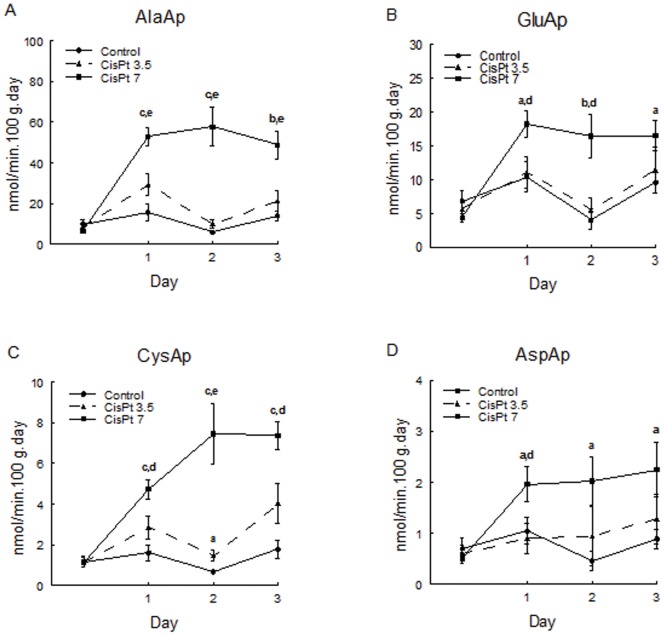
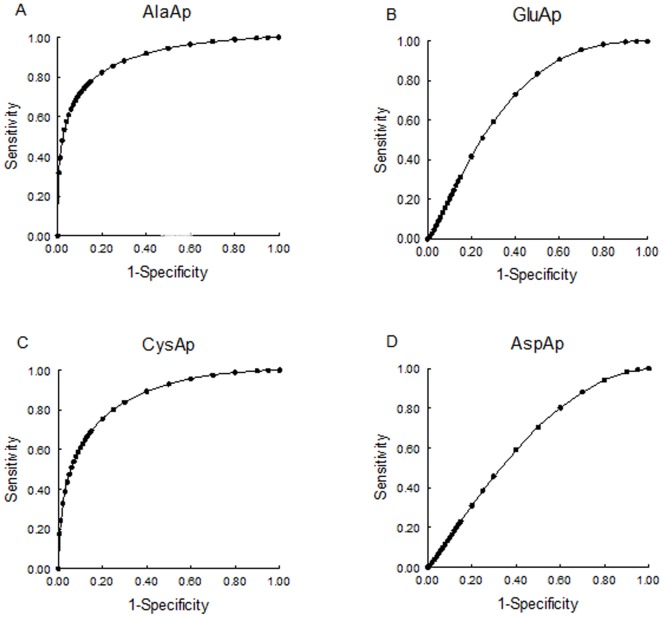
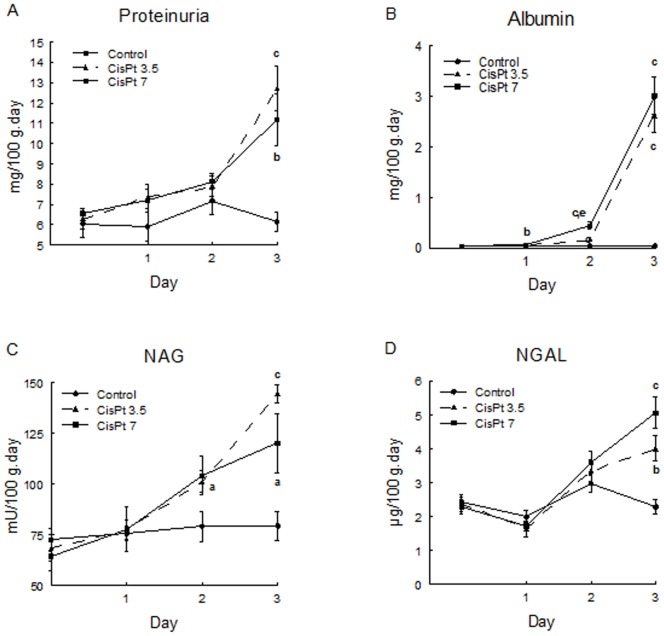
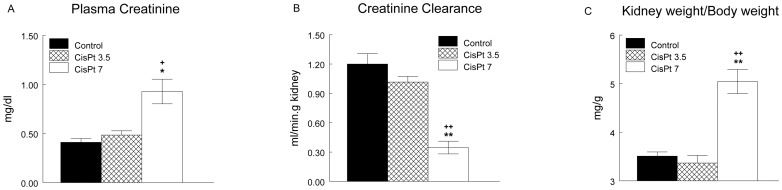
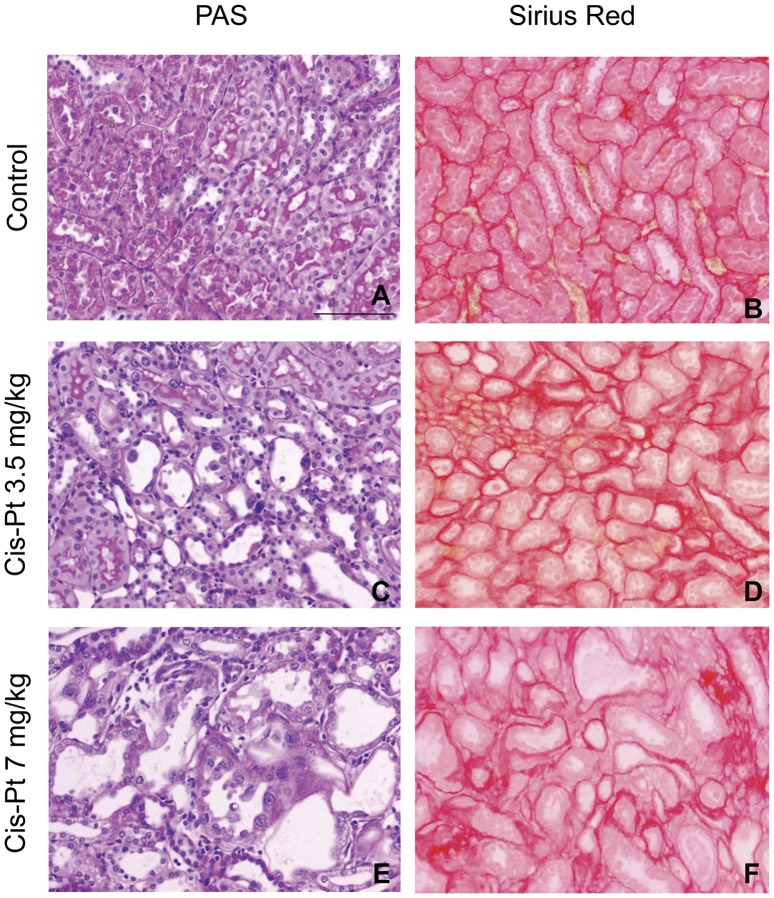
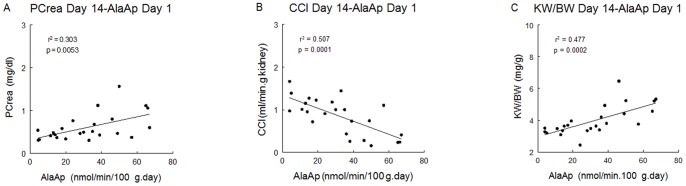
This study analyzes the fluorimetric determination of alanyl- (Ala), glutamyl- (Glu), leucyl-cystinyl- (Cys) and aspartyl-aminopeptidase (AspAp) urinary enzymatic activities as early and predictive biomarkers of renal dysfunction in cisplatin-treated rats. Male Wistar rats (n = 8 each group) received a single subcutaneous injection of either saline or cisplatin 3.5 or 7 mg/kg, and urine samples were taken at 0, 1, 2, 3 and 14 days after treatment. In urine samples we determined Ala, Glu, Cys and AspAp activities, proteinuria, N-acetyl-β-D-glucosaminidase (NAG), albumin, and neutrophil gelatinase-associated lipocalin (NGAL). Plasma creatinine, creatinine clearance and renal morphological variables were measured at the end of the experiment. CysAp, NAG and albumin were increased 48 hours after treatment in the cisplatin 3.5 mg/kg treated group. At 24 hours, all urinary aminopeptidase activities and albuminuria were significantly increased in the cisplatin 7 mg/kg treated group. Aminopeptidase urinary activities correlated (p<0.011; r(2)>0.259) with plasma creatinine, creatinine clearance and/or kidney weight/body weight ratio at the end of the experiment and they could be considered as predictive biomarkers of renal injury severity. ROC-AUC analysis was made to study their sensitivity and specificity to distinguish between treated and untreated rats at day 1. All aminopeptidase activities showed an AUC>0.633. We conclude that Ala, Cys, Glu and AspAp enzymatic activities are early and predictive urinary biomarkers of the renal dysfunction induced by cisplatin. These determinations can be very useful in the prognostic and diagnostic of renal dysfunction in preclinical research and clinical practice.
本研究分析了氟比色法测定丙氨酰-(Ala)、谷氨酰-(Glu)、亮氨酰-胱氨酰-(Cys)和天冬氨酰-氨基肽酶(AspAp)尿液酶活性作为顺铂治疗大鼠肾功能障碍的早期和预测性生物标志物。雄性 Wistar 大鼠(每组 n=8)接受单次皮下注射生理盐水或顺铂 3.5 或 7 mg/kg,在治疗后 0、1、2、3 和 14 天采集尿液样本。在尿液样本中,我们测定了 Ala、Glu、Cys 和 AspAp 活性、蛋白尿、N-乙酰-β-D-氨基葡萄糖苷酶(NAG)、白蛋白和中性粒细胞明胶酶相关脂质运载蛋白(NGAL)。实验结束时测量血浆肌酐、肌酐清除率和肾脏形态学变量。在顺铂 3.5 mg/kg 处理组中,治疗后 48 小时 CysAp、NAG 和白蛋白增加。在顺铂 7 mg/kg 处理组中,在 24 小时时所有尿氨基肽酶活性和白蛋白尿均显著增加。氨基肽酶尿液活性与实验结束时的血浆肌酐、肌酐清除率和/或肾重/体重比相关(p<0.011;r(2)>0.259),可作为肾功能损伤严重程度的预测生物标志物。进行了 ROC-AUC 分析,以研究它们在第 1 天区分处理和未处理大鼠的敏感性和特异性。所有氨基肽酶活性的 AUC>0.633。我们得出结论,Ala、Cys、Glu 和 AspAp 酶活性是顺铂诱导的肾功能障碍的早期和预测性尿生物标志物。这些测定在临床前研究和临床实践中对肾功能障碍的预后和诊断非常有用。