Department of Experimental Psychology, University of Oxford, Oxford, UK.
Nat Neurosci. 2012 Jul 15;15(8):1153-9. doi: 10.1038/nn.3166.
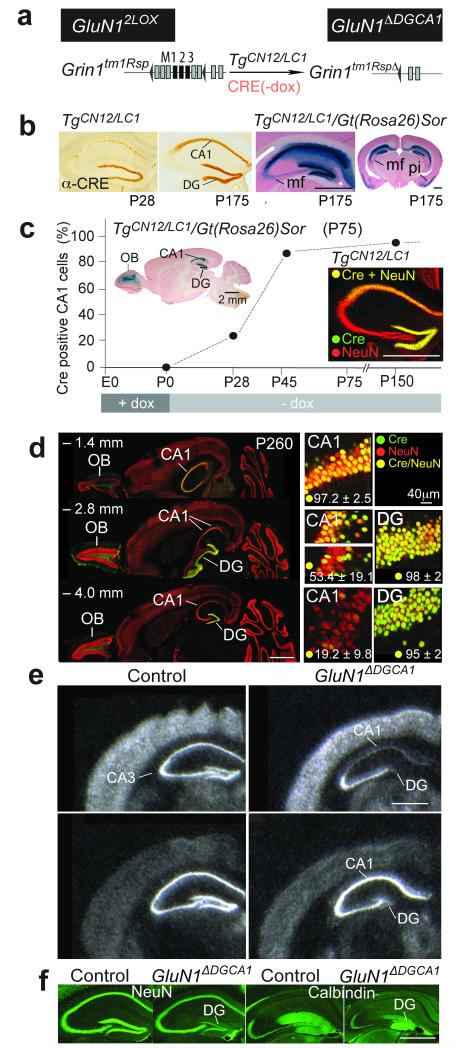
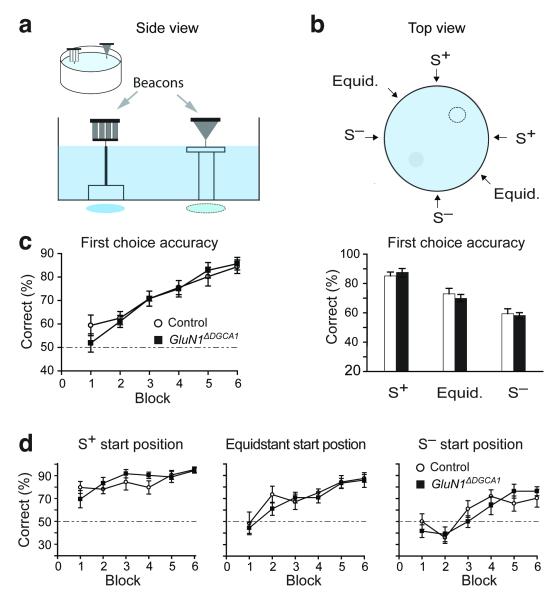
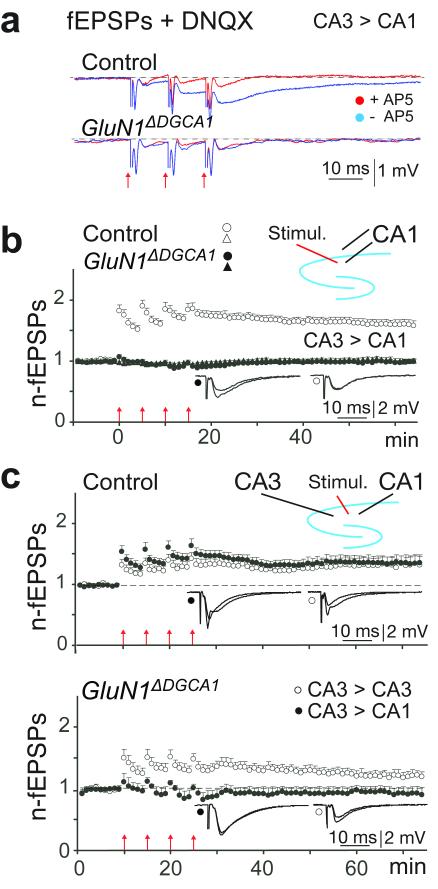
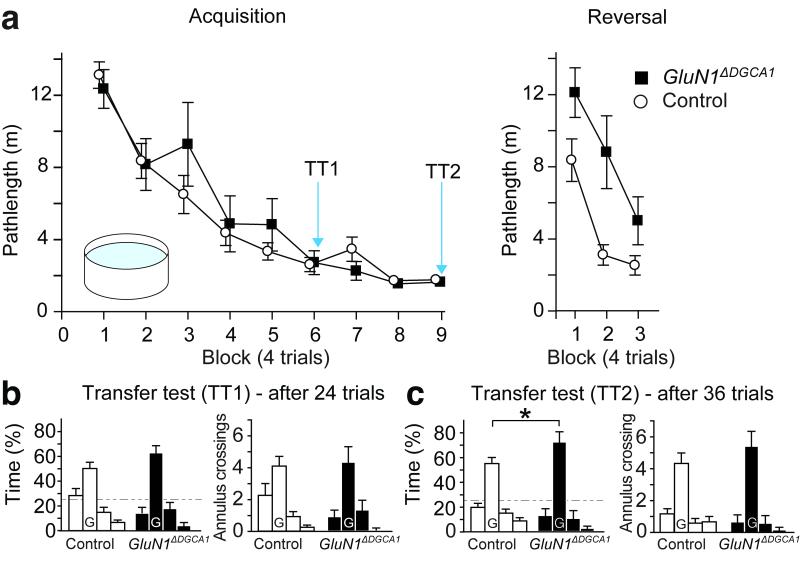
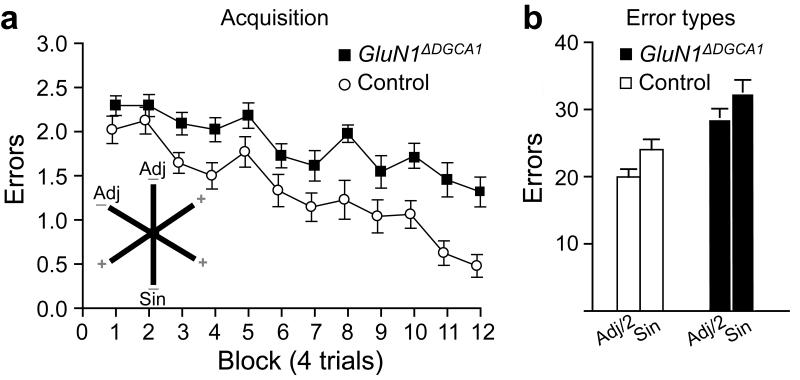
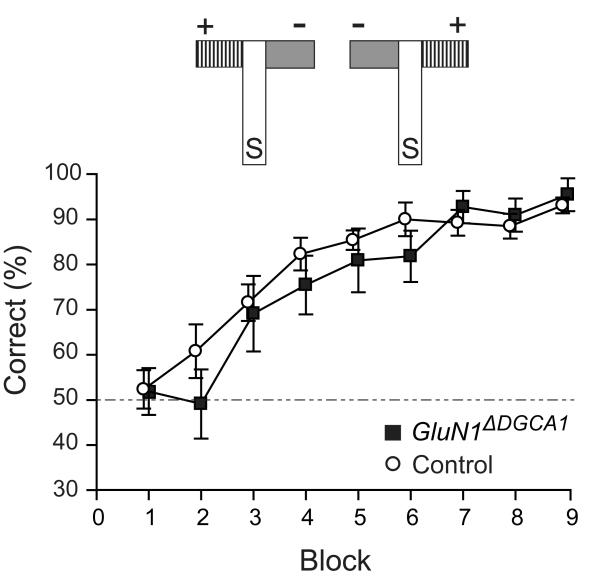
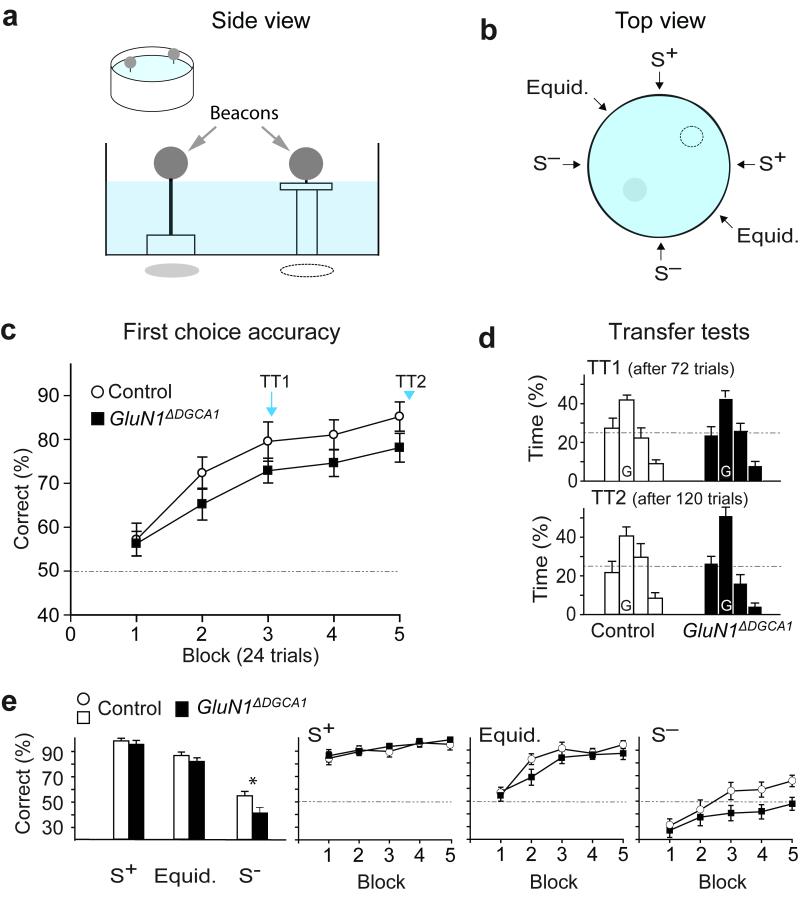
Hippocampal NMDA receptors (NMDARs) and NMDAR-dependent synaptic plasticity are widely considered crucial substrates of long-term spatial memory, although their precise role remains uncertain. Here we show that Grin1(ΔDGCA1) mice, lacking GluN1 and hence NMDARs in all dentate gyrus and dorsal CA1 principal cells, acquired the spatial reference memory water maze task as well as controls, despite impairments on the spatial reference memory radial maze task. When we ran a spatial discrimination water maze task using two visually identical beacons, Grin1(ΔDGCA1) mice were impaired at using spatial information to inhibit selecting the decoy beacon, despite knowing the platform's actual spatial location. This failure could suffice to impair radial maze performance despite spatial memory itself being normal. Thus, these hippocampal NMDARs are not essential for encoding or storing long-term, associative spatial memories. Instead, we demonstrate an important function of the hippocampus in using spatial knowledge to select between alternative responses that arise from competing or overlapping memories.
海马体 NMDA 受体(NMDAR)和 NMDAR 依赖性突触可塑性被广泛认为是长期空间记忆的重要基础,尽管其确切作用仍不确定。在这里,我们展示了 Grin1(ΔDGCA1) 小鼠,由于 GluN1 的缺失,所有齿状回和背侧 CA1 主细胞中均缺乏 NMDAR,尽管在空间参考记忆放射状迷宫任务中存在缺陷,但仍能很好地完成空间参考记忆水迷宫任务。当我们使用两个视觉上相同的信标运行空间辨别水迷宫任务时,Grin1(ΔDGCA1) 小鼠在使用空间信息抑制选择诱饵信标方面存在障碍,尽管它们知道平台的实际空间位置。尽管空间记忆本身是正常的,但这种失败足以损害放射状迷宫的表现。因此,这些海马体中的 NMDAR 对于编码或存储长期的、联想性的空间记忆并不是必需的。相反,我们证明了海马体在使用空间知识来选择来自竞争或重叠记忆的替代反应方面的重要功能。