Structural Biology Research Center, Institute of Material Structure Science, High Energy Accelerator Research Organization, Tsukuba, Ibaraki, Japan.
Biosci Rep. 2012 Dec;32(6):539-48. doi: 10.1042/BSR20120029.
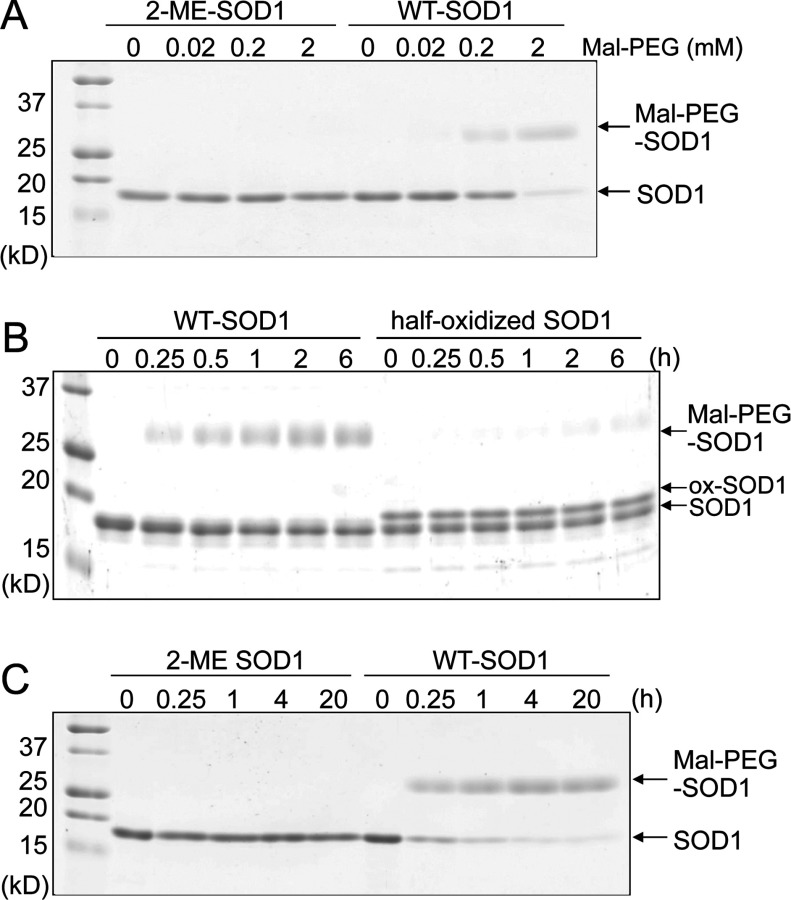
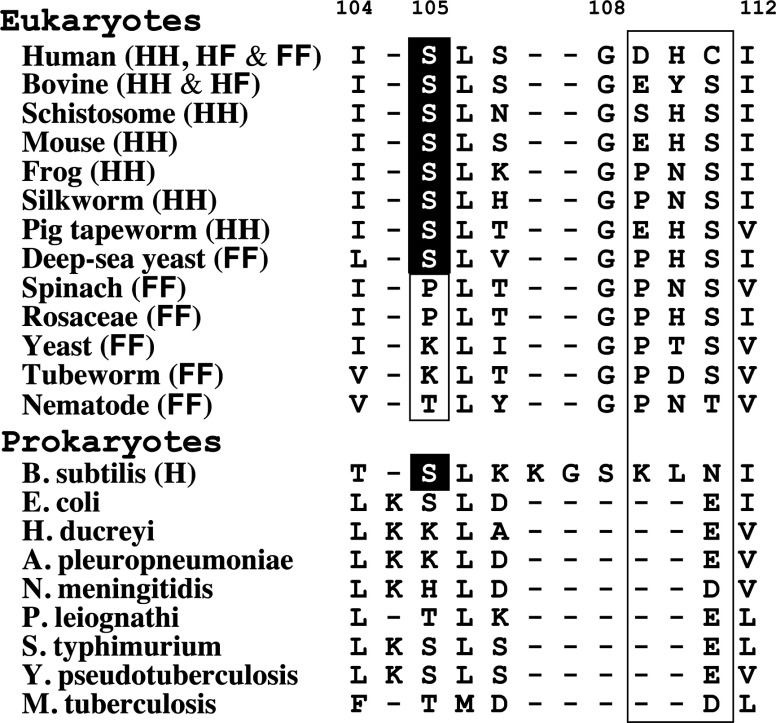
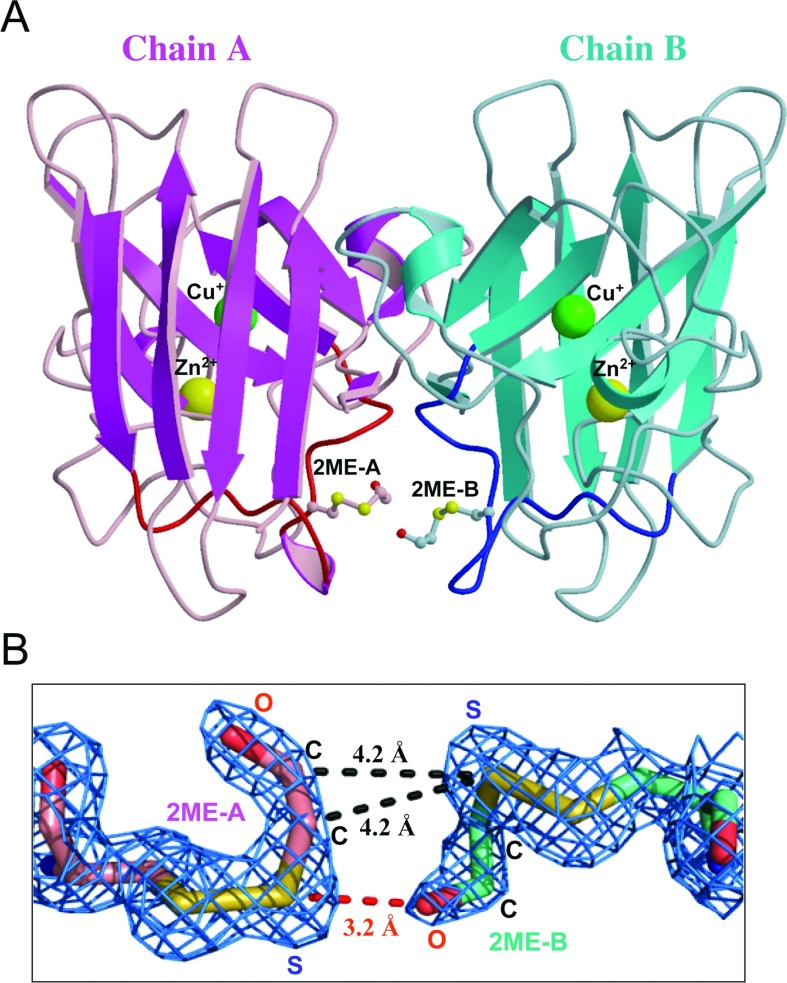
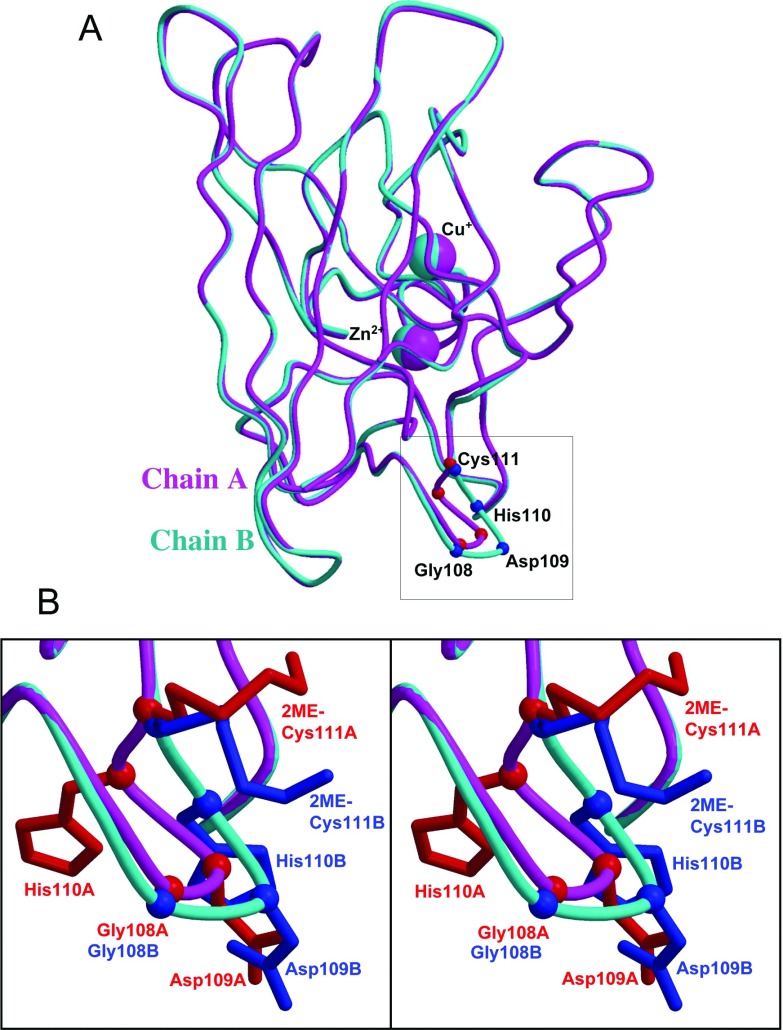
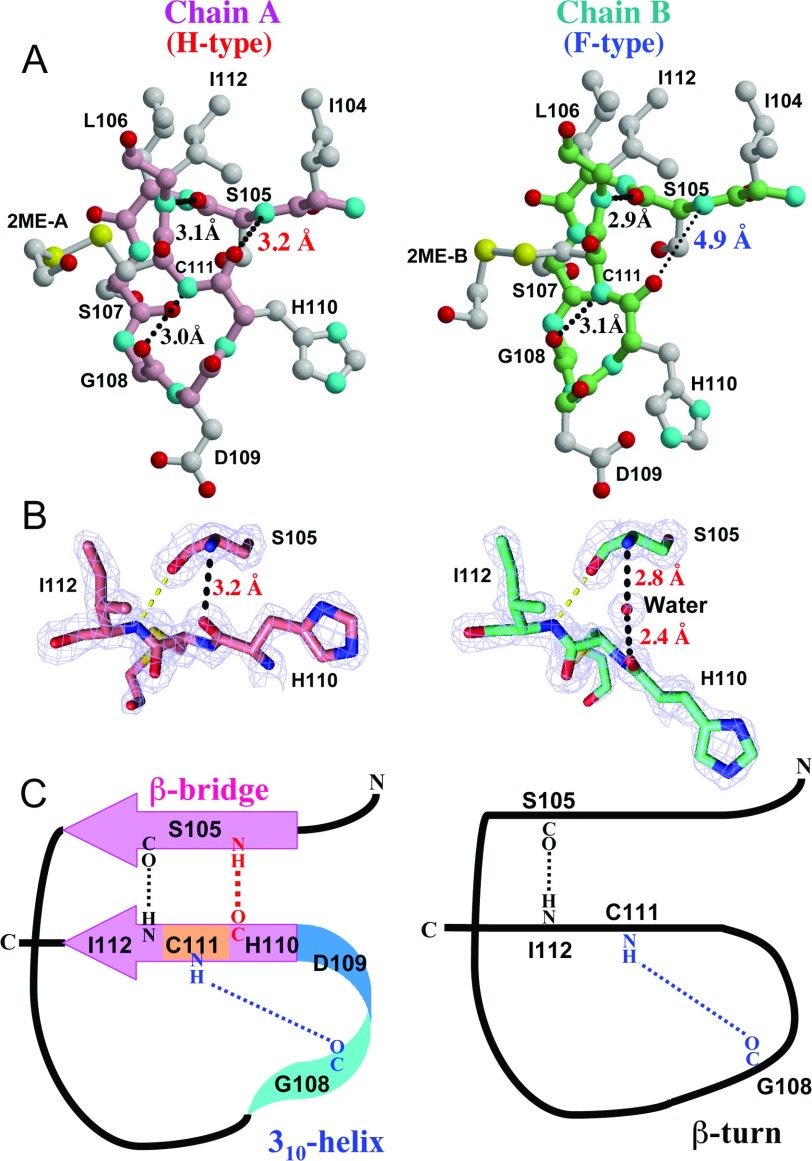
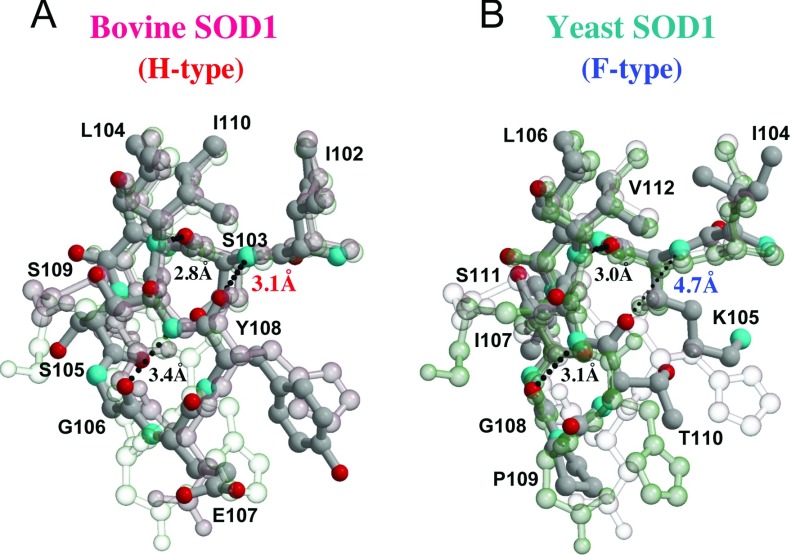
Cu,Zn SOD1 (superoxide dismutase 1) is implicated in FALS (familial amyotrophic lateral sclerosis) through the accumulation of misfolded proteins that are toxic to neuronal cells. Loop VI (residues 102-115) of the protein is at the dimer interface and could play a critical role in stability. The free cysteine residue, Cys111 in the loop, is readily oxidized and alkylated. We have found that modification of this Cys111 with 2-ME (2-mercaptoethanol; 2-ME-SOD1) stabilizes the protein and the mechanism may provide insights into destabilization and the formation of aggregated proteins. Here, we determined the crystal structure of 2-ME-SOD1 and find that the 2-ME moieties in both subunits interact asymmetrically at the dimer interface and that there is an asymmetric configuration of segment Gly108 to Cys111 in loop VI. One loop VI of the dimer forms a 310-helix (Gly108 to His110) within a unique β-bridge stabilized by a hydrogen bond between Ser105-NH and His110-CO, while the other forms a β-turn without the H-bond. The H-bond (H-type) and H-bond free (F-type) configurations are also seen in some wild-type and mutant human SOD1s in the Protein Data Bank suggesting that they are interconvertible and an intrinsic property of SOD1s. The two structures serve as a basis for classification of these proteins and hopefully a guide to their stability and role in pathophysiology.
Cu,Zn SOD1(超氧化物歧化酶 1)通过积累对神经元细胞有毒的错误折叠蛋白而与 FALS(家族性肌萎缩侧索硬化症)有关。该蛋白质的环 VI(残基 102-115)位于二聚体界面,可能在稳定性方面发挥关键作用。该环中的游离半胱氨酸残基 Cys111 很容易被氧化和烷基化。我们发现该 Cys111 与 2-ME(2-巯基乙醇;2-ME-SOD1)的修饰可稳定蛋白质,其机制可能为不稳定和聚集蛋白的形成提供了见解。在这里,我们确定了 2-ME-SOD1 的晶体结构,发现两个亚基中的 2-ME 部分在二聚体界面处不对称地相互作用,并且在环 VI 中存在 Gly108 到 Cys111 的不对称构象。二聚体的一个环 VI 形成独特的β-桥内的 310-螺旋(Gly108 到 His110),由 Ser105-NH 和 His110-CO 之间的氢键稳定,而另一个则形成没有 H-键的β-转角。在蛋白质数据库中,还可以看到一些野生型和突变型人 SOD1 中的 H-键(H 型)和无 H-键(F 型)构型,表明它们是可相互转换的,并且是 SOD1 的固有特性。这两个结构为这些蛋白质的分类提供了基础,并希望为它们的稳定性和在病理生理学中的作用提供指导。