Laboratory of Cell Biology, Wageningen University and Research Centre, Wageningen, The Netherlands.
PLoS One. 2012;7(7):e39604. doi: 10.1371/journal.pone.0039604. Epub 2012 Jul 9.
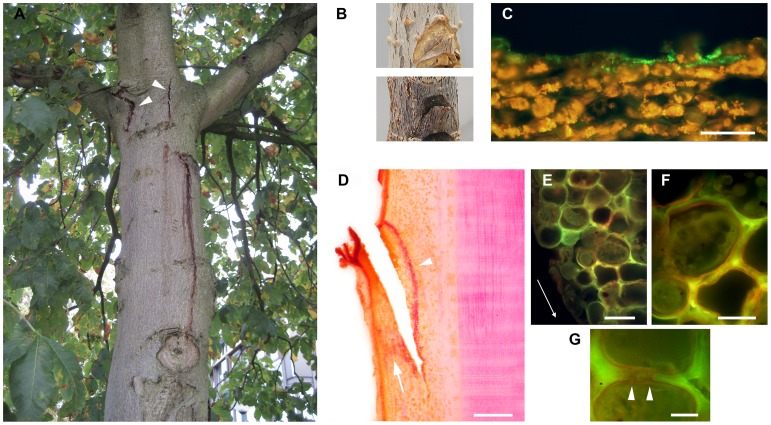
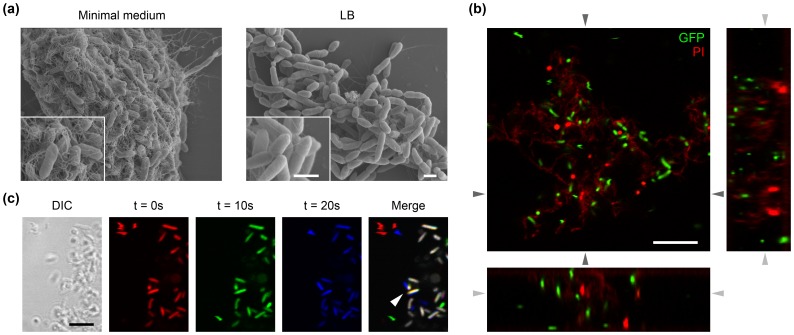
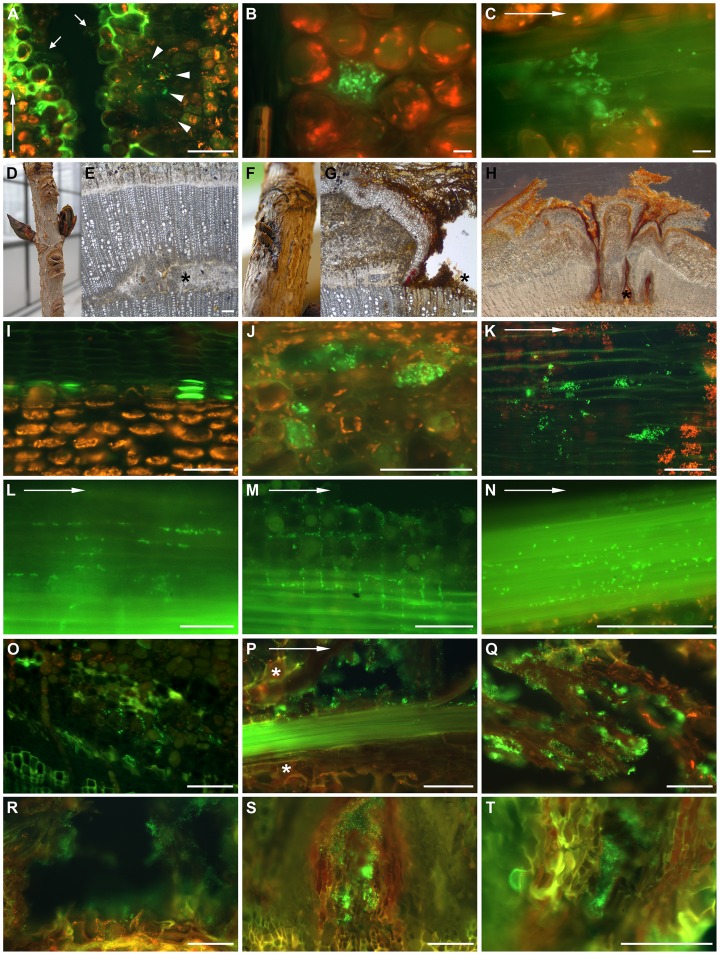
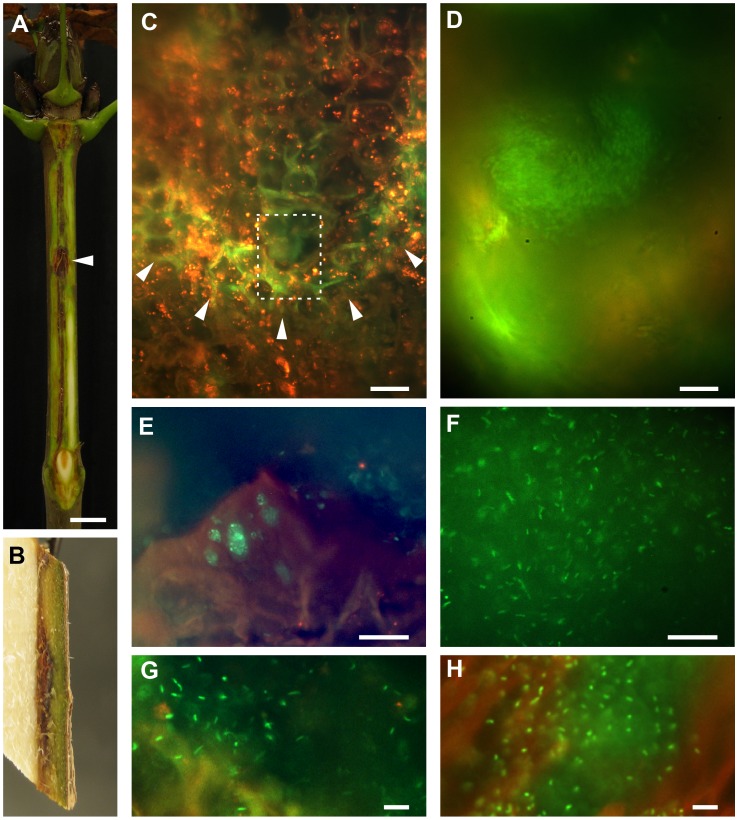
Since its emergence in Northwest Europe as a pathogen that infects trunks and branches of Aesculus spp. (the horse chestnuts) approximately one decade ago, Pseudomonas syringae pv. aesculi has rapidly established itself as major threat to these trees. Infected trees exhibit extensive necrosis of phloem and cambium, which can ultimately lead to dieback. The events after host entry leading to extensive necrosis are not well documented. In this work, the histopathology of this interaction is investigated and heat-treatment is explored as method to eradicate bacteria associated with established infections. The early wound-repair responses of A. hippocastanum, both in absence and presence of P. s. pv. aesculi, included cell wall lignification by a distinct layer of phloem and cortex parenchyma cells. The same cells also deposited suberin lamellae later on, suggesting this layer functions in compartmentalizing healthy from disrupted tissues. However, monitoring bacterial ingress, its construction appeared inadequate to constrain pathogen spread. Microscopic evaluation of bacterial dispersal in situ using immunolabelling and GFP-tagging of P. s. pv. aesculi, revealed two discriminative types of bacterial colonization. The forefront of lesions was found to contain densely packed bacteria, while necrotic areas housed bacterial aggregates with scattered individuals embedded in an extracellular matrix of bacterial origin containing alginate. The endophytic localization and ability of P. s. pv aesculi to create a protective matrix render it poorly accessible for control agents. To circumvent this, a method based on selective bacterial lethality at 39 °C was conceived and successfully tested on A. hippocastanum saplings, providing proof of concept for controlling this disease by heat-treatment. This may be applicable for curing other tree cankers, caused by related phytopathogens.
自大约十年前,它作为一种感染欧洲七叶树属(马栗树)树干和树枝的病原体在北欧出现以来,丁香假单胞菌 pv. aesculi 已迅速成为这些树木的主要威胁。受感染的树木表现出韧皮部和形成层的广泛坏死,最终可能导致枯萎。宿主进入后导致广泛坏死的事件尚未得到很好的记录。在这项工作中,研究了这种相互作用的组织病理学,并探讨了热处理作为根除与已建立感染相关细菌的方法。在没有和存在 P. s. pv. aesculi 的情况下,欧洲七叶树的早期伤口修复反应包括韧皮部和皮层薄壁组织细胞的细胞壁木质化。同一细胞后来还沉积了几丁质薄片,表明这一层的功能是将健康组织与受损组织分隔开来。然而,监测细菌的进入,其结构似乎不足以限制病原体的传播。使用 P. s. pv. aesculi 的免疫标记和 GFP 标记原位监测细菌入侵,发现了两种有区别的细菌定植类型。病变的前沿含有密集堆积的细菌,而坏死区域则容纳了细菌聚集体,其中分散的个体嵌入含有藻酸盐的细菌来源的细胞外基质中。丁香假单胞菌 pv aesculi 的内生定位和形成保护基质的能力使其难以被控制剂接触。为了解决这个问题,设计了一种基于在 39°C 选择性杀死细菌的方法,并在欧洲七叶树实生苗上成功进行了测试,为热处理控制这种疾病提供了概念验证。这可能适用于治疗由相关植物病原体引起的其他树干溃疡。