Department of Nutritional Sciences, Rutgers University, New Brunswick, New Jersey 08901, USA.
Annu Rev Nutr. 2012 Aug 21;32:287-309. doi: 10.1146/annurev.nutr.012809.104655.
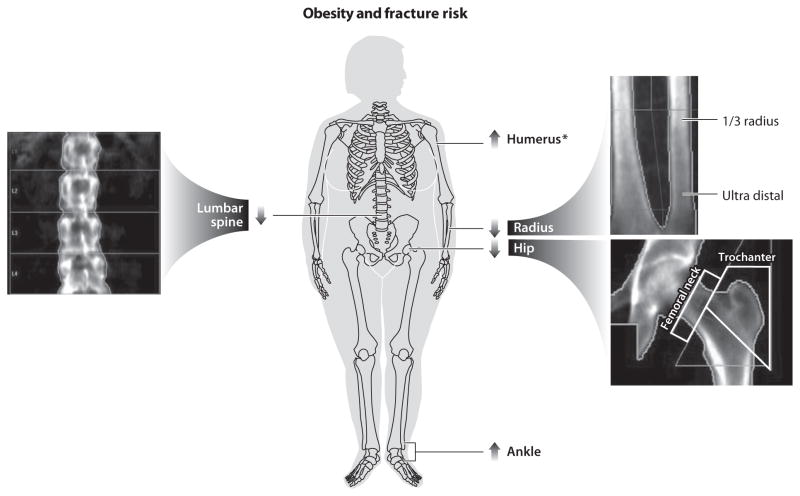
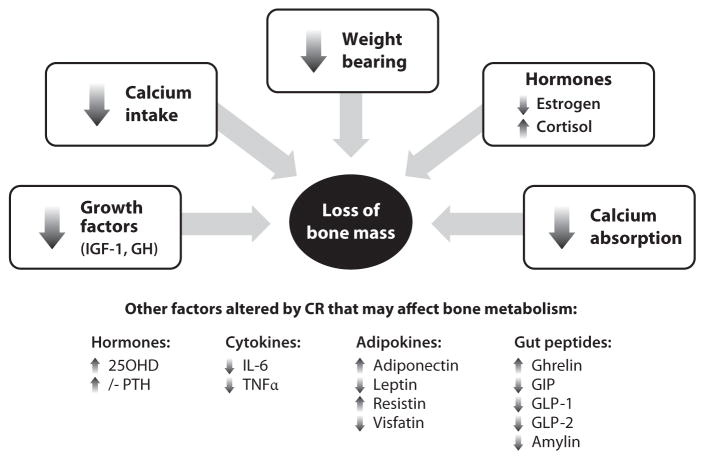
Excess body weight due to obesity has traditionally been considered to have a positive effect on bone; however, more recent findings suggest that bone quality is compromised. Both obesity and caloric restriction increase fracture risk and are regulated by endocrine factors and cytokines that have direct and indirect effects on bone and calcium absorption. Weight reduction will decrease bone mass and mineral density, but this varies by the individual's age, gender, and adiposity. Dietary modifications, exercise, and medications have been shown to attenuate the bone loss associated with weight reduction. Future obesity and weight loss trials would benefit from assessment of key hormones, adipokine and gut peptides that regulate calcium absorption, and bone mineral density and quality by using sensitive techniques in high-risk populations.
由于肥胖导致的超重传统上被认为对骨骼有积极影响;然而,最近的发现表明,骨质量受到了损害。肥胖和热量限制都会增加骨折的风险,这是由内分泌因素和细胞因子调节的,这些因素对骨骼和钙吸收有直接和间接的影响。体重减轻会导致骨量和矿物质密度减少,但这因人而异,取决于个体的年龄、性别和肥胖程度。饮食调整、运动和药物已被证明可以减轻与体重减轻相关的骨质流失。未来的肥胖和减肥试验将受益于使用敏感技术在高危人群中评估调节钙吸收和骨矿物质密度和质量的关键激素、脂肪因子和肠道肽。