Center for Biomedical Engineering and Technology, University of Maryland School of Medicine, Baltimore, Maryland, United States of America.
PLoS One. 2012;7(7):e41210. doi: 10.1371/journal.pone.0041210. Epub 2012 Jul 17.
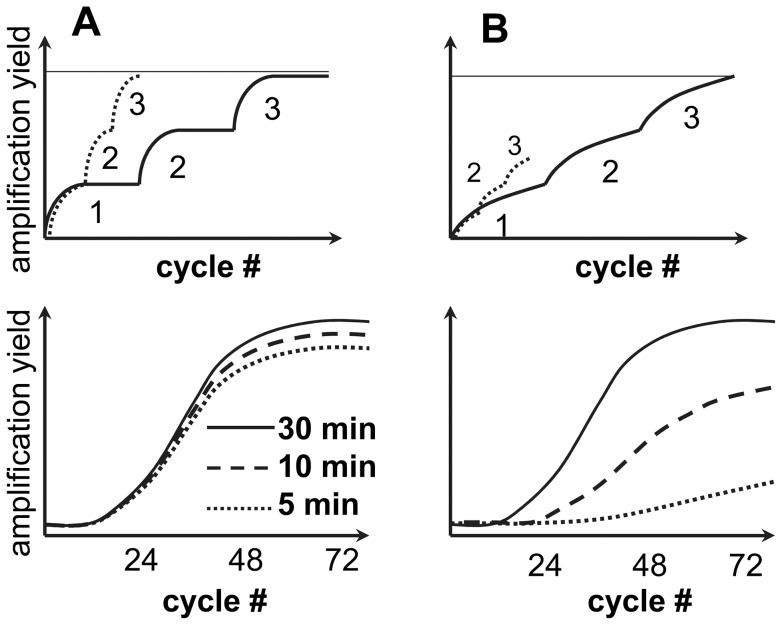
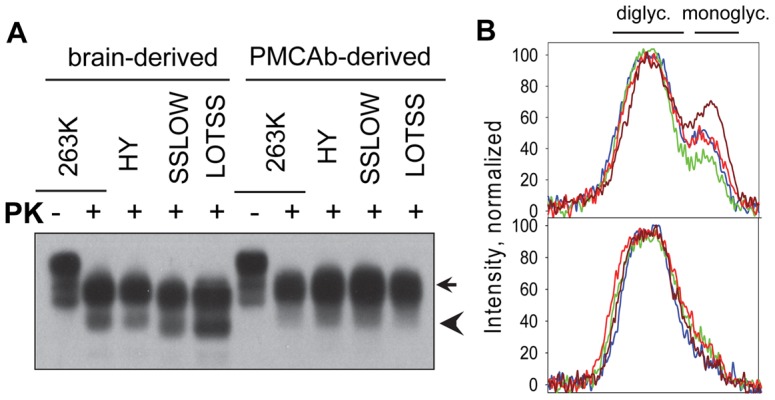
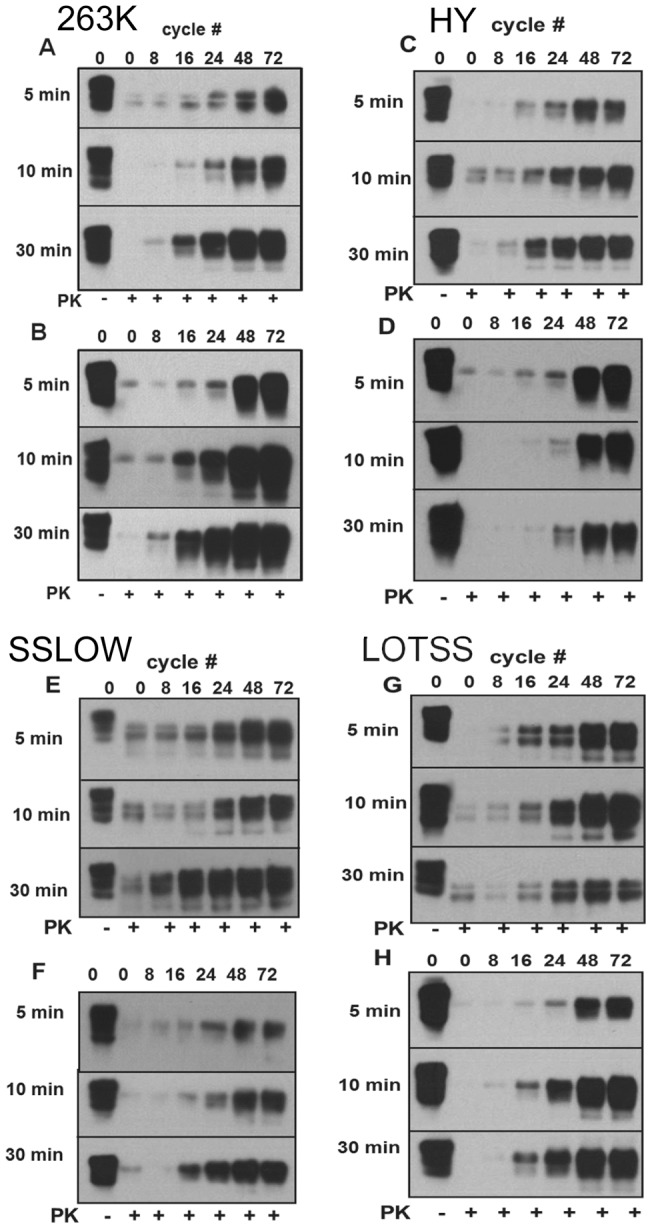
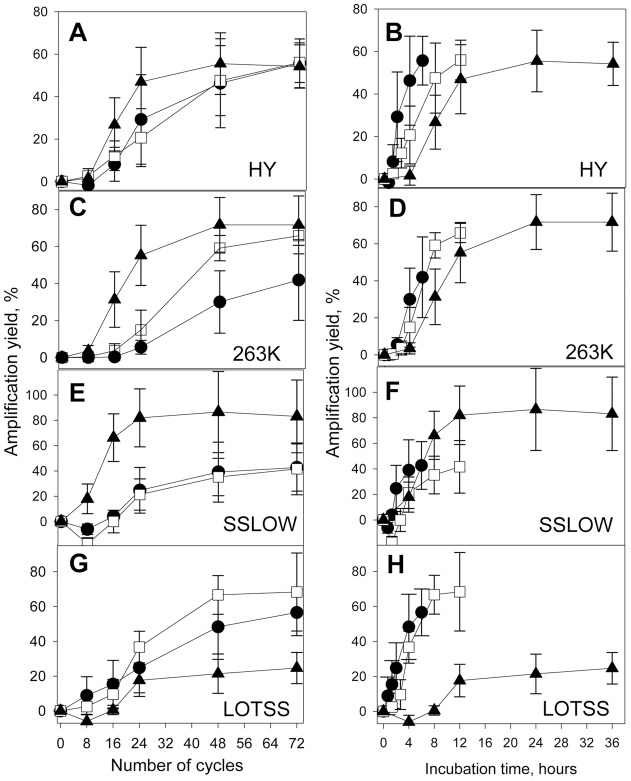
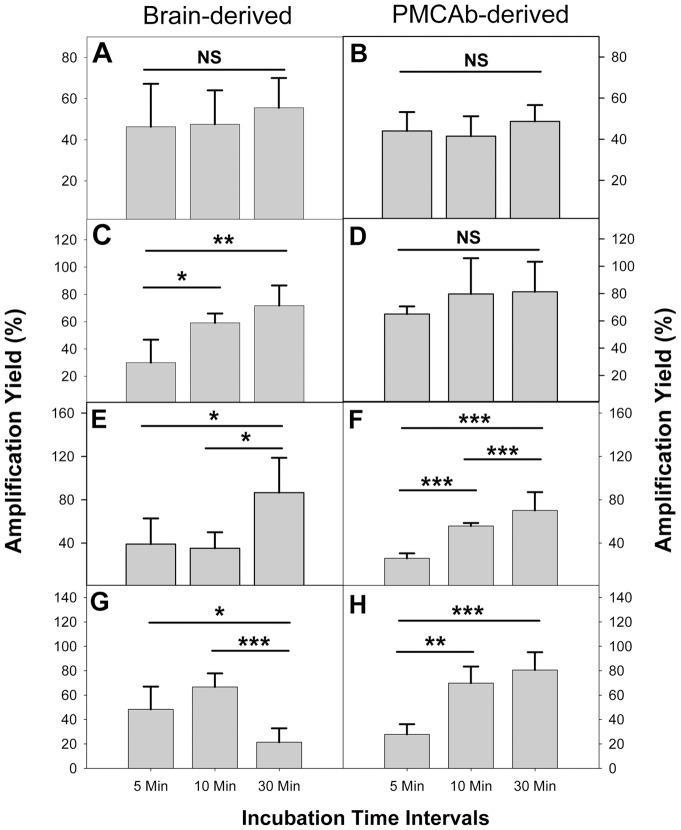
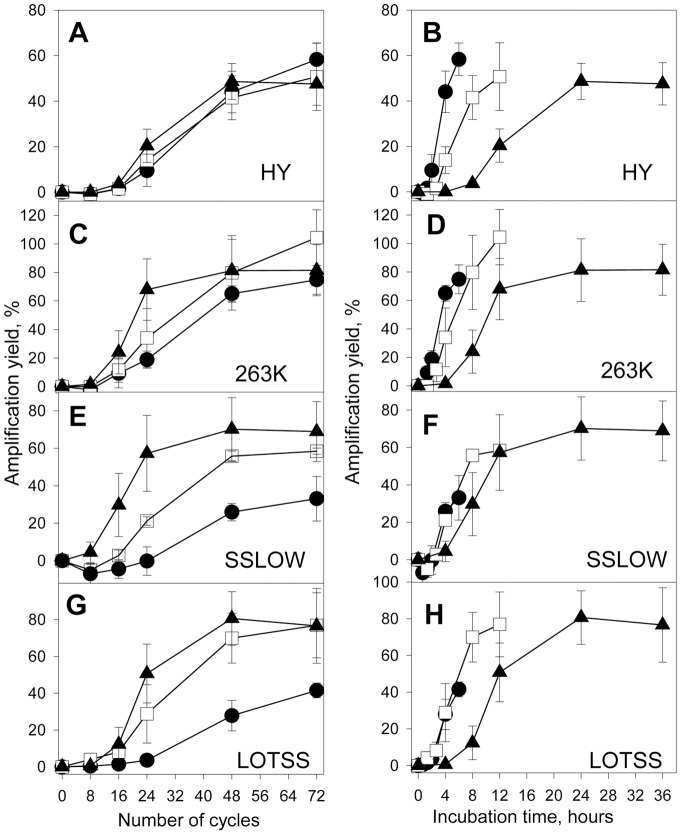
Prion replication is believed to consist of two components, a growth or elongation of infectious isoform of the prion protein (PrP(Sc)) particles and their fragmentation, a process that provides new replication centers. The current study introduced an experimental approach that employs Protein Misfolding Cyclic Amplification with beads (PMCAb) and relies on a series of kinetic experiments for assessing elongation rates of PrP(Sc) particles. Four prion strains including two strains with short incubation times to disease (263K and Hyper) and two strains with very long incubation times (SSLOW and LOTSS) were tested. The elongation rate of brain-derived PrP(Sc) was found to be strain-specific. Strains with short incubation times had higher rates than strains with long incubation times. Surprisingly, the strain-specific elongation rates increased substantially for all four strains after they were subjected to six rounds of serial PMCAb. In parallel to an increase in elongation rates, the percentages of diglycosylated PrP glycoforms increased in PMCAb-derived PrP(Sc) comparing to those of brain-derived PrP(Sc). These results suggest that PMCAb selects the same molecular features regardless of strain initial characteristics and that convergent evolution of PrP(Sc) properties occurred during in vitro amplification. These results are consistent with the hypothesis that each prion strain is comprised of a variety of conformers or 'quasi-species' and that change in the prion replication environment gives selective advantage to those conformers that replicate most effectively under specific environment.
朊病毒的复制被认为由两个部分组成,即传染性朊病毒蛋白(PrP(Sc))颗粒的生长或伸长及其片段化,这一过程提供了新的复制中心。本研究采用了一种实验方法,即使用珠子上的蛋白错误折叠循环扩增(PMCAb),并依赖一系列动力学实验来评估 PrP(Sc)颗粒的伸长率。测试了包括两种潜伏期较短的朊病毒株(263K 和 Hyper)和两种潜伏期非常长的朊病毒株(SSLOW 和 LOTSS)在内的四种朊病毒株。发现脑源性 PrP(Sc)的伸长率具有菌株特异性。潜伏期较短的菌株的伸长率高于潜伏期较长的菌株。令人惊讶的是,在经过六轮连续的 PMCAb 处理后,所有四种菌株的菌株特异性伸长率都显著增加。与伸长率的增加平行的是,与脑源性 PrP(Sc)相比,在 PMCAb 衍生的 PrP(Sc)中,二糖基化 PrP 糖型的百分比增加。这些结果表明,PMCAb 选择的是相同的分子特征,而与菌株的初始特征无关,并且在体外扩增过程中发生了 PrP(Sc)特性的趋同进化。这些结果与以下假说一致,即每种朊病毒株由多种构象或“准种”组成,并且朊病毒复制环境的变化赋予了在特定环境下最有效地复制的构象选择性优势。