Department of Endodontics, University of Texas Health Science Center at San Antonio, San Antonio, Texas, USA Department of Cellular and Structural Biology, University of Texas Health Science Center at San Antonio, San Antonio, Texas, USA Department of Pharmacology, University of Texas Health Science Center at San Antonio, San Antonio, Texas, USA.
Pain. 2012 Oct;153(10):2061-2067. doi: 10.1016/j.pain.2012.06.018. Epub 2012 Jul 20.
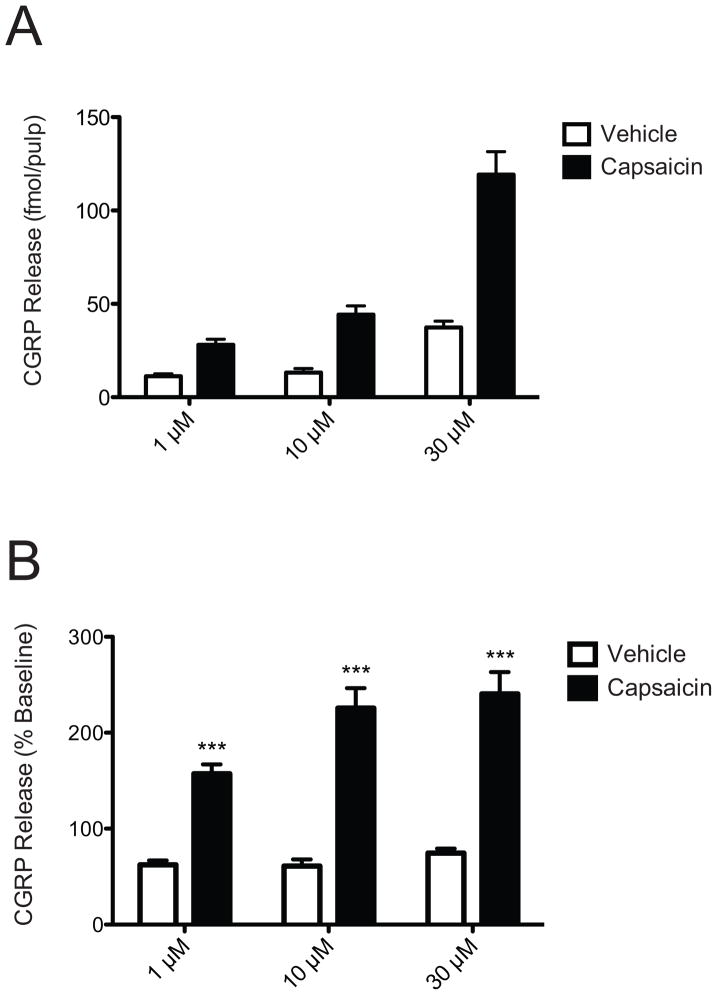
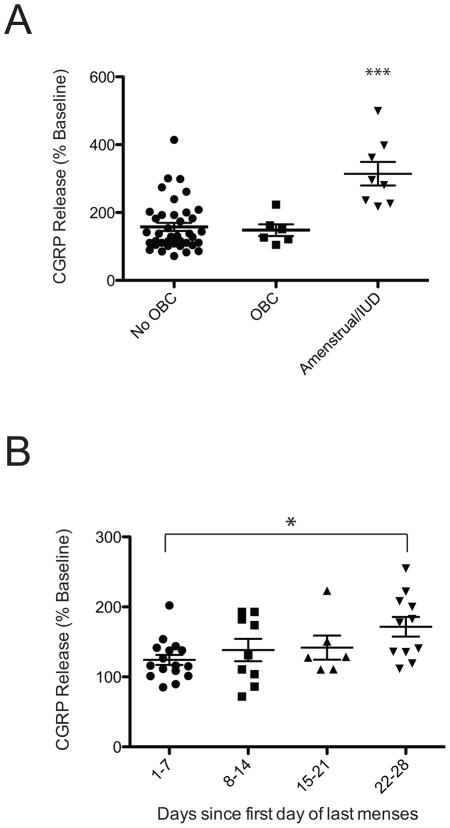
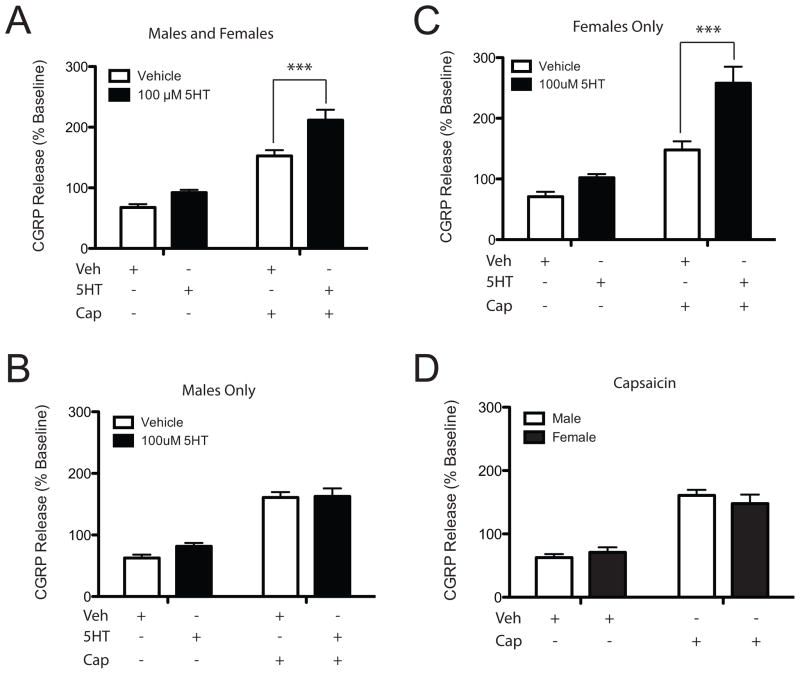
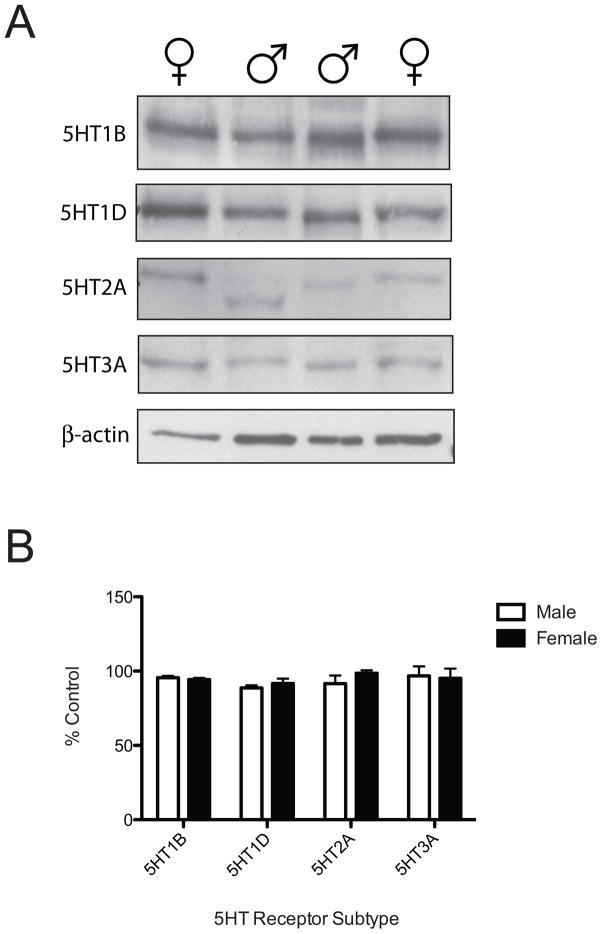
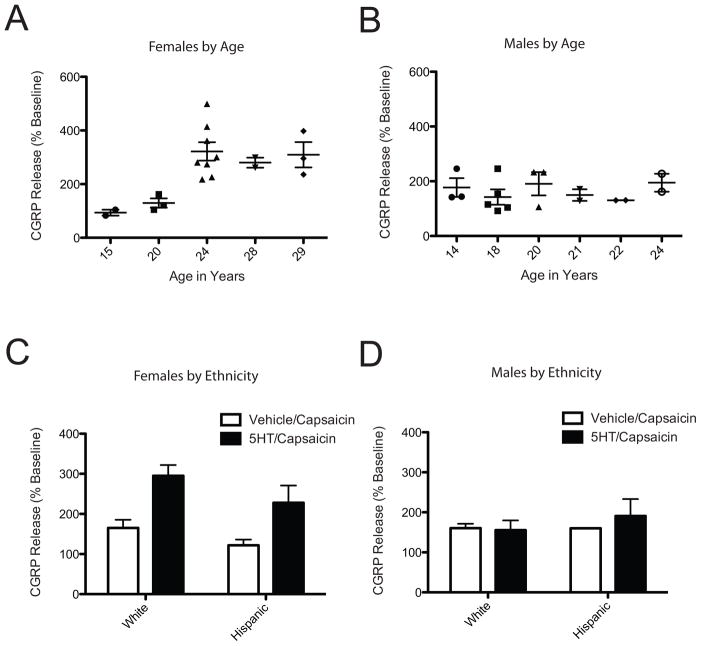
Serotonin (5HT) is a pronociceptive mediator in the periphery, and evidence implicates involvement in trigeminal pain processing. However, the mechanism(s) by which 5HT modulates trigeminal nociceptors remains unclear. Trigeminal pain can be evoked by the transient receptor potential V1 channel (TRPV1), which is expressed by nociceptive trigeminal neurons and induces release of proinflammatory calcitonin gene-related peptide (CGRP). In our preclinical models, 5HT evoked thermal hyperalgesia and enhanced calcium influx and CGRP release from the TRPV1 population of trigeminal nociceptors. Whether this occurs in humans is unknown. As dental pulp is densely innervated by trigeminal nociceptors, routine tooth extractions offer a unique opportunity to examine whether 5HT enhances CGRP release from human nociceptors. Pulpal tissue was collected from 140 extracted molar teeth from men and women, and basal release samples were collected before treatment with saline or 5HT 100μmol/L. CGRP release was then stimulated with the TRPV1 agonist capsaicin 1μmol/L and quantitated by enzyme immunoassay. Additional samples were collected for Western blots to examine 5HT receptor expression. We report that 5HT induced a significant increase in capsaicin-evoked CGRP release, and that this enhancement was observed only in female dental pulp, with no effect of 5HT on male dental pulp. The greatest amount of CGRP release occurred in dental pulp from women in the luteal phase of the menstrual cycle. These results indicate that 5HT enhances capsaicin-evoked CGRP release from human trigeminal nociceptors in a sexually dimorphic manner providing a mechanistic basis for prevalence of trigeminal pain disorders in women.
5-羟色胺(5HT)是外周神经系统的致痛递质,有证据表明其参与了三叉神经疼痛的处理过程。然而,5HT 调节三叉神经感受器的机制尚不清楚。三叉神经疼痛可以通过瞬时受体电位 V1 通道(TRPV1)诱发,该通道由伤害性三叉神经神经元表达,并诱导促炎性降钙素基因相关肽(CGRP)的释放。在我们的临床前模型中,5HT 诱发了热痛觉过敏,并增强了三叉神经伤害感受器中 TRPV1 群体的钙内流和 CGRP 释放。这种情况是否发生在人类身上尚不清楚。由于牙髓被三叉神经伤害感受器密集地支配,常规拔牙为检查 5HT 是否增强人类伤害感受器中 CGRP 的释放提供了一个独特的机会。从男性和女性的 140 颗磨牙中收集牙髓组织,并在治疗前用生理盐水或 5HT 100μmol/L 收集基础释放样本。然后用 TRPV1 激动剂辣椒素 1μmol/L 刺激 CGRP 释放,并通过酶联免疫吸附法进行定量。收集额外的样本进行 Western blot 以检查 5HT 受体表达。我们报告 5HT 诱导辣椒素诱发的 CGRP 释放显著增加,并且这种增强仅在女性牙髓中观察到,5HT 对男性牙髓没有影响。在月经周期黄体期的女性牙髓中,CGRP 释放量最大。这些结果表明,5HT 以性别二态的方式增强了人类三叉神经伤害感受器对辣椒素诱发的 CGRP 释放,为女性三叉神经疼痛障碍的高发提供了机制基础。