School of Biological and Chemical Sciences, Queen Mary University of London, London, UK.
ISME J. 2013 Jan;7(1):28-36. doi: 10.1038/ismej.2012.76. Epub 2012 Jul 26.
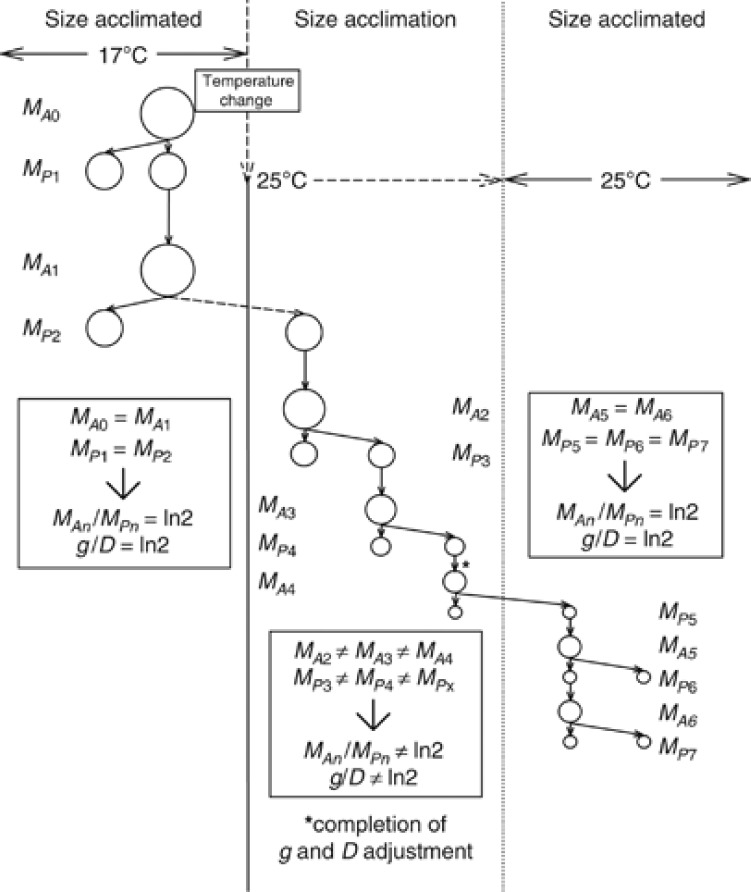
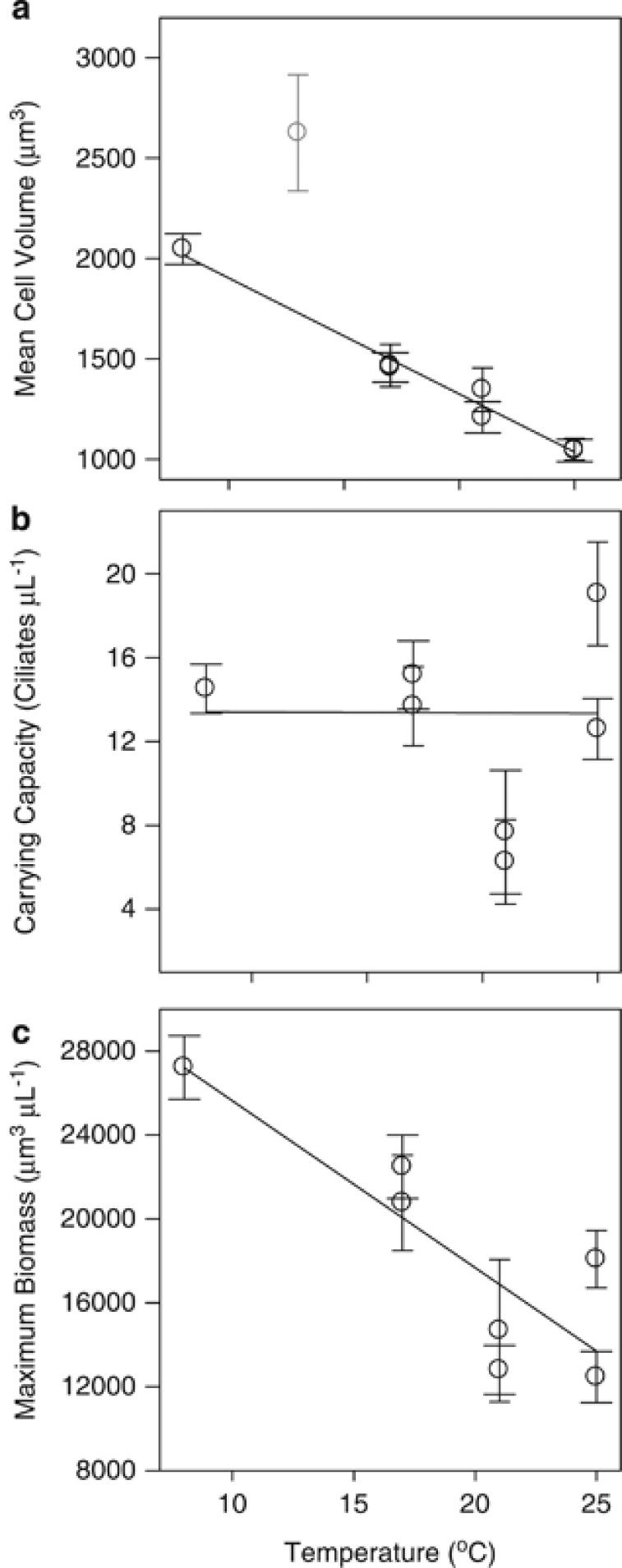
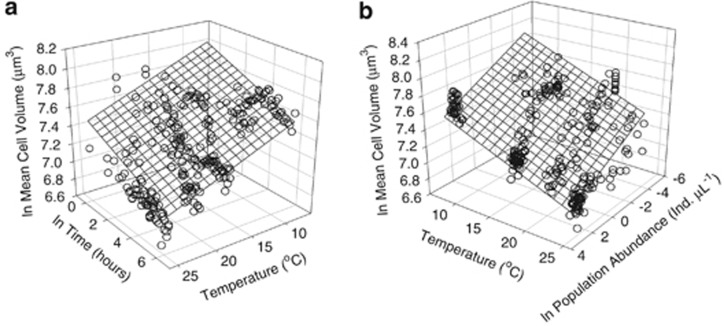
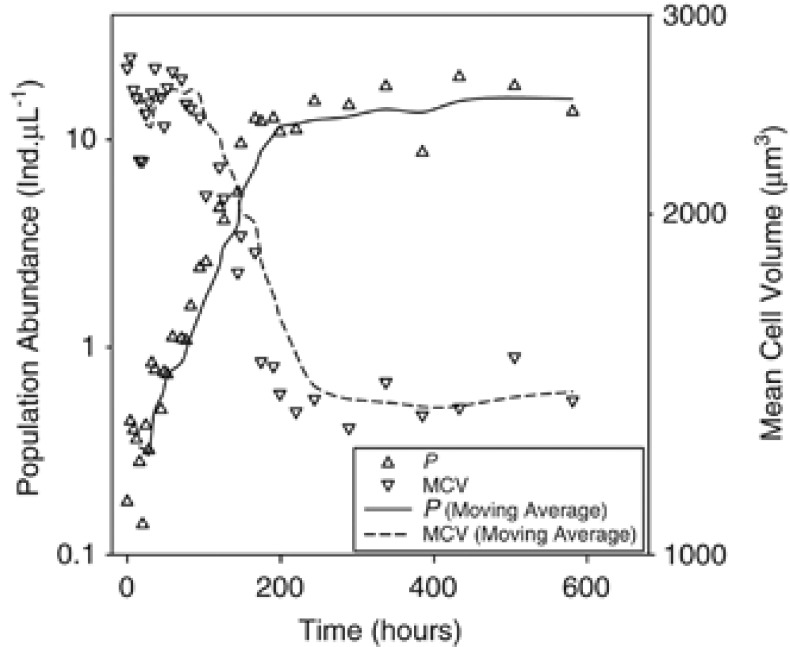
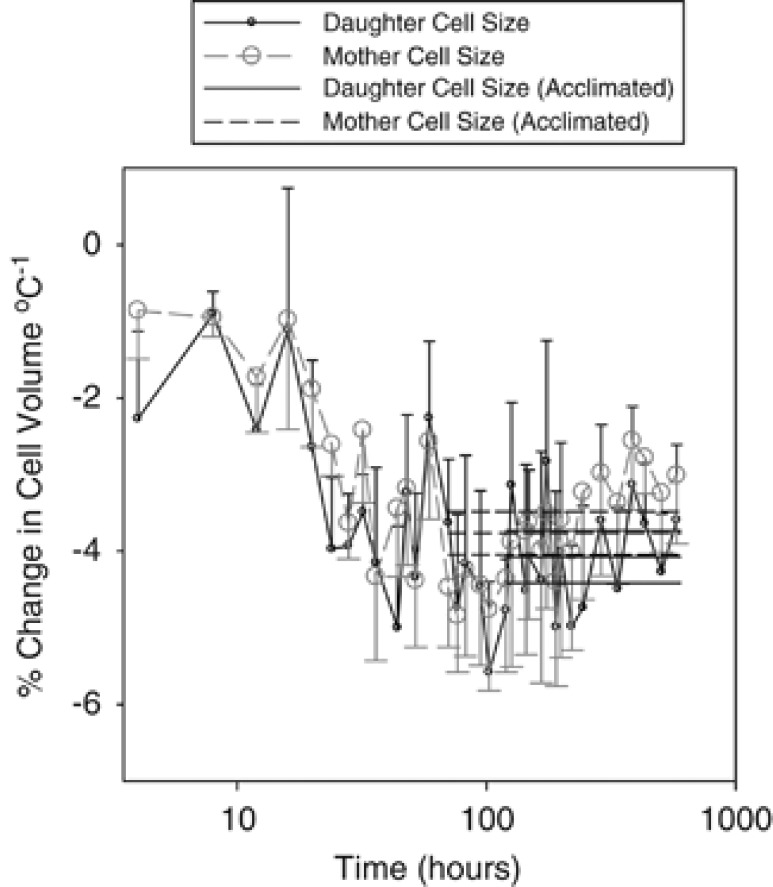
The temperature-size rule (TSR) is an intraspecific phenomenon describing the phenotypic plastic response of an organism size to the temperature: individuals reared at cooler temperatures mature to be larger adults than those reared at warmer temperatures. The TSR is ubiquitous, affecting >80% species including uni- and multicellular groups. How the TSR is established has received attention in multicellular organisms, but not in unicells. Further, conceptual models suggest the mechanism of size change to be different in these two groups. Here, we test these theories using the protist Cyclidium glaucoma. We measure cell sizes, along with population growth during temperature acclimation, to determine how and when the temperature-size changes are achieved. We show that mother and daughter sizes become temporarily decoupled from the ratio 2:1 during acclimation, but these return to their coupled state (where daughter cells are half the size of the mother cell) once acclimated. Thermal acclimation is rapid, being completed within approximately a single generation. Further, we examine the impact of increased temperatures on carrying capacity and total biomass, to investigate potential adaptive strategies of size change. We demonstrate no temperature effect on carrying capacity, but maximum supported biomass to decrease with increasing temperature.
温度-体型规则(TSR)是一种种内现象,描述了生物体体型对温度的表型可塑性反应:在较冷温度下饲养的个体比在较暖温度下饲养的个体成熟后体型更大。TSR 普遍存在,影响了包括单细胞和多细胞群体在内的超过 80%的物种。TSR 的建立机制在多细胞生物中受到了关注,但在单细胞生物中却没有。此外,概念模型表明,这两组生物的体型变化机制不同。在这里,我们使用原生动物 Cyclidium glaucoma 来检验这些理论。我们测量了细胞大小以及在温度驯化过程中的种群生长情况,以确定温度-体型变化是如何以及何时实现的。我们表明,在驯化过程中,母亲和女儿的大小暂时与 2:1 的比例脱钩,但一旦驯化,它们就会回到耦合状态(即女儿细胞的大小是母亲细胞的一半)。热驯化非常迅速,大约在一个代内即可完成。此外,我们还研究了温度升高对承载能力和总生物量的影响,以探讨体型变化的潜在适应策略。我们证明,承载能力不受温度影响,但最大支持生物量随温度升高而减少。