Department of Psychosomatic Internal Medicine, Kagoshima University Graduate School of Medical and Dental Sciences, Kagoshima, Japan.
Transl Psychiatry. 2011 Jul 26;1(7):e23. doi: 10.1038/tp.2011.25.
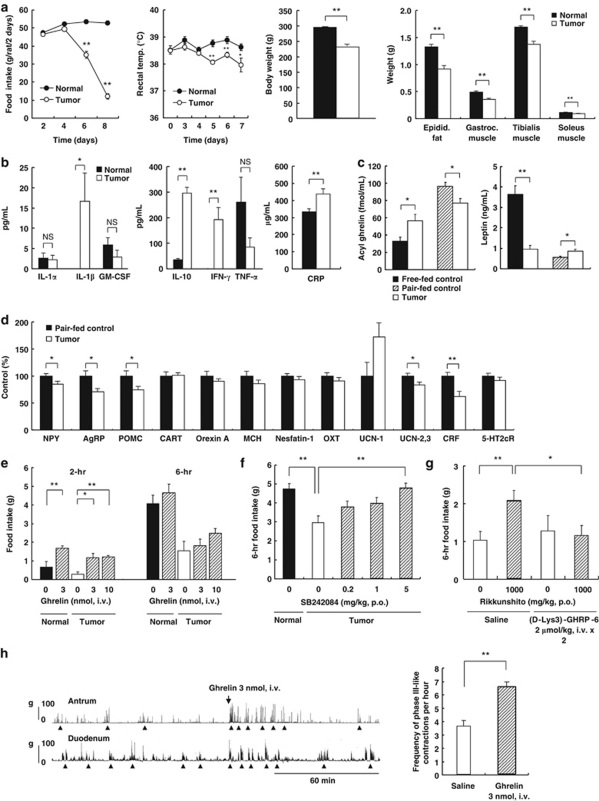
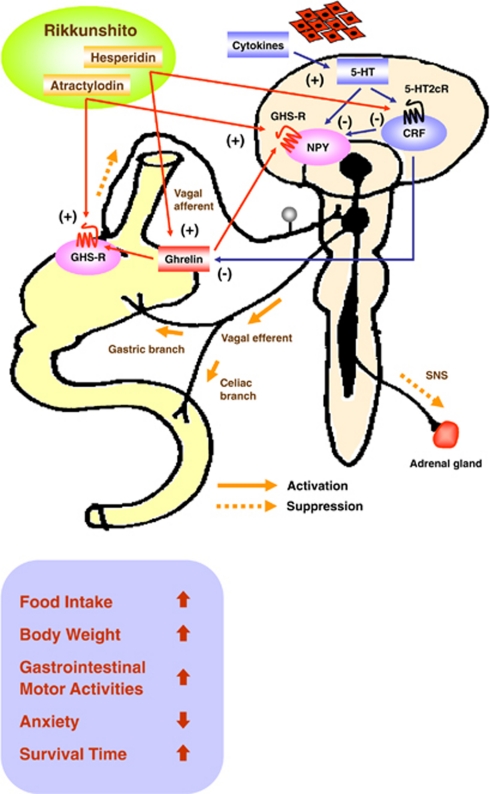
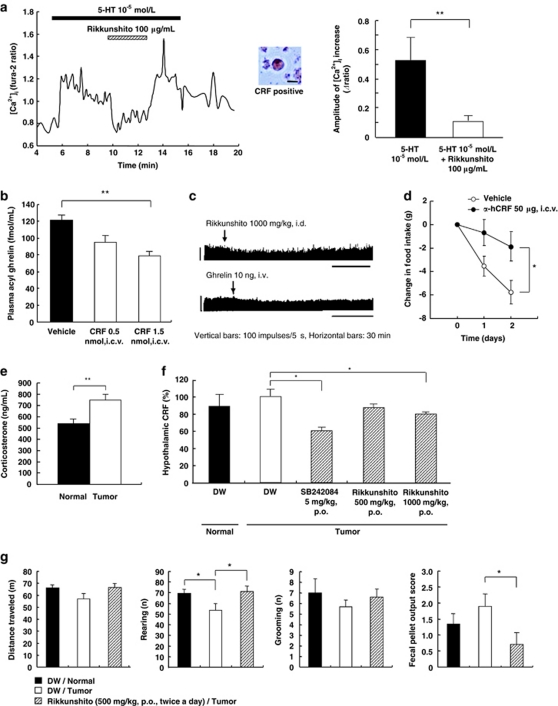
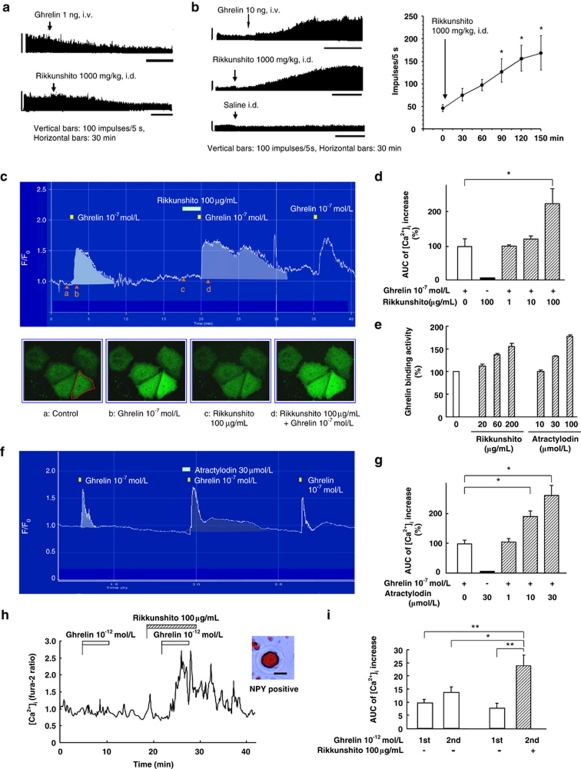
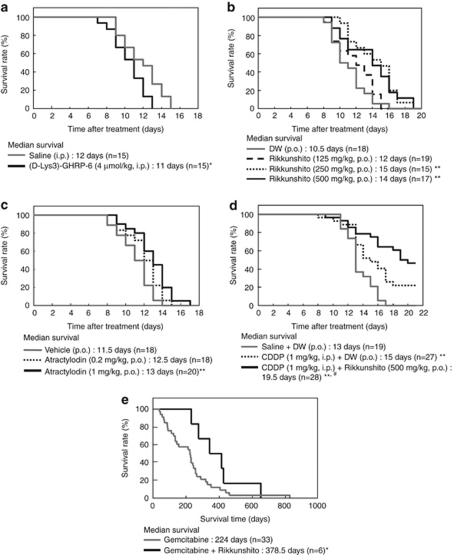
Cancer anorexia-cachexia syndrome is characterized by decreased food intake, weight loss, muscle tissue wasting and psychological distress, and this syndrome is a major source of increased morbidity and mortality in cancer patients. This study aimed to clarify the gut-brain peptides involved in the pathogenesis of the syndrome and determine effective treatment for cancer anorexia-cachexia. We show that both ghrelin insufficiency and resistance were observed in tumor-bearing rats. Corticotropin-releasing factor (CRF) decreased the plasma level of acyl ghrelin, and its receptor antagonist, α-helical CRF, increased food intake of these rats. The serotonin 2c receptor (5-HT2cR) antagonist SB242084 decreased hypothalamic CRF level and improved anorexia, gastrointestinal (GI) dysmotility and body weight loss. The ghrelin receptor antagonist (D-Lys3)-GHRP-6 worsened anorexia and hastened death in tumor-bearing rats. Ghrelin attenuated anorexia-cachexia in the short term, but failed to prolong survival, as did SB242084 administration. In addition, the herbal medicine rikkunshito improved anorexia, GI dysmotility, muscle wasting, and anxiety-related behavior and prolonged survival in animals and patients with cancer. The appetite-stimulating effect of rikkunshito was blocked by (D-Lys3)-GHRP-6. Active components of rikkunshito, hesperidin and atractylodin, potentiated ghrelin secretion and receptor signaling, respectively, and atractylodin prolonged survival in tumor-bearing rats. Our study demonstrates that the integrated mechanism underlying cancer anorexia-cachexia involves lowered ghrelin signaling due to excessive hypothalamic interactions of 5-HT with CRF through the 5-HT2cR. Potentiation of ghrelin receptor signaling may be an attractive treatment for anorexia, muscle wasting and prolong survival in patients with cancer anorexia-cachexia.
癌症恶病质厌食症的特征是食欲下降、体重减轻、肌肉组织消耗和心理困扰,这种综合征是癌症患者发病率和死亡率增加的主要原因。本研究旨在阐明与该综合征发病机制相关的肠-脑肽,并确定治疗癌症恶病质厌食症的有效方法。我们发现荷瘤大鼠存在生长激素释放肽(ghrelin)不足和抵抗。促肾上腺皮质释放因子(CRF)降低了酰基 ghrelin 的血浆水平,其受体拮抗剂α-螺旋 CRF 增加了这些大鼠的食物摄入。5-羟色胺 2c 受体(5-HT2cR)拮抗剂 SB242084 降低了下丘脑 CRF 水平,并改善了厌食、胃肠道(GI)动力障碍和体重减轻。ghrelin 受体拮抗剂(D-Lys3)-GHRP-6 加重了荷瘤大鼠的厌食症并加速了其死亡。ghrelin 在短期内缓解了厌食恶病质,但未能延长荷瘤大鼠的生存期,与 SB242084 给药的效果相同。此外,草药和胃汤(rikkunshito)改善了动物和癌症患者的厌食、GI 动力障碍、肌肉消耗和焦虑相关行为,并延长了其生存期。rikkunshito 的食欲刺激作用被(D-Lys3)-GHRP-6 阻断。rikkunshito 的活性成分橙皮苷和苍术苷分别增强了 ghrelin 的分泌和受体信号转导,苍术苷延长了荷瘤大鼠的生存期。我们的研究表明,癌症恶病质厌食症的综合发病机制涉及由于 5-HT 与 CRF 通过 5-HT2cR 的过度下丘脑相互作用导致的 ghrelin 信号降低。增强 ghrelin 受体信号可能是治疗癌症恶病质厌食症患者的厌食症、肌肉消耗和延长生存期的有吸引力的方法。