Li Xinxin, Wang Jinguang, Xu Zhiyun, Ahmad Aftab, Li Encheng, Wang Yuan, Qin Suli, Wang Qi
Department of Respiratory Medicine, The Second Hospital Affiliated to Dalian Medical University, Dalian 116023, China.
Department of Thoracic Surgery, The First Hospital Affiliated to Dalian Medical University, No. 222 Zhongshan Road, Dalian 116011, China.
Int J Mol Sci. 2012;13(6):7663-7675. doi: 10.3390/ijms13067663. Epub 2012 Jun 21.
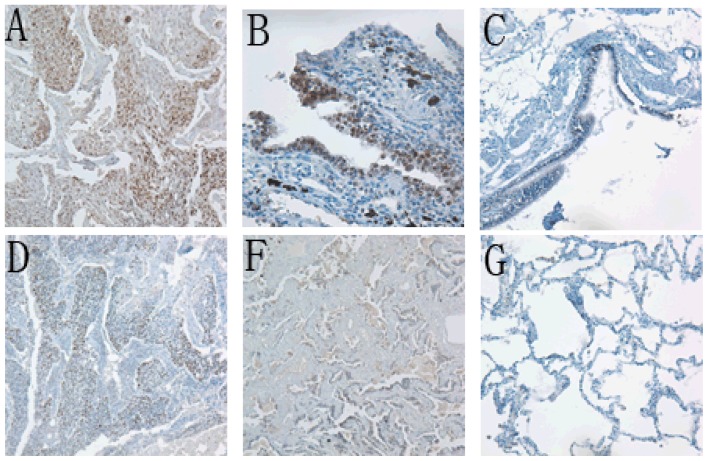
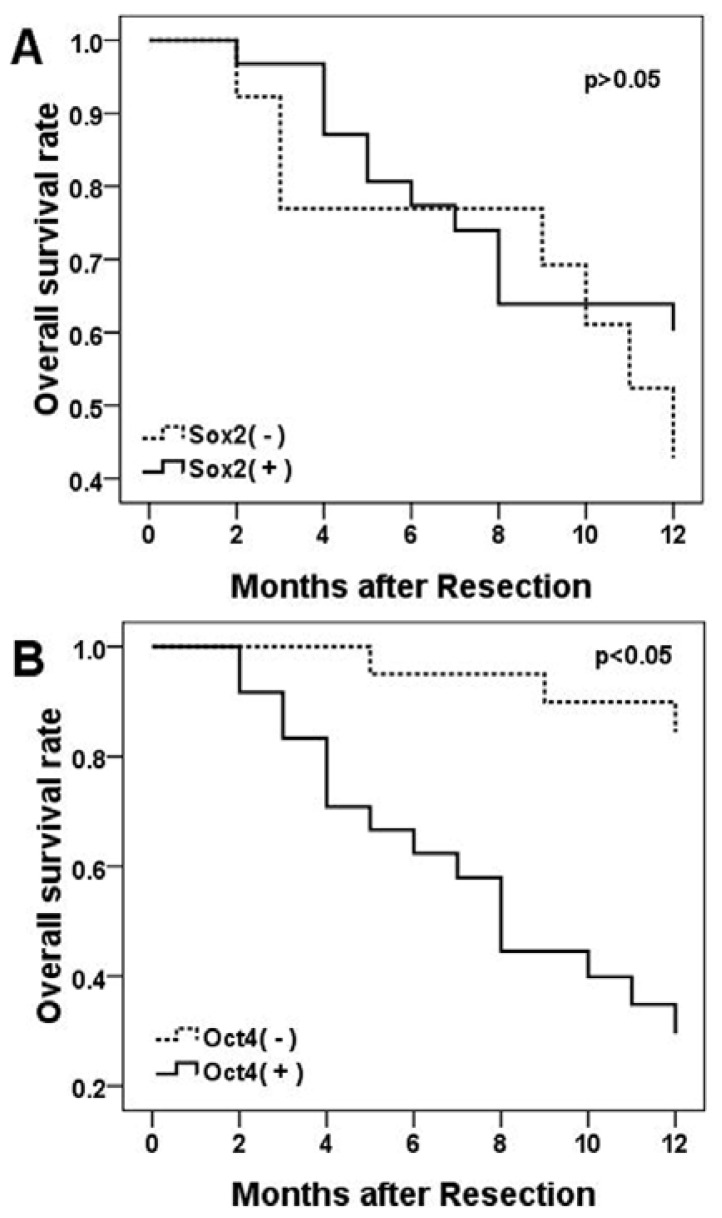
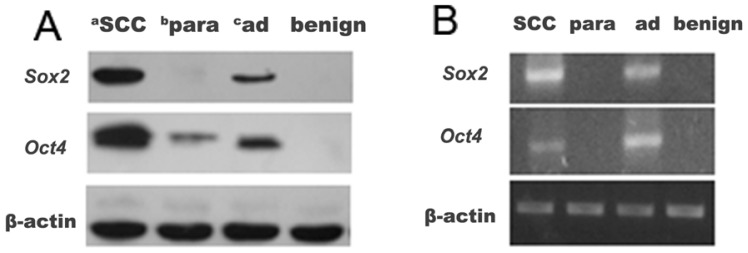
Sox2 and Oct4 are transcription factors with the characteristics of regulating self-renewal and differentiation of embryonic stem cell. The aim of this study was to detect the expression of Sox2 and Oct4 and analyze their clinical significance in human non-small-cell lung cancer (NSCLC). Expression of Sox2 and Oct4 were assayed in cancer tissues and their corresponding paracancerous tissues from 44 patients with NSCLC and 21 patients with benign tumors using immunohistochemistry, Western blot, reverse transcription polymerase chain reaction (RT-PCR). The correlation between the expression of Sox2 and Oct4 and tumor type, grade and prognosis and the utility of the two genes in discriminating between benign and malignant tumors were analyzed as well. The results showed that Sox2 and Oct4 positive staining was only seen in the nuclei of cancer cells but not in either the precancerous tissues or benign tumor tissues by immunohistochemistry (p < 0.01). Furthermore, in the lung cancer tissue, the positive rate for Sox2 and Oct4 was 70.5% and 54.5%, respectively. Meanwhile, clinicopathological correlations showed that the Oct4 expression level was significantly associated with poorer differentiation and higher TNM stage of the cancer (p < 0.05). Western blot and RT-PCR analysis showed similar results to immunohistochemistry. Follow-up analysis revealed that expression of Oct4 was significantly associated with poor prognosis of lung cancer. The conclusion is that Sox2 and Oct4 may act as the promising unit markers in directing NSCLC diagnosis and therapy. Also, Oct4 can be regarded as a novel predictor of poor prognosis for NSCLC patients undergoing resection.
Sox2和Oct4是具有调控胚胎干细胞自我更新和分化特性的转录因子。本研究旨在检测Sox2和Oct4在人非小细胞肺癌(NSCLC)中的表达,并分析其临床意义。采用免疫组织化学、蛋白质免疫印迹法、逆转录聚合酶链反应(RT-PCR)检测44例NSCLC患者和21例良性肿瘤患者癌组织及其相应癌旁组织中Sox2和Oct4的表达。分析Sox2和Oct4表达与肿瘤类型、分级及预后的相关性,以及这两个基因在鉴别良恶性肿瘤中的作用。结果显示,免疫组织化学检测发现Sox2和Oct4阳性染色仅见于癌细胞核,癌前组织和良性肿瘤组织均未见阳性染色(p<0.01)。此外,在肺癌组织中,Sox2和Oct4的阳性率分别为70.5%和54.5%。同时,临床病理相关性分析显示,Oct4表达水平与肿瘤分化较差及TNM分期较高显著相关(p<0.05)。蛋白质免疫印迹法和RT-PCR分析结果与免疫组织化学结果相似。随访分析显示,Oct4表达与肺癌预后不良显著相关。结论是,Sox2和Oct4可能作为指导NSCLC诊断和治疗的有前景的单位标志物。此外,Oct4可被视为接受手术切除的NSCLC患者预后不良的新型预测指标。