Institute for Cell Engineering, Johns Hopkins University School of Medicine, Baltimore, Maryland 21205, USA.
Nature. 2012 Sep 6;489(7414):150-4. doi: 10.1038/nature11306.
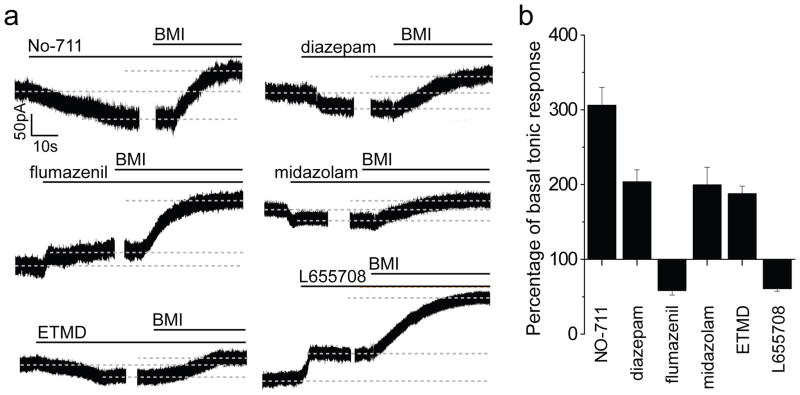
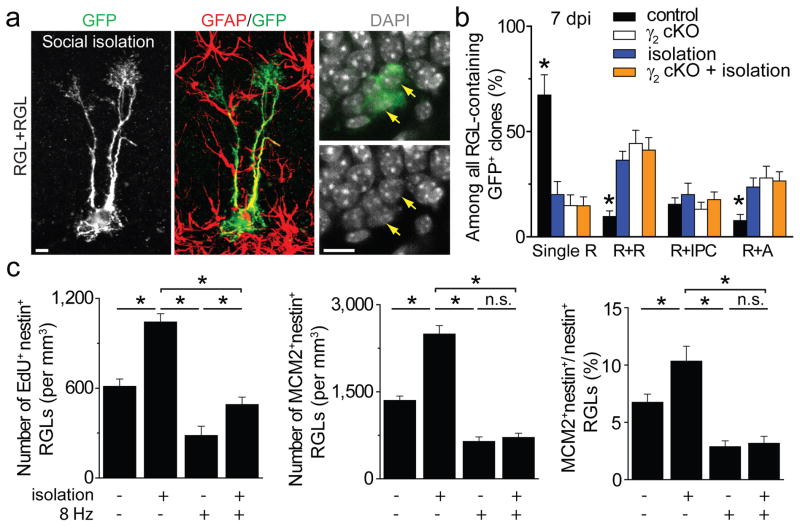
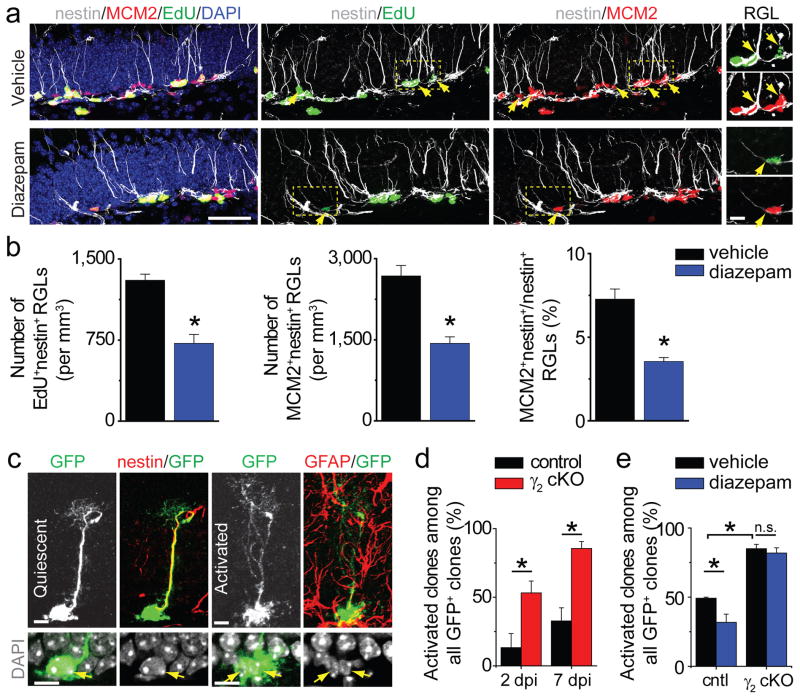
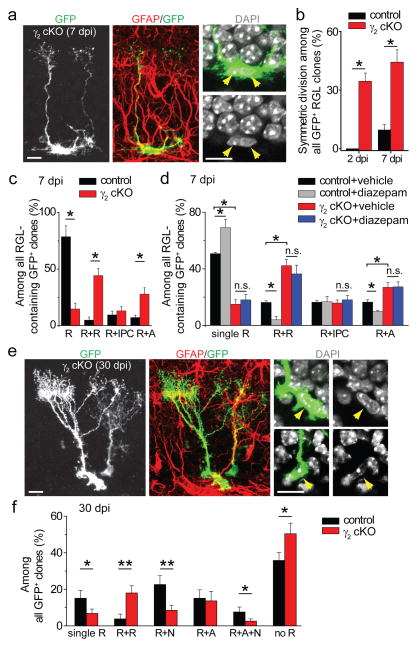
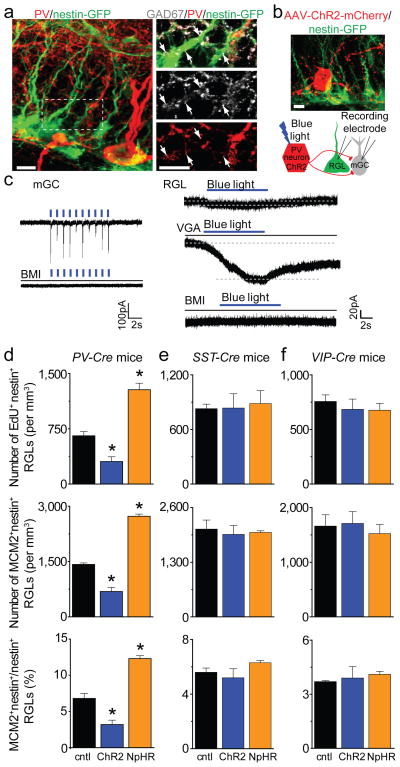
Adult neurogenesis arises from neural stem cells within specialized niches. Neuronal activity and experience, presumably acting on this local niche, regulate multiple stages of adult neurogenesis, from neural progenitor proliferation to new neuron maturation, synaptic integration and survival. It is unknown whether local neuronal circuitry has a direct impact on adult neural stem cells. Here we show that, in the adult mouse hippocampus, nestin-expressing radial glia-like quiescent neural stem cells (RGLs) respond tonically to the neurotransmitter γ-aminobutyric acid (GABA) by means of γ2-subunit-containing GABAA receptors. Clonal analysis of individual RGLs revealed a rapid exit from quiescence and enhanced symmetrical self-renewal after conditional deletion of γ2. RGLs are in close proximity to terminals expressing 67-kDa glutamic acid decarboxylase (GAD67) of parvalbumin-expressing (PV+) interneurons and respond tonically to GABA released from these neurons. Functionally, optogenetic control of the activity of dentate PV+ interneurons, but not that of somatostatin-expressing or vasoactive intestinal polypeptide (VIP)-expressing interneurons, can dictate the RGL choice between quiescence and activation. Furthermore, PV+ interneuron activation restores RGL quiescence after social isolation, an experience that induces RGL activation and symmetrical division. Our study identifies a niche cell–signal–receptor trio and a local circuitry mechanism that control the activation and self-renewal mode of quiescent adult neural stem cells in response to neuronal activity and experience.
成人神经发生源于特定龛位中的神经干细胞。神经元活动和经验,推测通过局部龛位作用,调节成人神经发生的多个阶段,从神经祖细胞增殖到新神经元成熟、突触整合和存活。目前尚不清楚局部神经元回路是否对成人神经干细胞有直接影响。本文中,我们发现成年小鼠海马中的巢蛋白表达的放射状胶质样静止神经干细胞(RGL)通过含有γ2 亚基的 GABAA 受体持续响应神经递质γ-氨基丁酸(GABA)。对单个 RGL 的克隆分析显示,在条件性敲除γ2 后,RGL 迅速退出静止状态并增强对称自我更新。RGL 与表达 67kDa 谷氨酸脱羧酶(GAD67)的颗粒细胞层表达 parvalbumin(PV+)中间神经元的末端紧密接近,并持续响应来自这些神经元的 GABA 释放。功能上,齿状回 PV+中间神经元的光遗传学控制活动,但不是 somatostatin 表达或血管活性肠肽(VIP)表达中间神经元的活动控制,可决定 RGL 在静止和激活之间的选择。此外,PV+中间神经元的激活可恢复社交隔离后的 RGL 静止状态,社交隔离会诱导 RGL 激活和对称分裂。本研究确定了一个龛位细胞-信号-受体三联体和一个局部回路机制,该机制可控制静止的成人神经干细胞在神经元活动和经验刺激下的激活和自我更新模式。