Institute of Specific Prophylaxis and Tropical Medicine, Center for Pathophysiology, Infectiology and Immunology, Medical University of Vienna, Vienna, Austria.
PLoS One. 2012;7(7):e42026. doi: 10.1371/journal.pone.0042026. Epub 2012 Jul 26.
BACKGROUND/OBJECTIVE: The Indianmeal moth Plodia interpunctella is a highly prevalent food pest in human dwellings, and has been shown to contain a number of allergens. So far, only one of these, the arginine kinase (Plo i 1) has been identified.
The aim of this study was to identify further allergens and characterise these in comparison to Plo i 1.
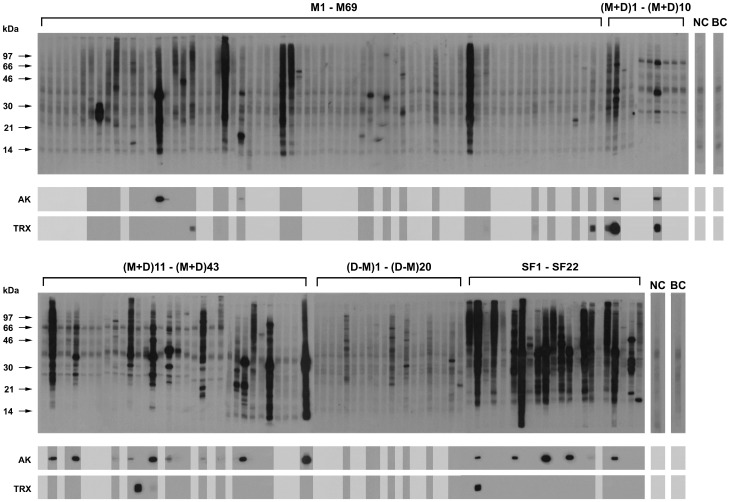
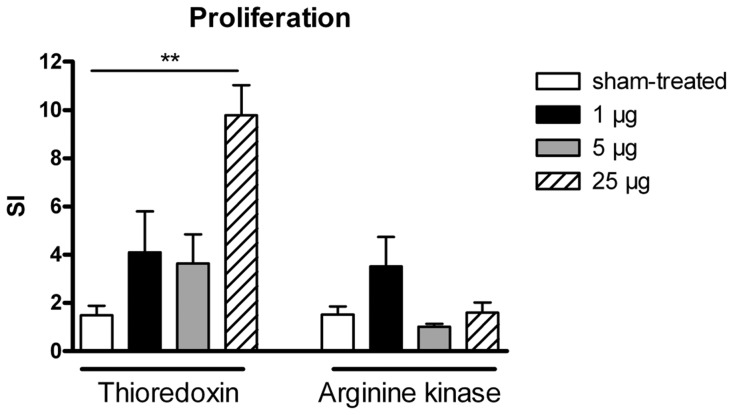
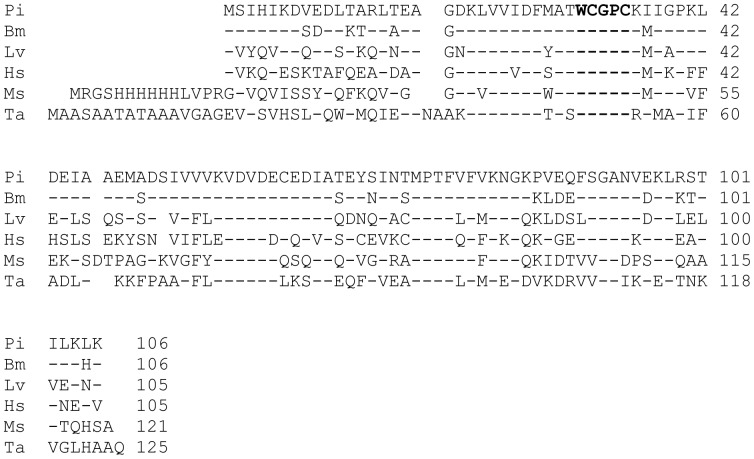
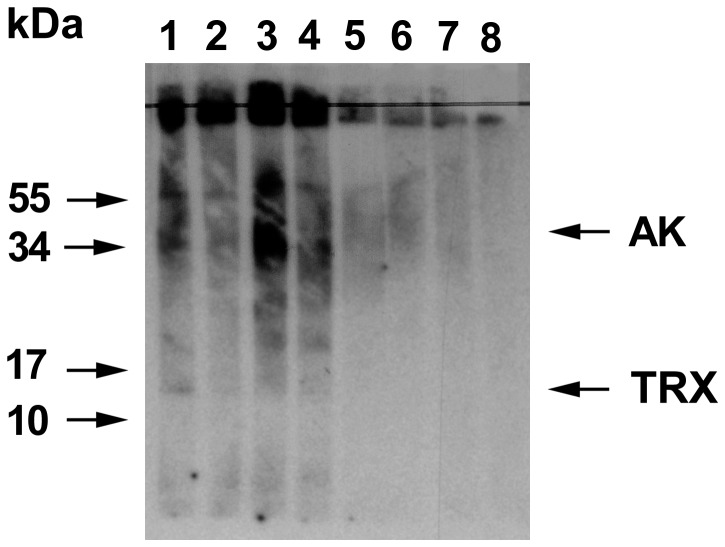
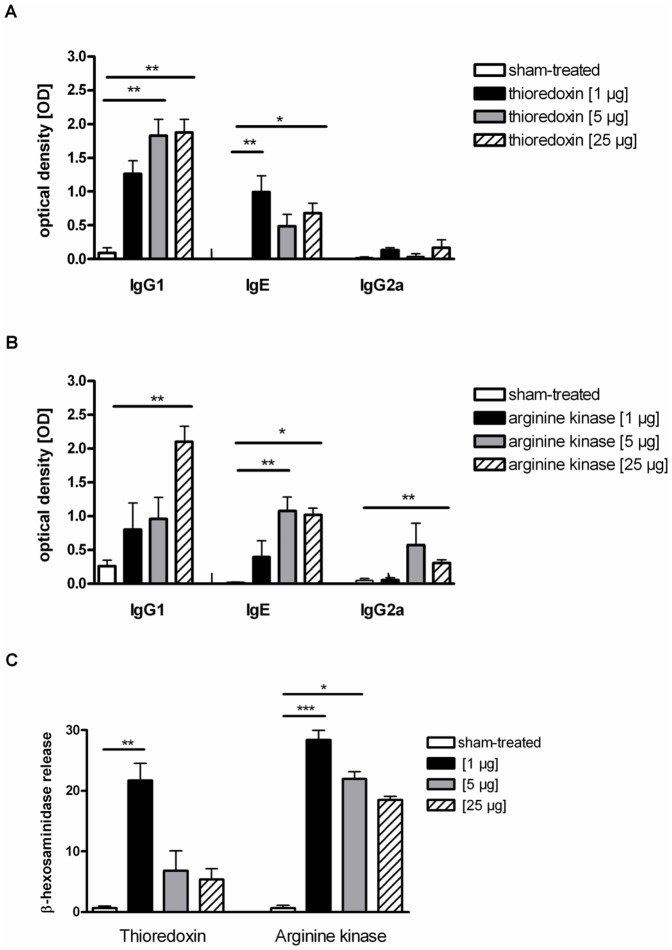
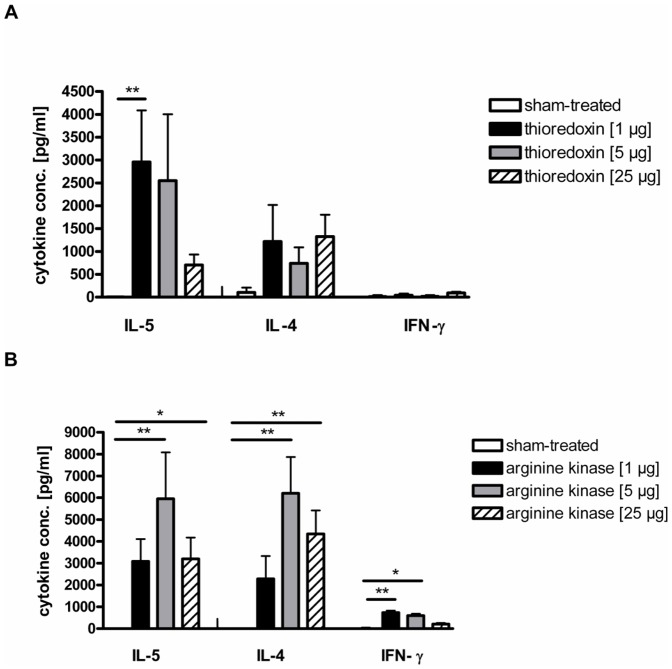
A cDNA library from whole adult P. interpunctella was screened with the serum of a patient with indoor allergy and IgE to moths, and thioredoxin was identified as an IgE-binding protein. Recombinant thioredoxin was generated in E. coli, and tested together with Plo i 1 and whole moth extracts in IgE immunoblots against a large panel of indoor allergic patients' sera. BALB/c mice were immunised with recombinant thioredoxin and Plo i 1, and antibody production, mediator release from RBL cells, T-cell proliferation and cytokine production were measured.
For the first time a thioredoxin from an animal species was identified as allergen. About 8% of the sera from patients with IgE against moth extracts reacted with recombinant P. interpunctella thioredoxin, compared to 25% reacting with recombinant Plo i 1. In immunised BALB/c mice, the recombinant allergens both induced classical Th2-biased immune responses such as induction IgE and IgG1 antibodies, upregulation of IL-5 and IL-4 and basophil degranulation.
Thioredoxin from moths like Plo i 1 acts like a classical Type I allergen as do the thioredoxins from wheat or corn. This clearly supports the pan-allergen nature of thioredoxin. The designation Plo i 2 is suggested for the new P. interpunctella allergen.
背景/目的:印度谷螟(Plodia interpunctella)是人类住所中一种普遍存在的食品害虫,已被证明含有多种过敏原。到目前为止,只有一种过敏原,即精氨酸激酶(Plo i 1)已被鉴定。
本研究旨在鉴定更多的过敏原,并与 Plo i 1 进行比较。
用一位室内过敏患者的血清和对飞蛾的 IgE 对来自整个成年印度谷螟的 cDNA 文库进行筛选,发现硫氧还蛋白是一种 IgE 结合蛋白。在大肠杆菌中生成重组硫氧还蛋白,并与 Plo i 1 和全蛾提取物一起在 IgE 免疫印迹中对一大组室内过敏患者的血清进行测试。用重组硫氧还蛋白和 Plo i 1 免疫 BALB/c 小鼠,并测量抗体产生、RBL 细胞释放介质、T 细胞增殖和细胞因子产生。
首次从动物物种中鉴定出一种硫氧还蛋白作为过敏原。与重组 Plo i 1 相比,约 8%的对蛾提取物 IgE 阳性的患者血清与重组 P. interpunctella 硫氧还蛋白反应,而 25%的患者血清与重组 Plo i 1 反应。在免疫的 BALB/c 小鼠中,重组过敏原均诱导经典的 Th2 偏向性免疫反应,如诱导 IgE 和 IgG1 抗体、上调 IL-5 和 IL-4 以及嗜碱性粒细胞脱颗粒。
像 Plo i 1 这样的飞蛾中的硫氧还蛋白像来自小麦或玉米的硫氧还蛋白一样,是一种典型的 I 型过敏原。这清楚地支持了硫氧还蛋白的泛过敏原性质。建议将新的 P. interpunctella 过敏原命名为 Plo i 2。