Department of Systems Biology, Harvard Medical School, Boston, Massachusetts, United States of America.
PLoS One. 2012;7(7):e40177. doi: 10.1371/journal.pone.0040177. Epub 2012 Jul 24.
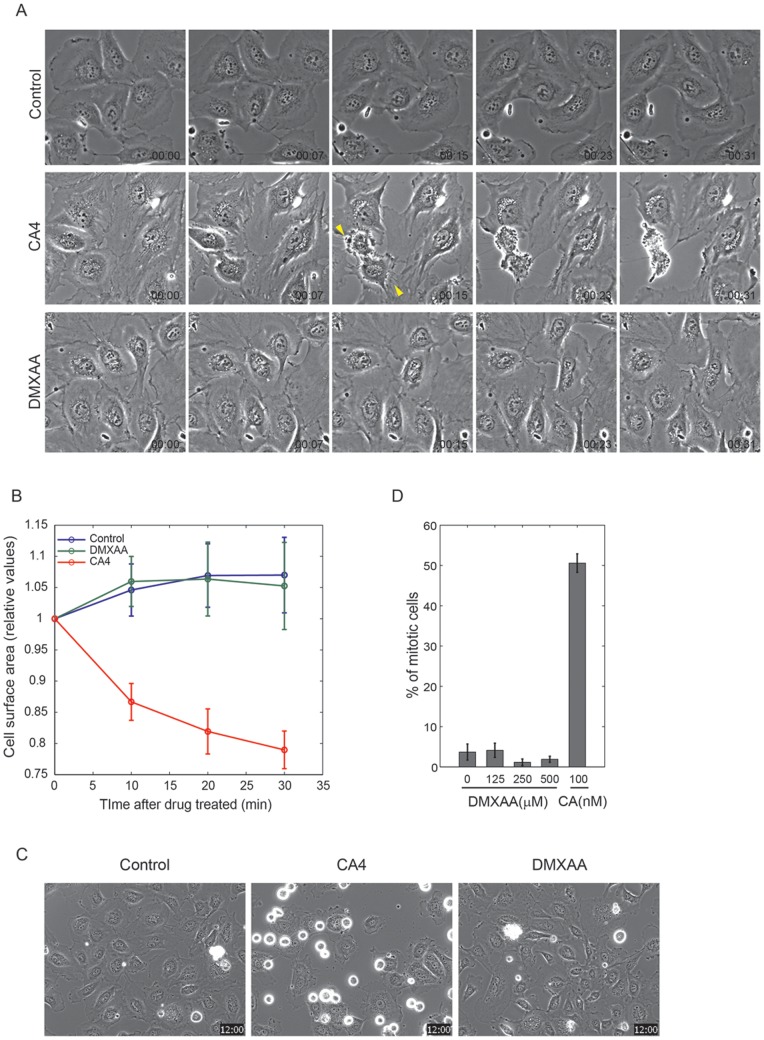
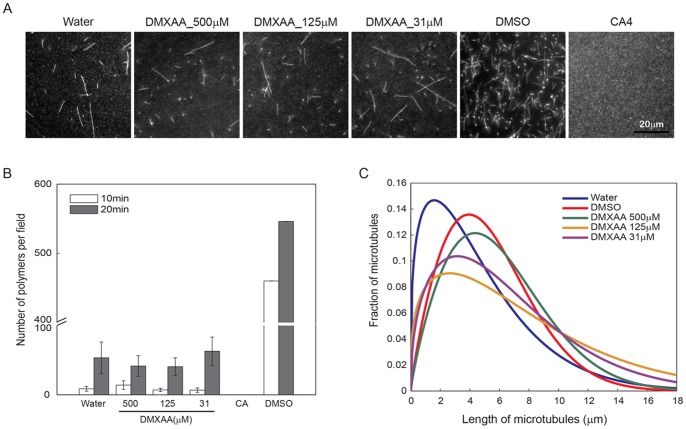
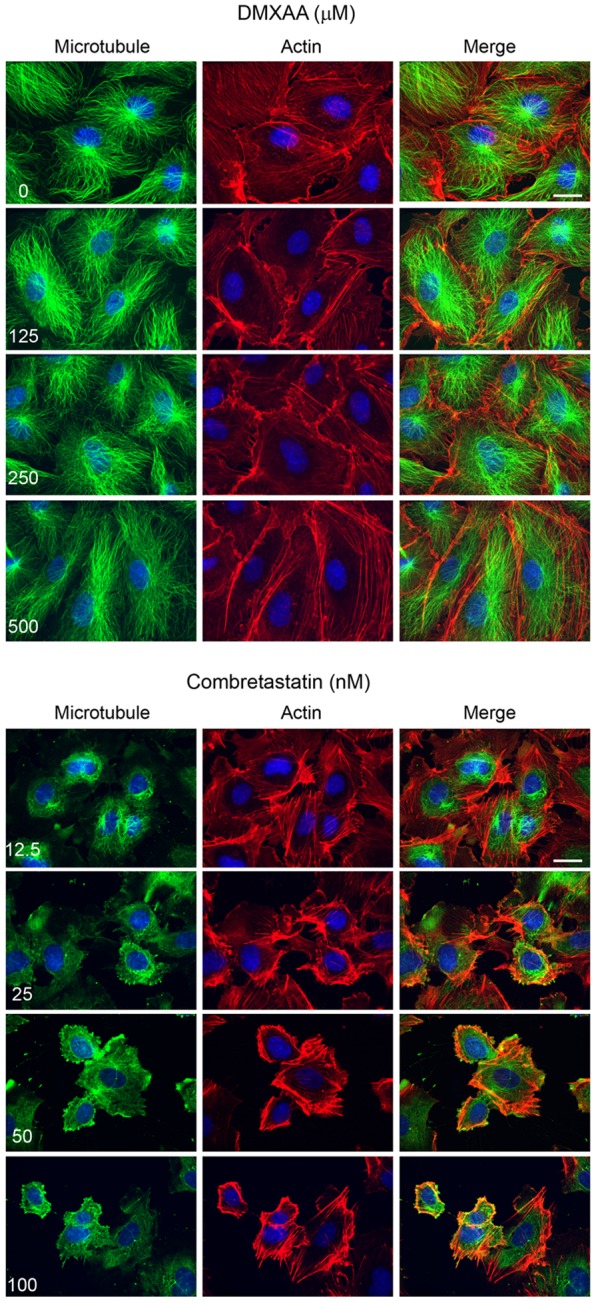
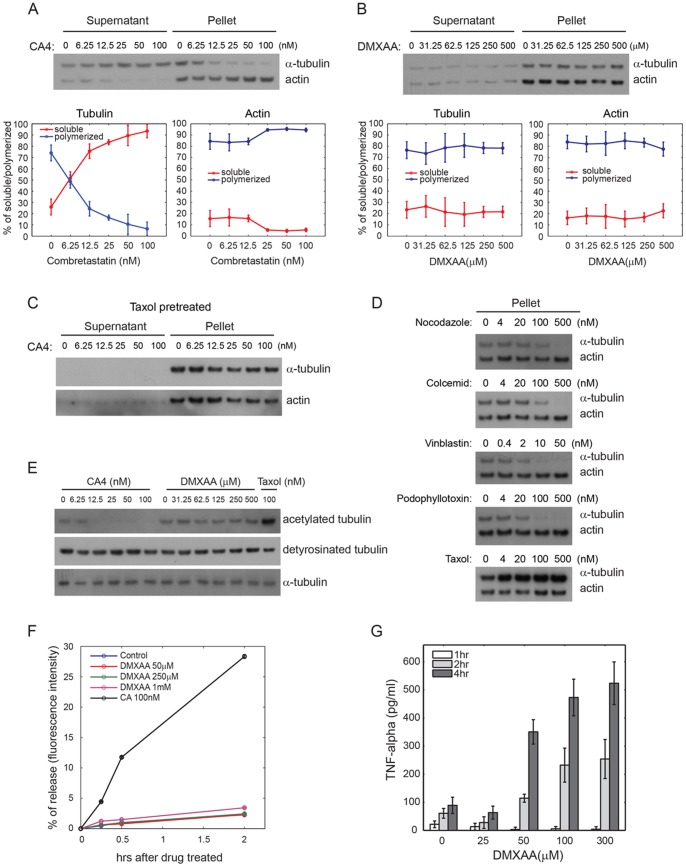
Vascular disrupting agents (VDAs), anti-cancer drugs that target established tumor blood vessels, fall into two main classes: microtubule targeting drugs, exemplified by combretastatin A4 (CA4), and flavonoids, exemplified by 5,6-dimethylxanthenone-4-acetic acid (DMXAA). Both classes increase permeability of tumor vasculature in mouse models, and DMXAA in particular can cause massive tumor necrosis. The molecular target of CA4 is clearly microtubules. The molecular target(s) of DMXAA remains unclear. It is thought to promote inflammatory signaling in leukocytes, and has been assumed to not target microtubules, though it is not clear from the literature how carefully this assumption has been tested. An earlier flavone analog, flavone acetic acid, was reported to promote mitotic arrest suggesting flavones might possess anti-microtubule activity, and endothelial cells are sensitive to even mild disruption of microtubules. We carefully investigated whether DMXAA directly affects the microtubule or actin cytoskeletons of endothelial cells by comparing effects of CA4 and DMXAA on human umbilical vein endothelial cells (HUVEC) using time-lapse imaging and assays for cytoskeleton integrity. CA4 caused retraction of the cell margin, mitotic arrest and microtubule depolymerization, while DMXAA, up to 500 µM, showed none of these effects. DMXAA also had no effect on pure tubulin nucleation and polymerization, unlike CA4. We conclude that DMXAA exhibits no direct anti-microtubule action and thus cleanly differs from CA4 in its mechanism of action at the molecular level.
血管破坏剂(VDAs)是一种靶向已建立的肿瘤血管的抗癌药物,分为两类:微管靶向药物,以 combretastatin A4(CA4)为代表,和黄酮类,以 5,6-二甲基黄嘌呤-4-乙酸(DMXAA)为代表。这两类药物都能增加小鼠模型中肿瘤血管的通透性,特别是 DMXAA 可以引起大量肿瘤坏死。CA4 的分子靶标显然是微管。DMXAA 的分子靶标尚不清楚。据认为,它促进白细胞中的炎症信号转导,并且一直被认为不针对微管,尽管从文献中尚不清楚这一假设经过了多么仔细的测试。早些时候的一种黄酮类似物,黄酮乙酸,据报道能促进有丝分裂停滞,这表明黄酮类可能具有抗微管活性,而内皮细胞对微管的轻微破坏也很敏感。我们通过比较 CA4 和 DMXAA 对人脐静脉内皮细胞(HUVEC)的作用,使用延时成像和细胞骨架完整性测定,仔细研究了 DMXAA 是否直接影响内皮细胞的微管或肌动蛋白细胞骨架。CA4 导致细胞边缘回缩、有丝分裂停滞和微管解聚,而 DMXAA(高达 500μM)则没有这些作用。DMXAA 也不会影响纯微管核的形成和聚合,这与 CA4 不同。我们得出结论,DMXAA 没有直接的抗微管作用,因此在分子水平上与 CA4 的作用机制明显不同。