Louvain Drug Research Institute, Université catholique de Louvain (UCL), Brussels, Belgium.
PLoS One. 2012;7(7):e40795. doi: 10.1371/journal.pone.0040795. Epub 2012 Jul 27.
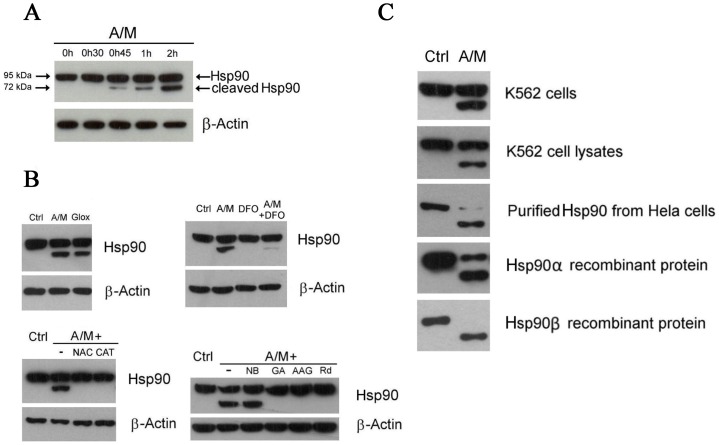
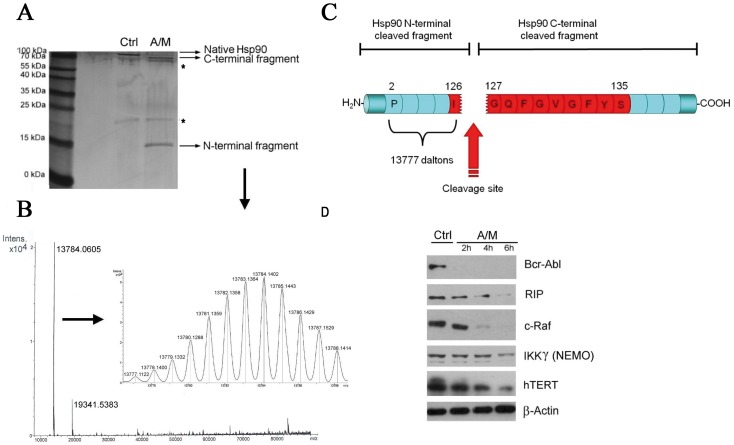
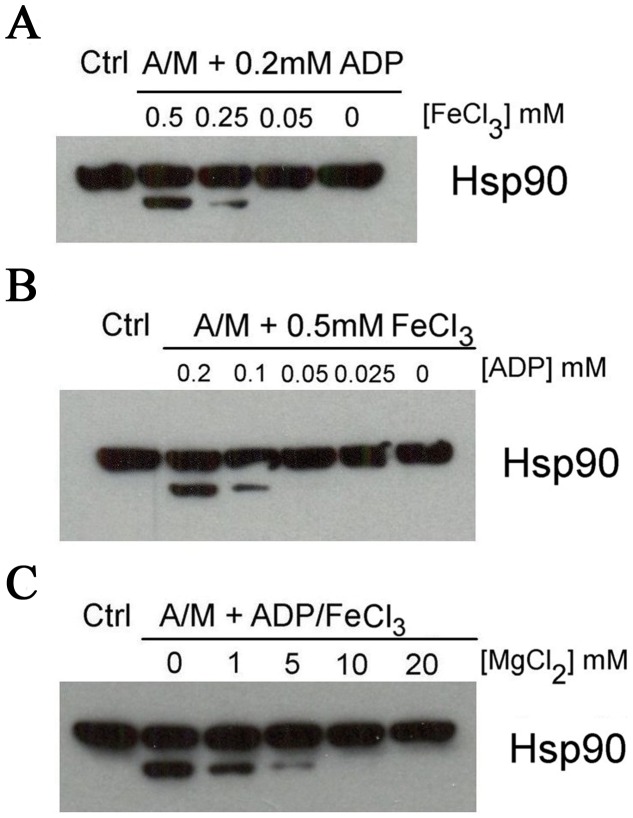
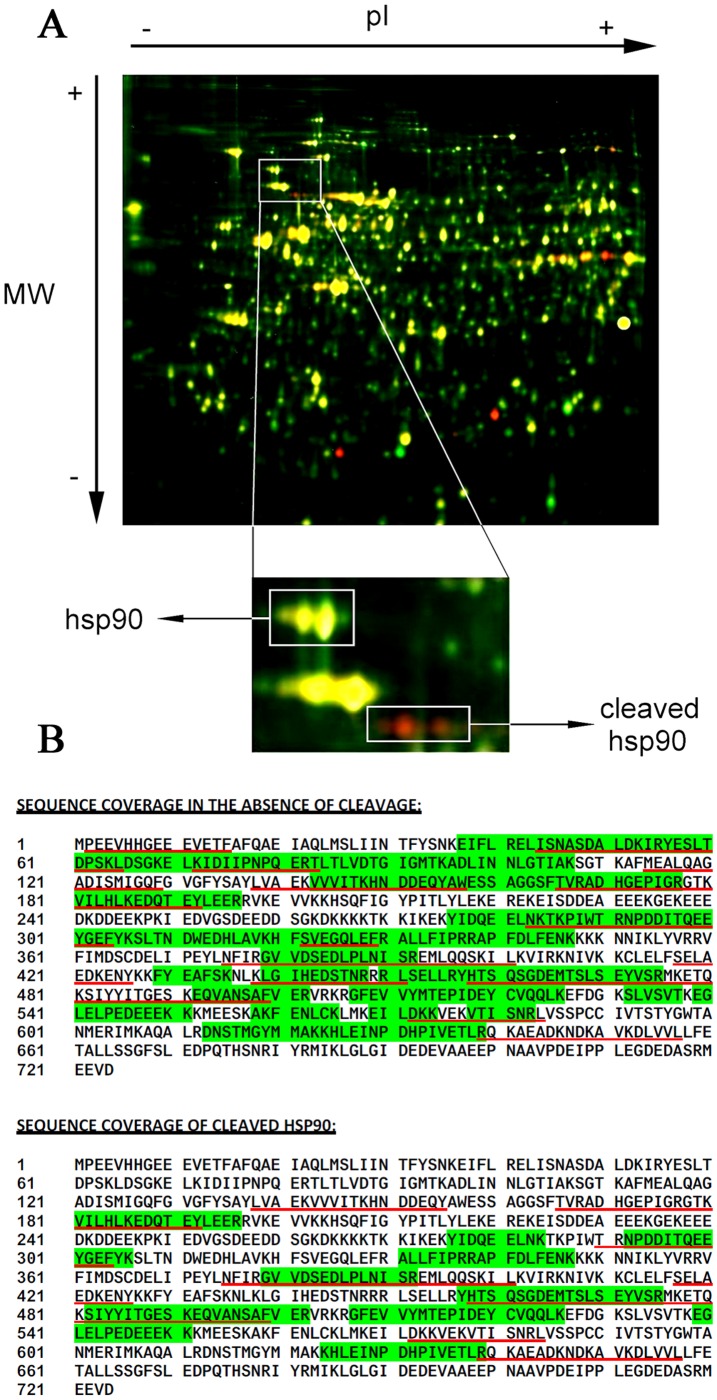
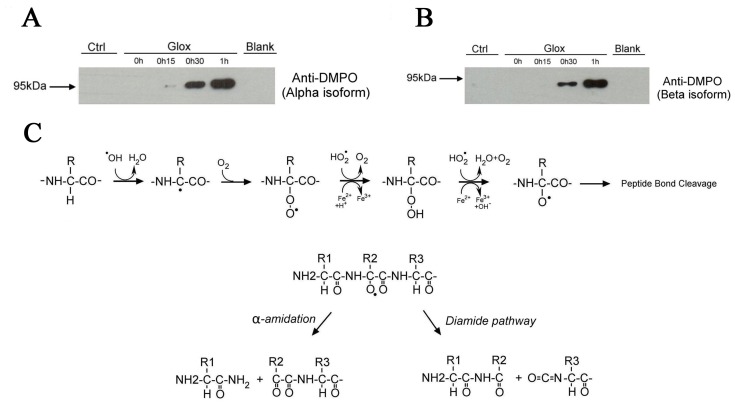
Hsp90 is an essential chaperone that is necessary for the folding, stability and activity of numerous proteins. In this study, we demonstrate that free radicals formed during oxidative stress conditions can cleave Hsp90. This cleavage occurs through a Fenton reaction which requires the presence of redox-active iron. As a result of the cleavage, we observed a disruption of the chaperoning function of Hsp90 and the degradation of its client proteins, for example, Bcr-Abl, RIP, c-Raf, NEMO and hTert. Formation of Hsp90 protein radicals on exposure to oxidative stress was confirmed by immuno-spin trapping. Using a proteomic analysis, we determined that the cleavage occurs in a conserved motif of the N-terminal nucleotide binding site, between Ile-126 and Gly-127 in Hsp90β, and between Ile-131 and Gly-132 in Hsp90α. Given the importance of Hsp90 in diverse biological functions, these findings shed new light on how oxidative stress can affect cellular homeostasis.
Hsp90 是一种必需的伴侣蛋白,对于许多蛋白质的折叠、稳定性和活性都是必要的。在这项研究中,我们证明了在氧化应激条件下形成的自由基可以切割 Hsp90。这种切割通过需要存在氧化还原活性铁的 Fenton 反应发生。由于切割,我们观察到 Hsp90 的伴侣功能被破坏,其客户蛋白(例如 Bcr-Abl、RIP、c-Raf、NEMO 和 hTert)被降解。通过免疫自旋捕获证实了氧化应激暴露下 Hsp90 蛋白自由基的形成。使用蛋白质组学分析,我们确定切割发生在 Hsp90β 的 N 端核苷酸结合位点的保守基序中,在 Ile-126 和 Gly-127 之间,以及在 Hsp90α 中在 Ile-131 和 Gly-132 之间。鉴于 Hsp90 在多种生物学功能中的重要性,这些发现揭示了氧化应激如何影响细胞内稳态的新途径。