Department for Cell Biology and Neuroscience, School of Osteopathic Medicine, Rowan University, Stratford, New Jersey, USA.
J Biol Chem. 2021 Dec;297(6):101374. doi: 10.1016/j.jbc.2021.101374. Epub 2021 Oct 31.
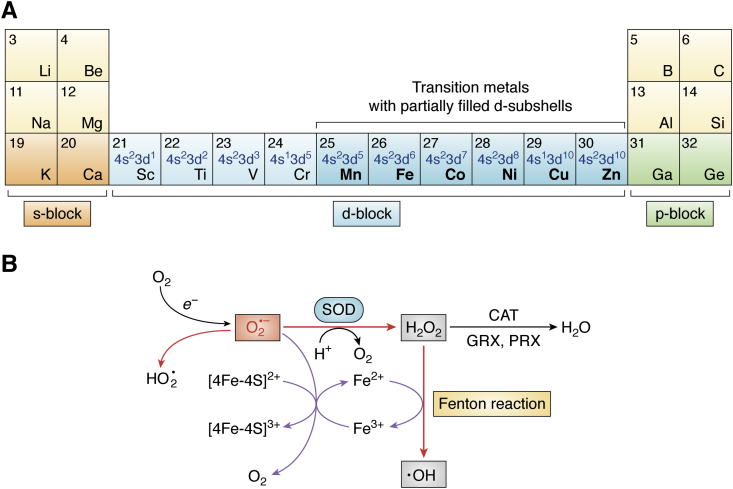
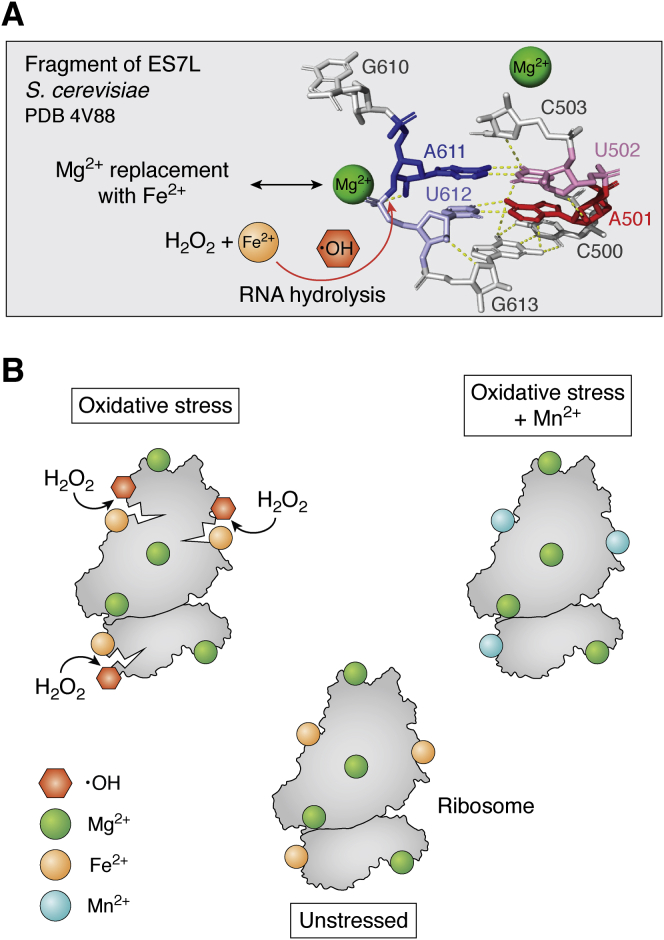
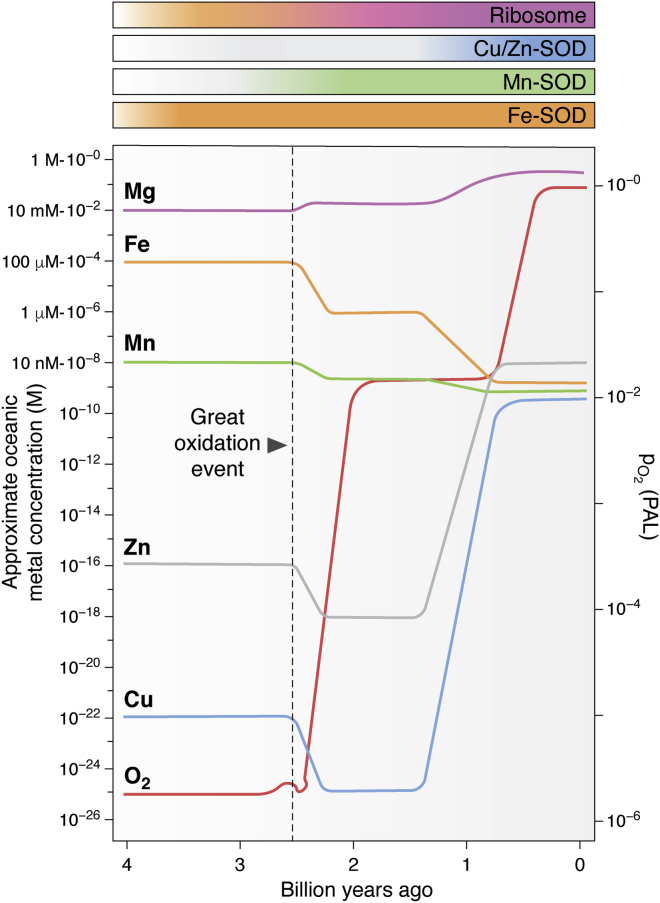
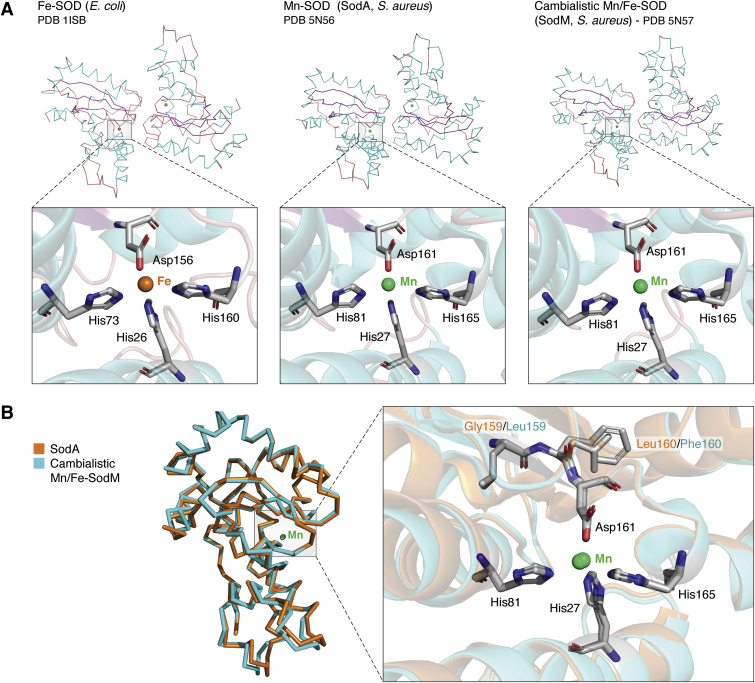
Metal ions provide considerable functionality across biological systems, and their utilization within biomolecules has adapted through changes in the chemical environment to maintain the activity they facilitate. While ancient earth's atmosphere was rich in iron and manganese and low in oxygen, periods of atmospheric oxygenation significantly altered the availability of certain metal ions, resulting in ion replacement within biomolecules. This adaptation mechanism has given rise to the phenomenon of metal cofactor interchangeability, whereby contemporary proteins and nucleic acids interact with multiple metal ions interchangeably, with different coordinated metals influencing biological activity, stability, and toxic potential. The ability of extant organisms to adapt to fluctuating metal availability remains relevant in a number of crucial biomolecules, including the superoxide dismutases of the antioxidant defense systems and ribonucleotide reductases. These well-studied and ancient enzymes illustrate the potential for metal interchangeability and adaptive utilization. More recently, the ribosome has also been demonstrated to exhibit interchangeable interactions with metal ions with impacts on function, stability, and stress adaptation. Using these and other examples, here we review the biological significance of interchangeable metal ions from a new angle that combines both biochemical and evolutionary viewpoints. The geochemical pressures and chemical properties that underlie biological metal utilization are discussed in the context of their impact on modern disease states and treatments.
金属离子在生物系统中提供了相当大的功能,它们在生物分子中的利用通过化学环境的变化进行了适应性调整,以维持它们所促进的活性。虽然古代地球的大气富含铁和锰,而氧气含量较低,但大气氧合作用的时期显著改变了某些金属离子的可用性,导致生物分子内的离子取代。这种适应机制产生了金属辅助因子可互换性现象,即当代蛋白质和核酸可以与多种金属离子可互换地相互作用,不同的配位金属影响生物活性、稳定性和毒性潜力。现存生物适应金属可用性波动的能力在许多关键生物分子中仍然相关,包括抗氧化防御系统的超氧化物歧化酶和核糖核苷酸还原酶。这些研究充分且古老的酶类说明了金属可互换性和适应性利用的潜力。最近,核糖体也被证明与金属离子具有可互换的相互作用,这对功能、稳定性和应激适应有影响。在这里,我们使用这些和其他例子,从结合生物化学和进化观点的新角度回顾了可互换金属离子的生物学意义。在讨论它们对现代疾病状态和治疗的影响时,我们探讨了生物利用金属的地球化学压力和化学性质。