Department of Wildlife, Fish, and Environmental Studies, Swedish University of Agricultural Sciences, Umeå, Sweden.
PLoS One. 2012;7(7):e41100. doi: 10.1371/journal.pone.0041100. Epub 2012 Jul 25.
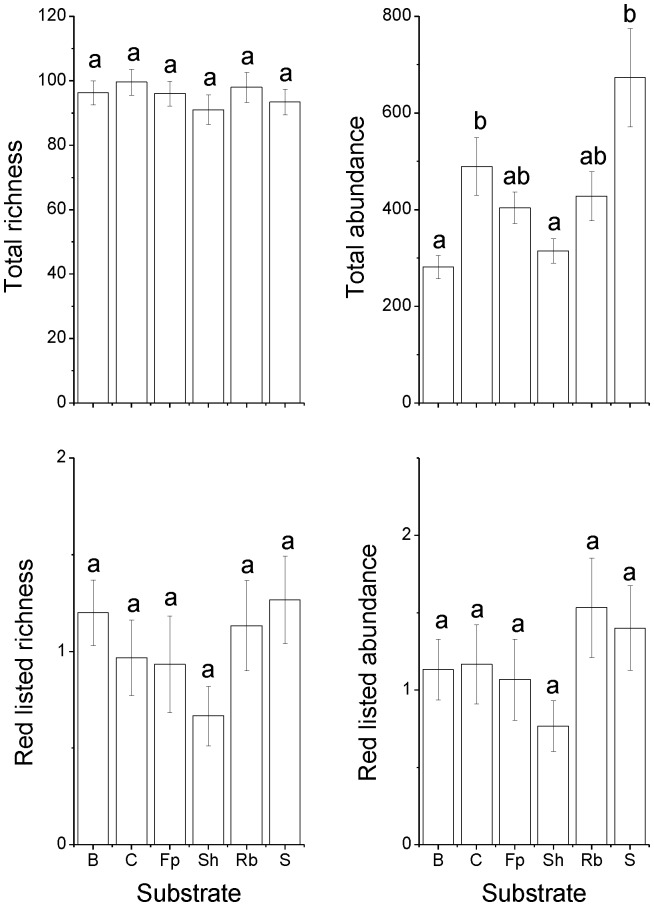
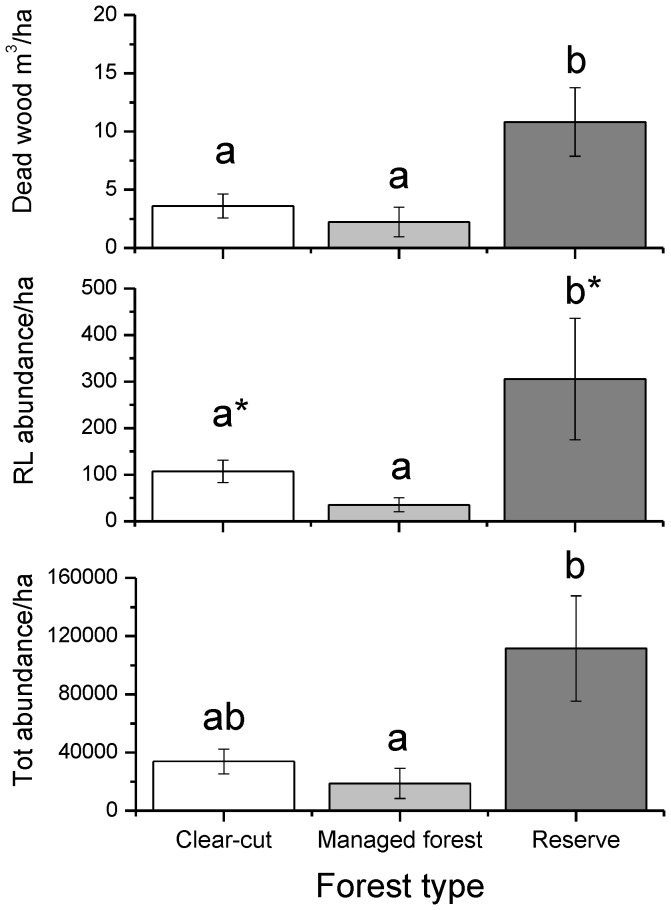
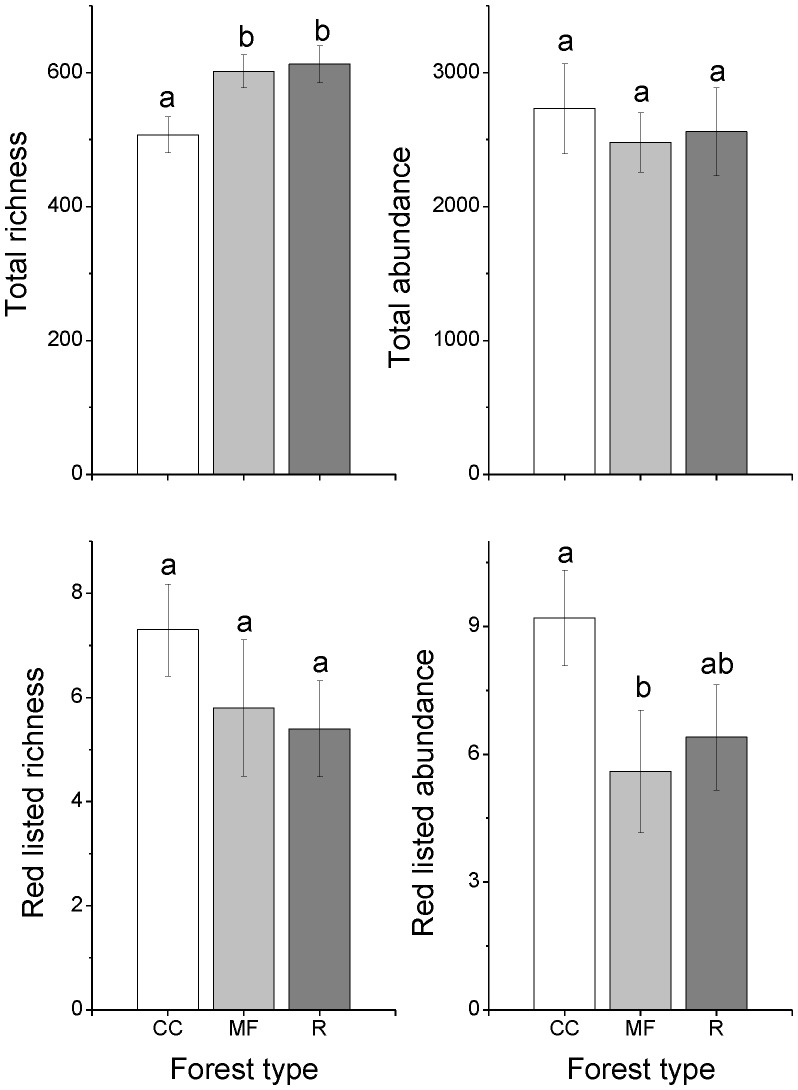
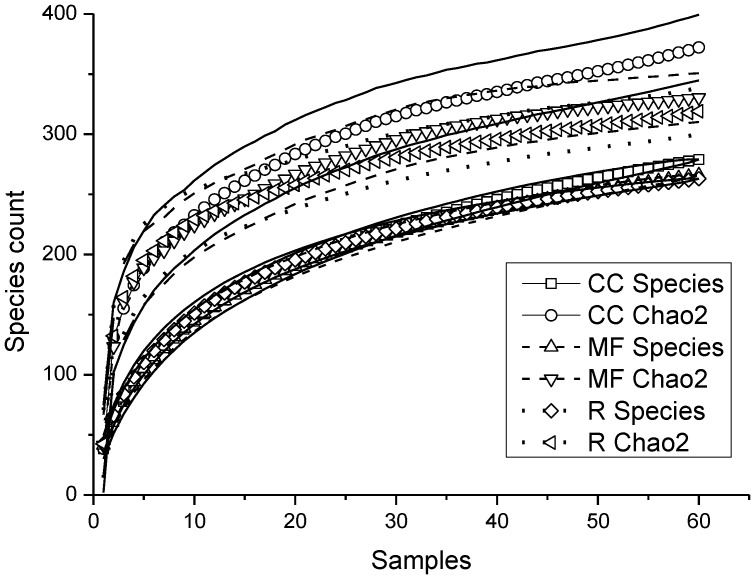
Restoration of habitats is critically important in preventing full realization of the extinction debt owed as a result of anthropogenic habitat destruction. Although much emphasis has been placed on macrohabitats, suitable microhabitats are also vital for the survival of most species. The aim of this large-scale field experiment was to evaluate the relative importance of manipulated microhabitats, i.e., dead wood substrates of spruce (snags, and logs that were burned, inoculated with wood fungi or shaded) and macrohabitats, i.e., stand types (clear-cuts, mature managed forests, and forest reserves) for species richness, abundance and assemblage composition of all saproxylic and red-listed saproxylic beetles. Beetles were collected in emergence traps in 30 forest stands in 2001, 2003, 2004 and 2006. More individuals emerged from snags and untreated logs than from burned and shaded logs, but species richness did not differ among substrates. Assemblage composition differed among substrates for both all saproxylics and red-listed saproxylic species, mainly attributed to different assemblage composition on snags. This suggests that the practise of leaving snags for conservation purposes should be complemented with log supplementation. Clear-cuts supported fewer species and different assemblages from mature managed forests and reserves. Neither abundance, nor species richness or assemblage composition differed between reserves and mature managed forests. This suggests that managed stands subjected to selective cutting, not clear-felling, maintain sufficient old growth characteristics and continuity to maintain more or less intact assemblages of saproxylic beetles. Thus, alternative management methods, e.g., continuity forestry should be considered for some of these stands to maintain continuity and conservation values. Furthermore, the significantly higher estimated abundance per ha of red-listed beetles in reserves underlines the importance of reserves for maintaining viable populations of rare red-listed species and as source areas for saproxylic species in boreal forest landscapes.
栖息地的恢复对于防止因人为破坏栖息地而导致的灭绝债务的完全实现至关重要。尽管人们非常重视宏观生境,但适宜的小生境对于大多数物种的生存也是至关重要的。本大规模野外实验的目的是评估受人为干扰的小生境(如云杉的枯立木(枯木和被火烧过、接种了真菌或遮荫的原木)和宏观生境(皆伐、成熟管理林和森林保护区)对所有腐木和受威胁腐木甲虫物种丰富度、丰度和组合组成的相对重要性。2001 年、2003 年、2004 年和 2006 年,通过诱捕器在 30 个林分中收集甲虫。枯立木和未处理的原木中收集到的个体比火烧和遮荫的原木多,但不同基质间物种丰富度没有差异。所有腐木和受威胁腐木甲虫的组合组成在基质之间存在差异,主要归因于枯立木上不同的组合组成。这表明,为了保护目的而保留枯立木的做法应该辅以原木补充。皆伐林分支持的物种和成熟管理林分和保护区的组成不同。无论是丰度、物种丰富度还是组合组成,保护区和成熟管理林分之间都没有差异。这表明,经过选择性采伐而不是皆伐的管理林分保持了足够的老龄特征和连续性,以维持腐木甲虫或多或少完整的组合。因此,应该考虑采用替代管理方法,例如连续性林业,以维持这些林分的连续性和保护价值。此外,保护区中受威胁甲虫的估计丰度每公顷显著较高,强调了保护区对维持稀有受威胁物种的可行种群以及作为北方森林景观腐木物种源区的重要性。