Vascular Biology Program, Department of Surgery, Boston Children's Hospital and Harvard Medical School, Boston, Massachusetts, United States of America.
PLoS One. 2012;7(7):e41596. doi: 10.1371/journal.pone.0041596. Epub 2012 Jul 25.
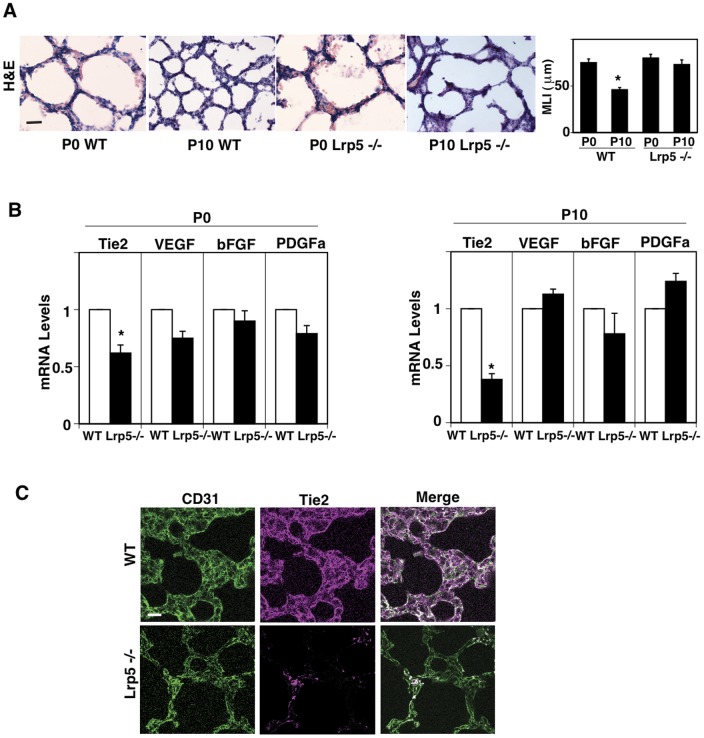
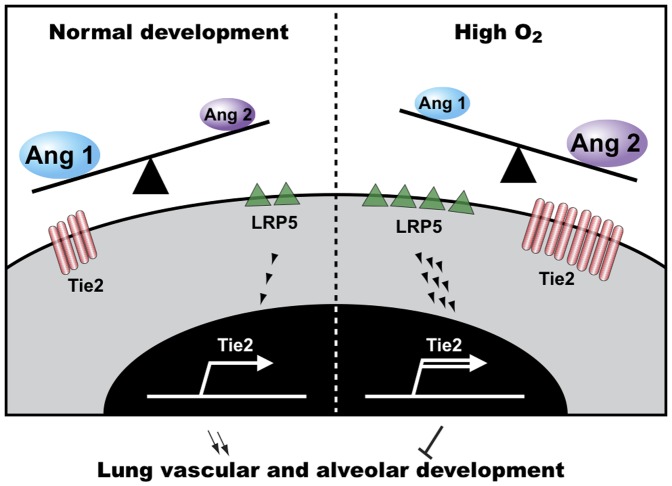
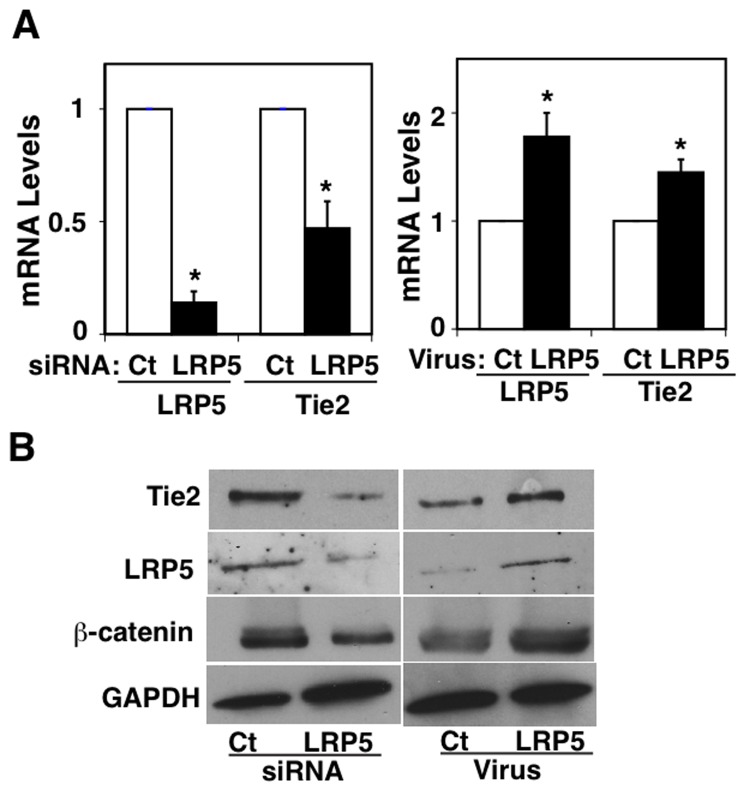
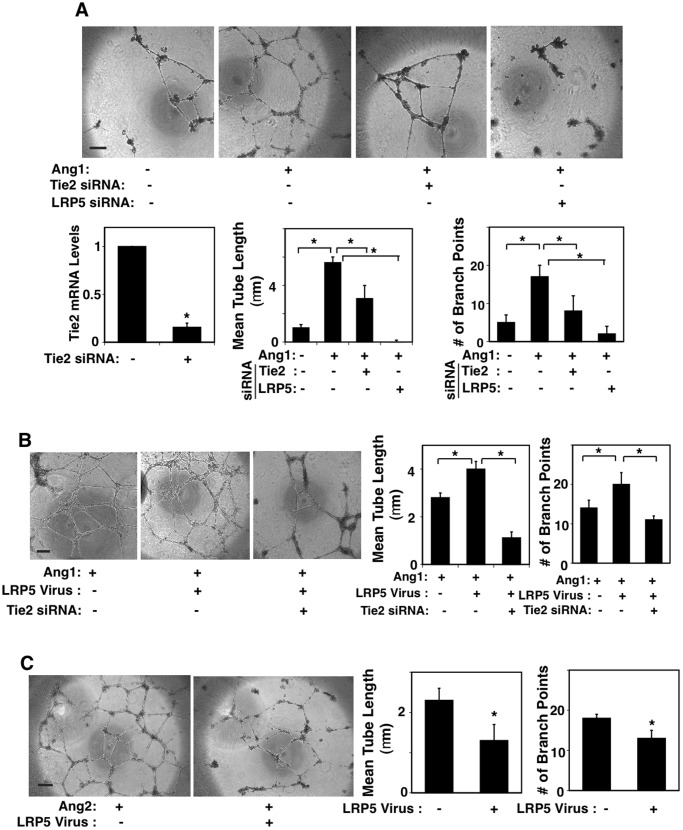
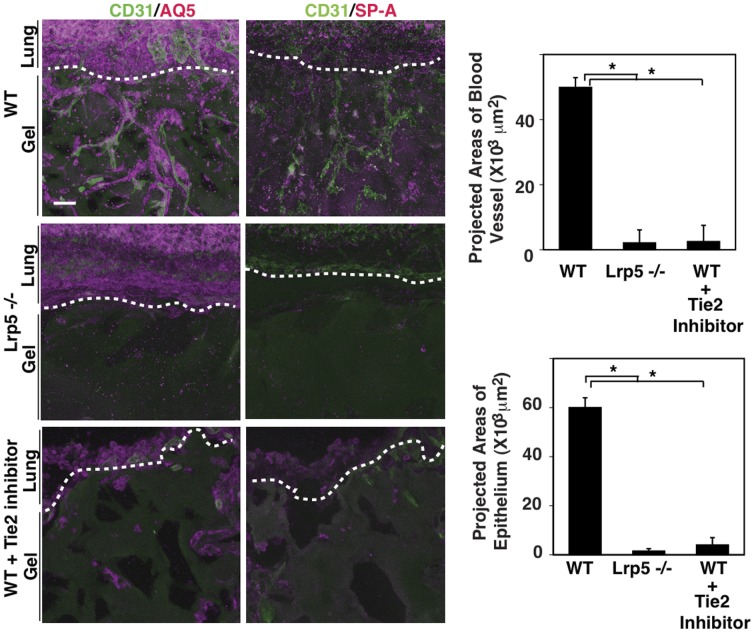
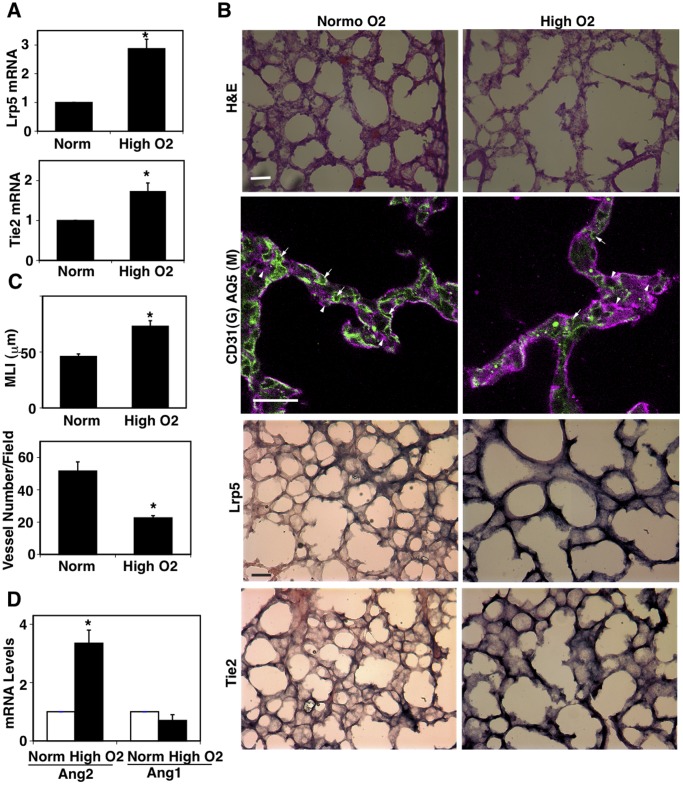
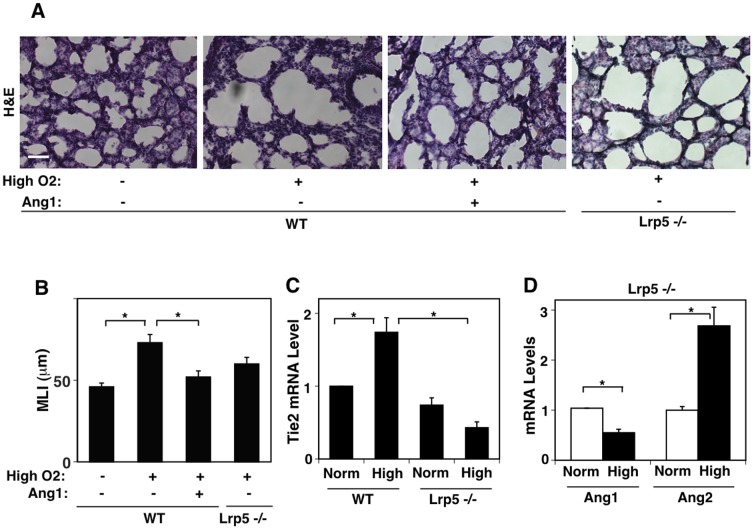
Angiogenesis is crucial for lung development. Although there has been considerable exploration, the mechanism by which lung vascular and alveolar formation is controlled is still not completely understood. Here we show that low-density lipoprotein receptor-related protein 5 (LRP5), a component of the Wnt ligand-receptor complex, regulates angiogenesis and alveolar formation in the lung by modulating expression of the angiopoietin (Ang) receptor, Tie2, in vascular endothelial cells (ECs). Vascular development in whole mouse lungs and in cultured ECs is controlled by LRP5 signaling, which is, in turn, governed by a balance between the activities of the antagonistic Tie2 ligands, Ang1 and Ang2. Under physiological conditions when Ang1 is dominant, LRP5 knockdown decreases Tie2 expression and thereby, inhibits vascular and alveolar development in the lung. Conversely, when Ang2 dominates under hyperoxia treatment in neonatal mice, high LRP5 and Tie2 expression suppress angiogenesis and lung development. These findings suggest that the LRP5-Tie2-Ang signaling axis plays a central role in control of both angiogenesis and alveolarization during postnatal lung development, and that deregulation of this signaling mechanism might lead to developmental abnormalities of the lung, such as are observed in bronchopulmonary dysplasia (BPD).
血管生成对于肺发育至关重要。尽管已经进行了大量的探索,但肺血管和肺泡形成的控制机制仍不完全清楚。在这里,我们表明,低密度脂蛋白受体相关蛋白 5(LRP5)是 Wnt 配体-受体复合物的一个组成部分,通过调节血管内皮细胞(ECs)中血管生成素(Ang)受体 Tie2 的表达,来调节肺中的血管生成和肺泡形成。整个小鼠肺中的血管发育和培养的 ECs 受 LRP5 信号的控制,而 LRP5 信号又受拮抗的 Tie2 配体 Ang1 和 Ang2 的活性之间的平衡所控制。在生理条件下,当 Ang1 占主导地位时,LRP5 敲低会降低 Tie2 的表达,从而抑制肺中的血管和肺泡发育。相反,当 Ang2 在新生鼠的高氧处理中占主导地位时,高 LRP5 和 Tie2 表达会抑制血管生成和肺发育。这些发现表明,LRP5-Tie2-Ang 信号轴在出生后肺发育过程中控制血管生成和肺泡化,并且该信号机制的失调可能导致肺的发育异常,如支气管肺发育不良(BPD)中观察到的那样。